Swirls and fine scratches are on the bonnet, the roof and the doors, and you don't need to park the car in the sun to see them – they show even under an overcast sky. The paint looks dull even freshly washed, and some scratches catch the light from every angle. This isn't one spot or just tired shine; these are the marks of years of washing across the whole car. Paint correction is for you: machine polishing in two or more steps that levels out these defects across the whole surface.
If you only see swirls in direct sunlight and the paint is more dull than damaged, a smaller step down is enough – light paint enhancement. Just one specific spot bothering you? A single-spot paint repair handles that. If you want the whole car sorted out, interior included, a level above correction is detailing: its correction tier includes multi-step polishing and paint correction. And if you're not sure where your paint fits, start with paint diagnostics.
Why correction isn't taken "to the max"
Polishing removes a defect by taking away some of the top glossy layer of paint. That layer doesn't grow back. A car only has as much of it as the factory, or a body shop, applied, and every correction over the car's life draws on that supply. On a car that was polished before sale or after bodywork repair, someone has already drawn on it before us.
It's the upper part of that layer that protects the colour from the sun. It's the first to thin out during polishing, and you can't see it happening – the surface still shines. You only notice once the colour underneath starts to fade, first on the roof and the bonnet. Faded colour can't be polished back; it can only be repainted. With a deep scratch, that sometimes means we soften it without fully levelling it out, and on paint that's already been through several rounds of polishing, it can mean leaving it alone instead. More in the article How much paint is on a car.
What you're paying for
- Inspection under a lamp. Under sharp light you can see how dense and how deep the scratches are – things that blend together in daylight.
- Measurement and the car's history. We measure paint thickness at several points. But a gauge can't tell us whether someone has already taken paint off before, so we'll ask how many times the car has been polished and whether it's been in a body shop. Even an answer of "I don't know" helps us: we then work with a bigger safety margin.
- Scope agreed in advance. The measurements and history tell us whether it makes sense to work on the whole car, or only the panels where it's worth the loss of paint, and how far we can go with your paint.
- A test spot. Hard paint needs a more aggressive approach to remove the same defect, taking off more material; soft paint levels out more easily. On a small area we find the gentlest approach that's enough for your paint.
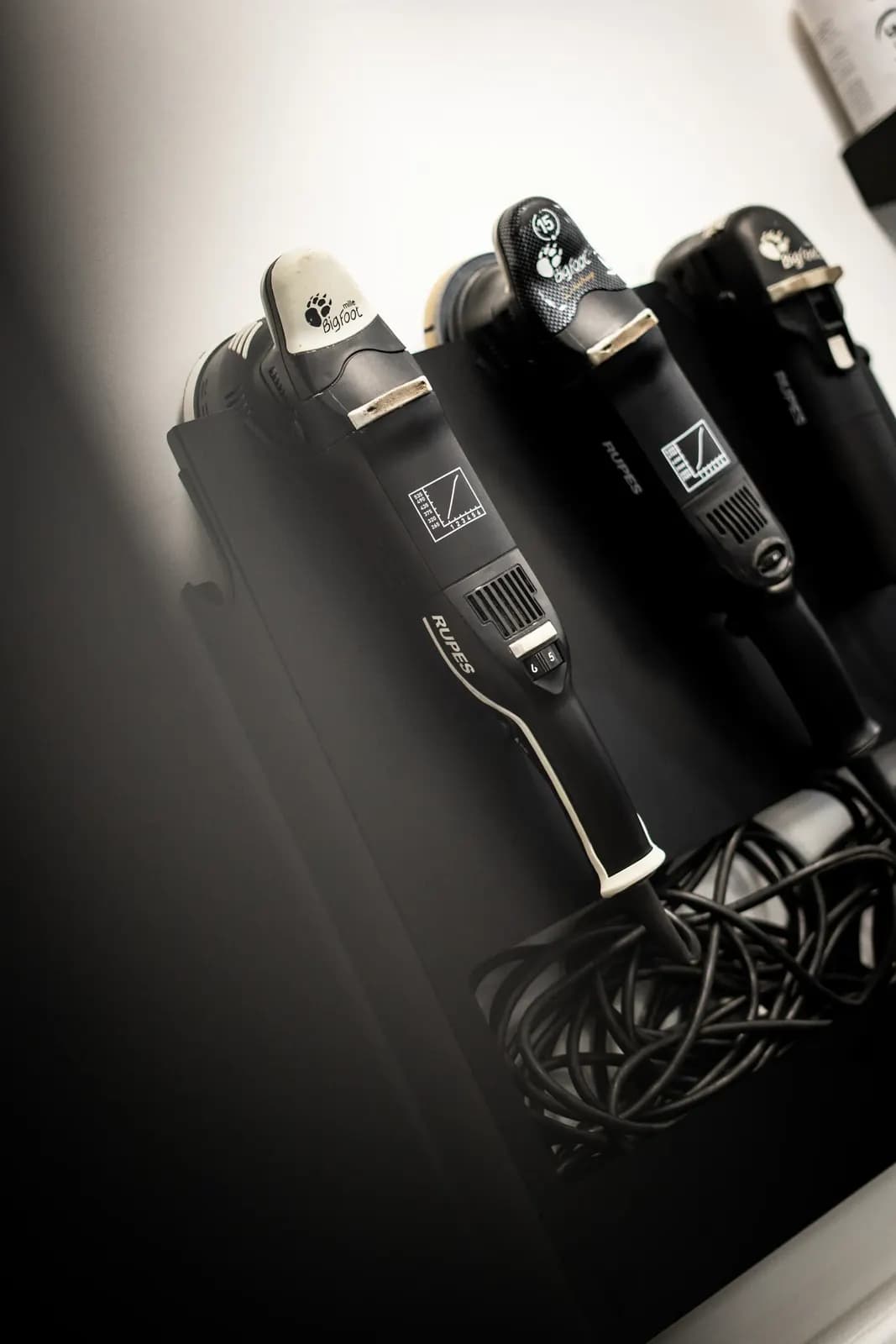
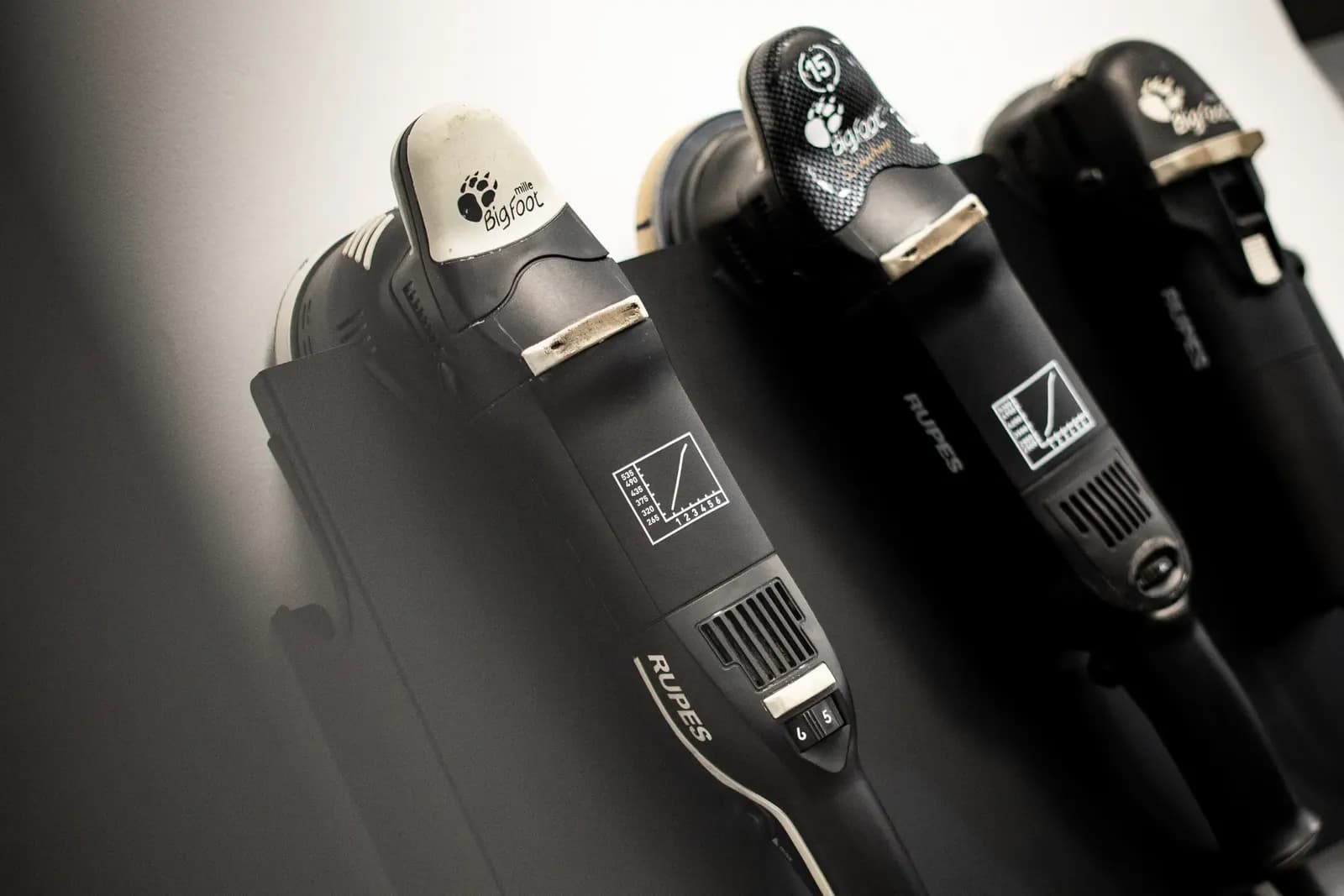
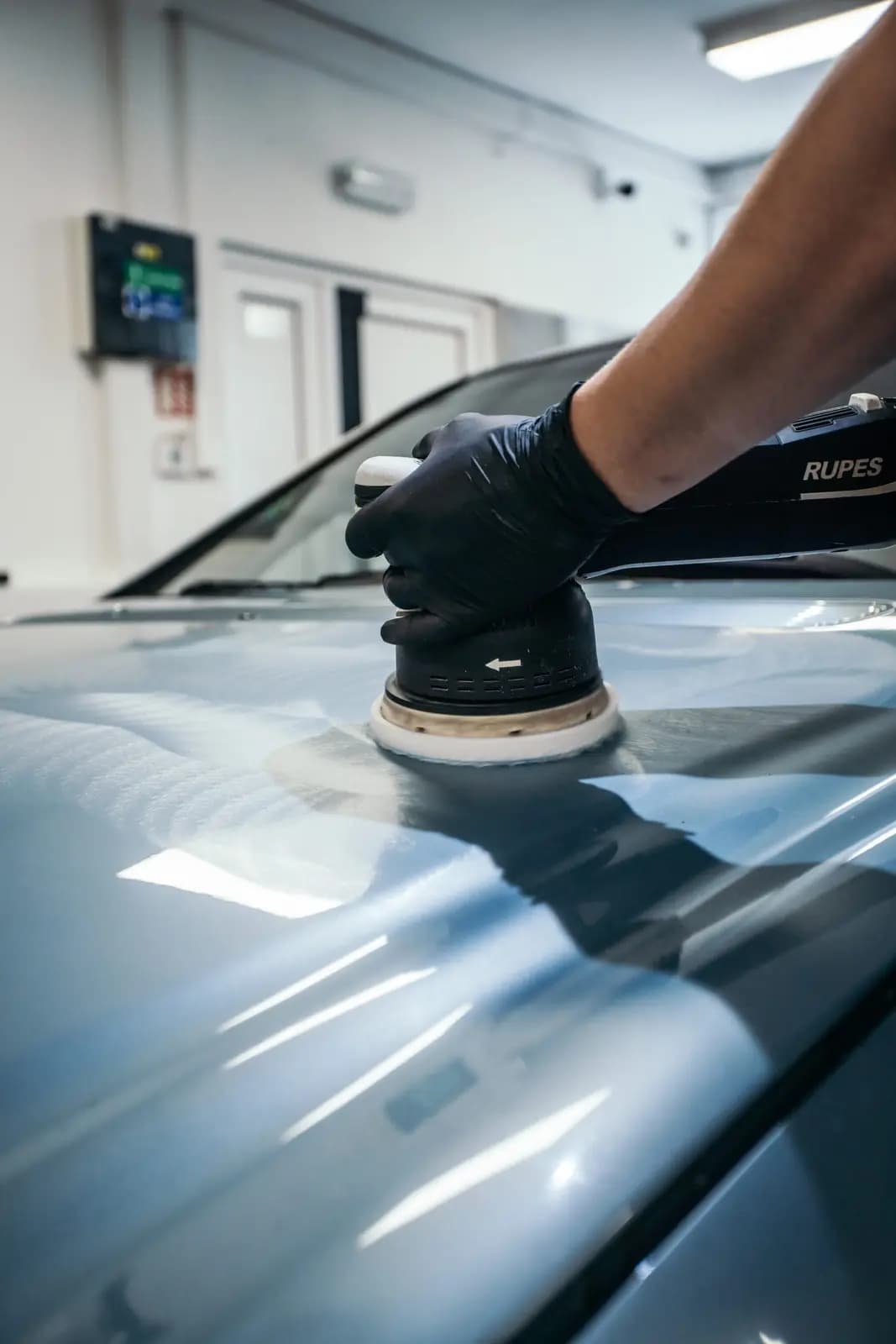
- Multi-step polishing. The first steps level out the defects, the last one finishes the surface to a shine. The shine after correction is the shape of the levelled paint, not a layer of filler, so neither shampoo nor rain will wash it away. Why that matters is explained in the article Why paint shines after correction.
The price of correction mainly comes down to the number of steps and the number of panels worked on. A dense network of deep scratches takes more steps to level out than sparse swirls, and a bigger car has more surface area. What result you want also plays into it: whether it's enough to remove what you see under an overcast sky, or you want the paint as close as possible to factory condition, if the paint can take it. We can only tell you the price after measurement and a test spot, because before that we don't know how much work your paint allows.
When the paint has already been polished many times
On paint like that, measurement may show that little is left on some panels. In that case we'll suggest a smaller intervention: light paint enhancement on the thinnest panels, spot correction on individual defects, and we'll cover the paint that's left with protection to put off the next polish.
To make swirls come back more slowly
A protective layer is applied to levelled paint, so it makes sense to plan it together with correction – just mention it in your inquiry. Ceramic surface protection sits above the paint, takes the wear itself, and swirls come back more slowly. The article Basic or ceramic protection can help you choose.
Tell us what you see on the paint
Tell us what's bothering you about the surface, whether the car has been in a body shop, and how many times it's already been polished. If you don't know, tell us that too.