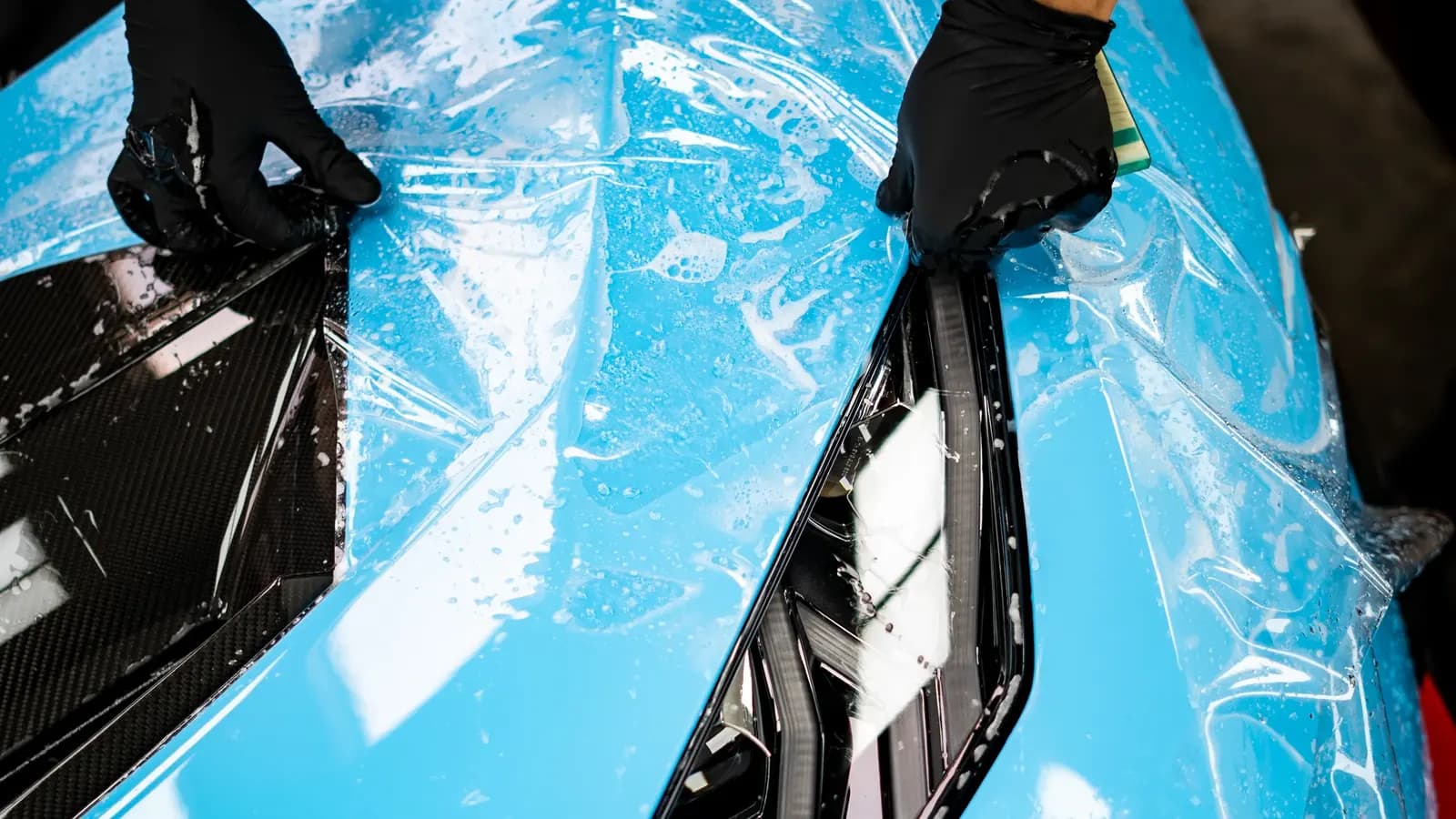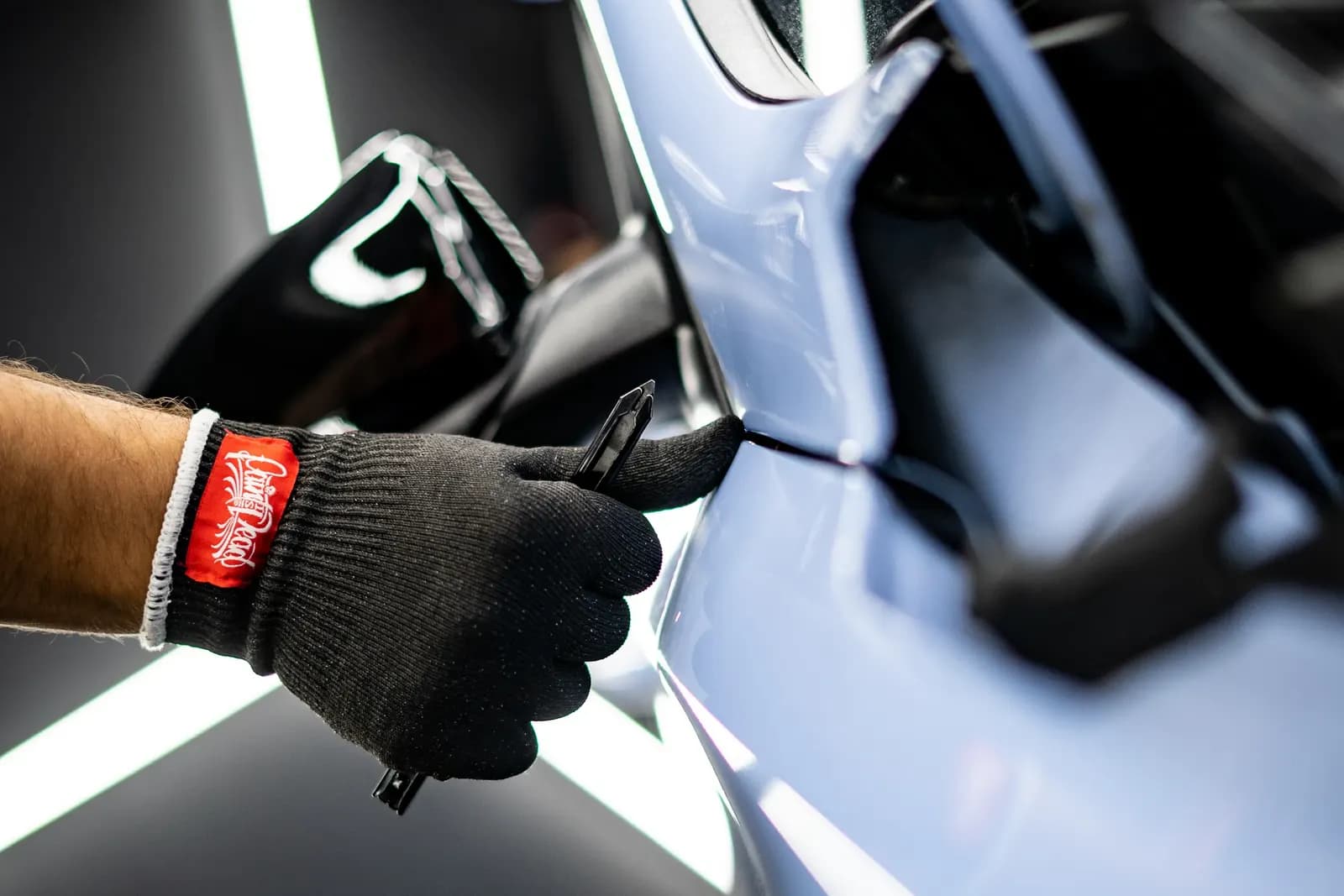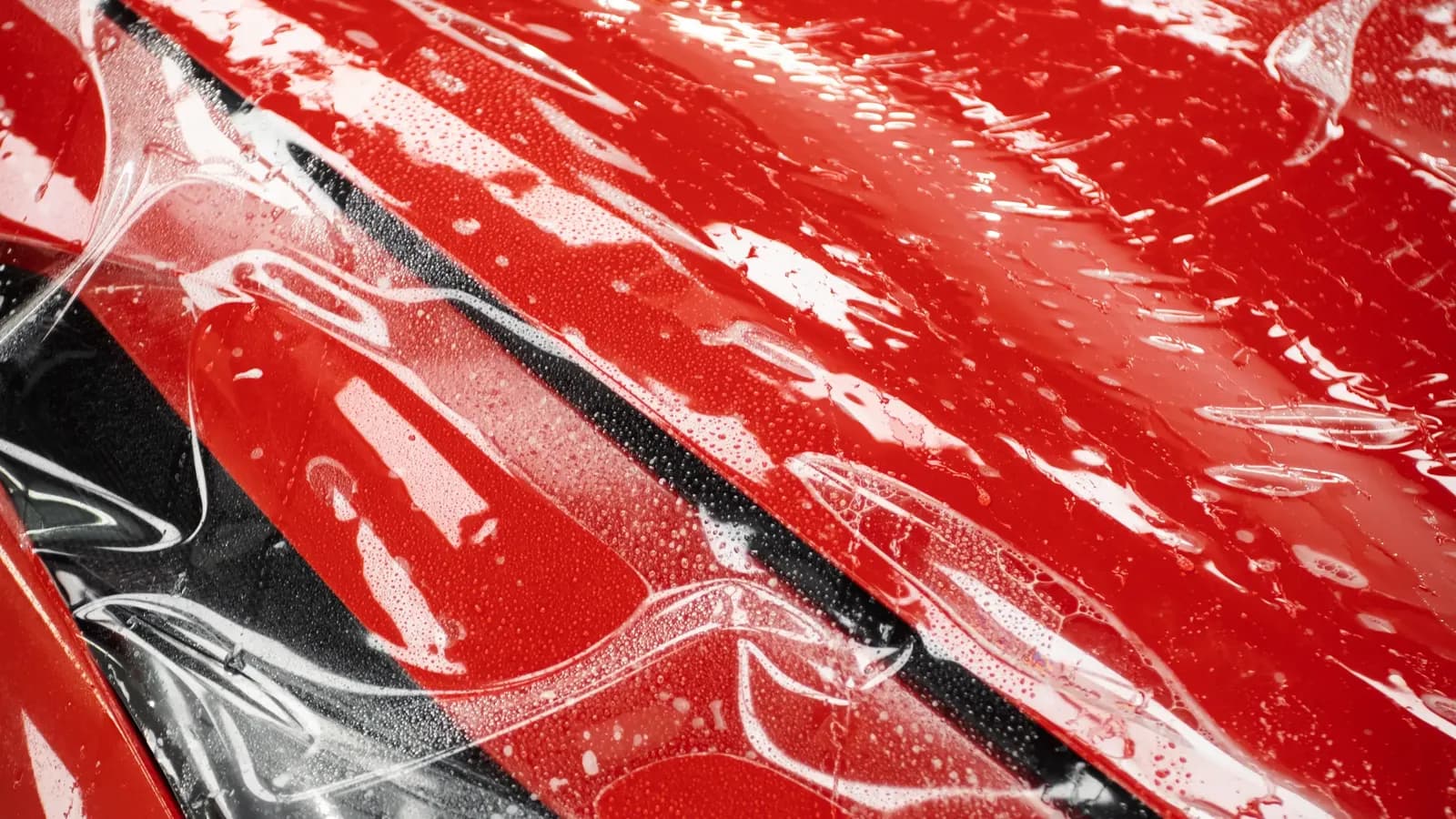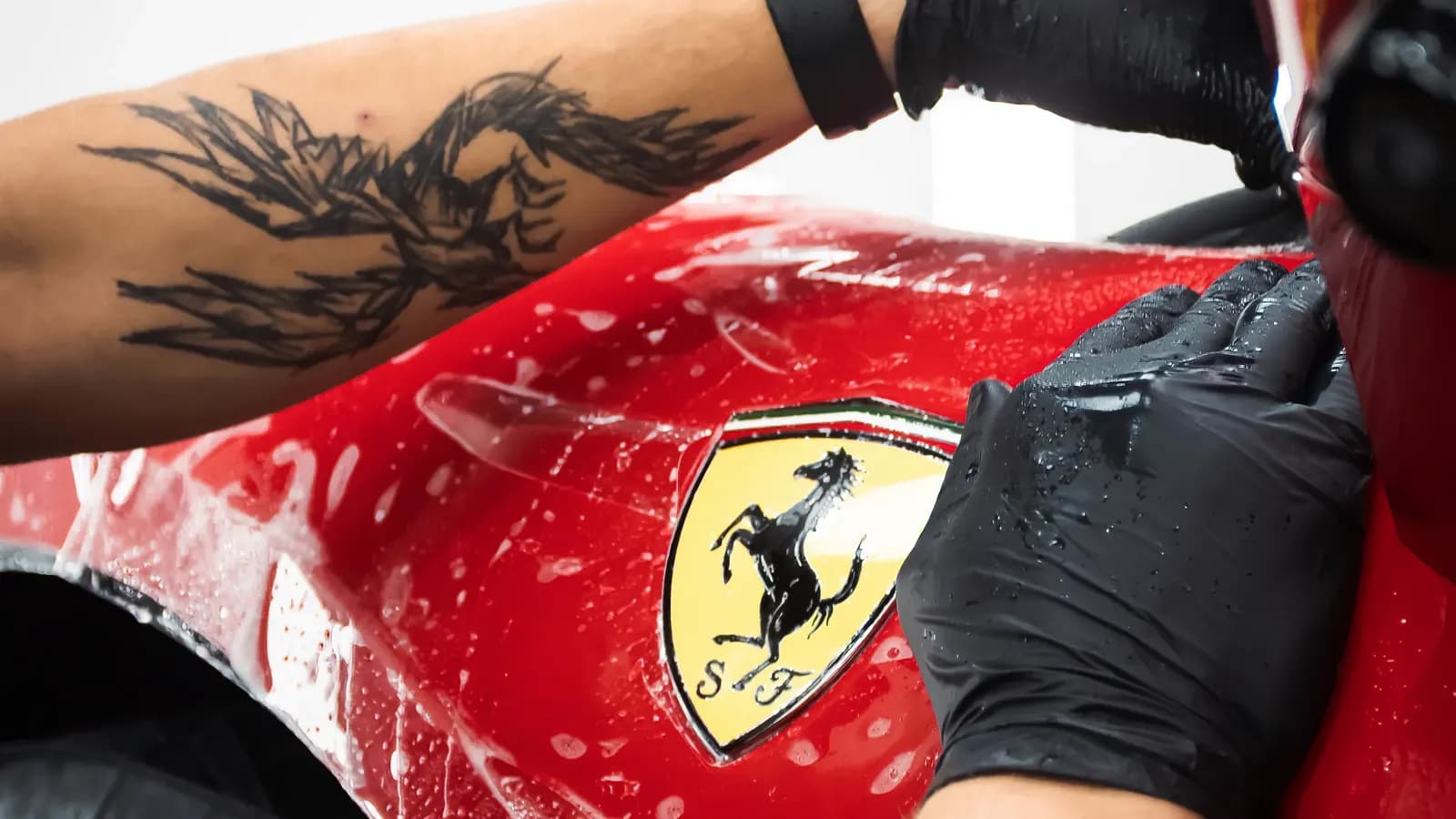
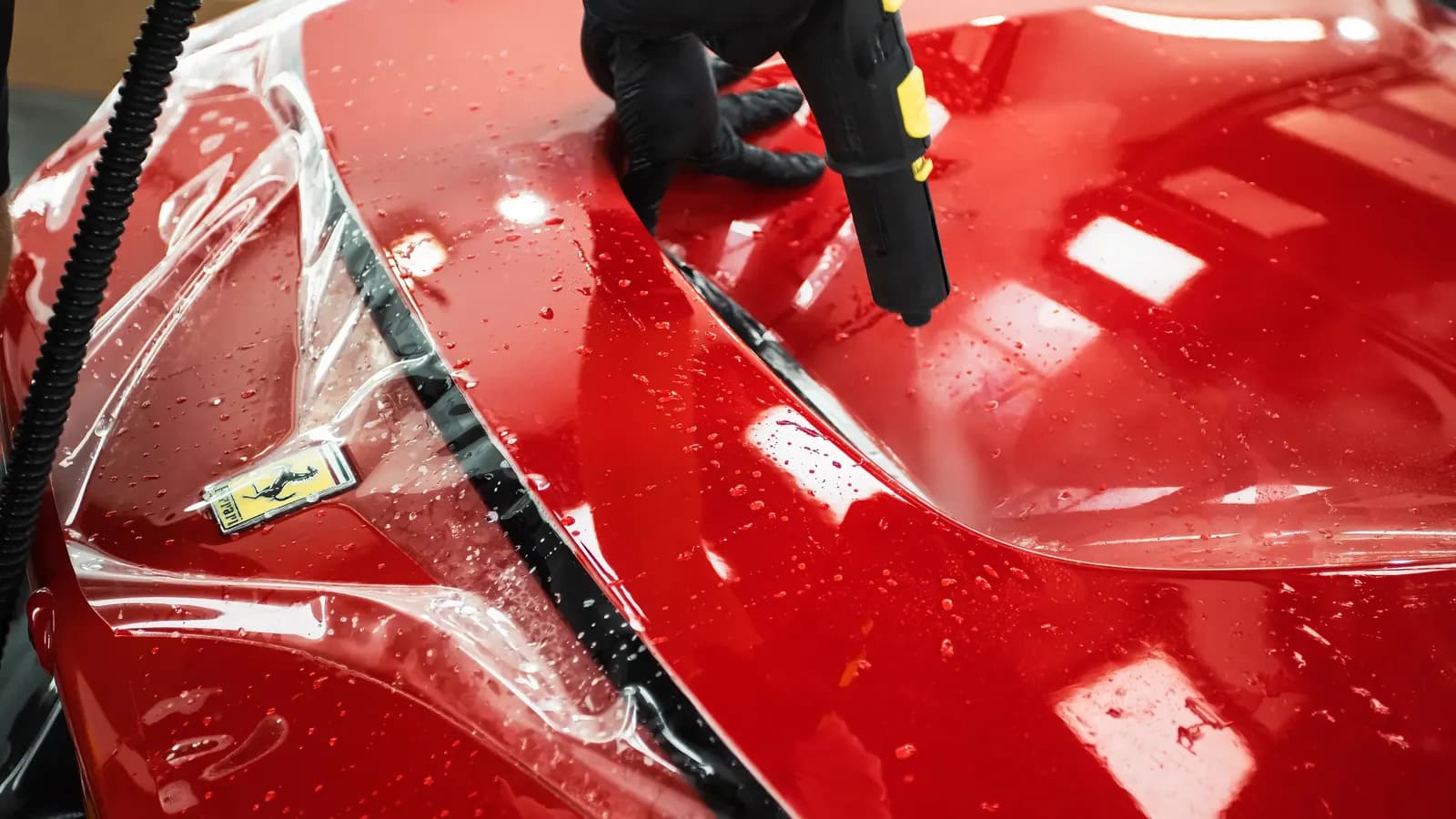
Stand by the car so the sun hits the bonnet from the side. Small light dots show up on the front edge and the bumper: spots where a stone chip from the road knocked out a bit of paint. There's often a dull streak by the door handle from fingernails and keys, and a scuffed patch on the sill from shoes. From a distance the car looks fine. Up close, you can see where it's been.
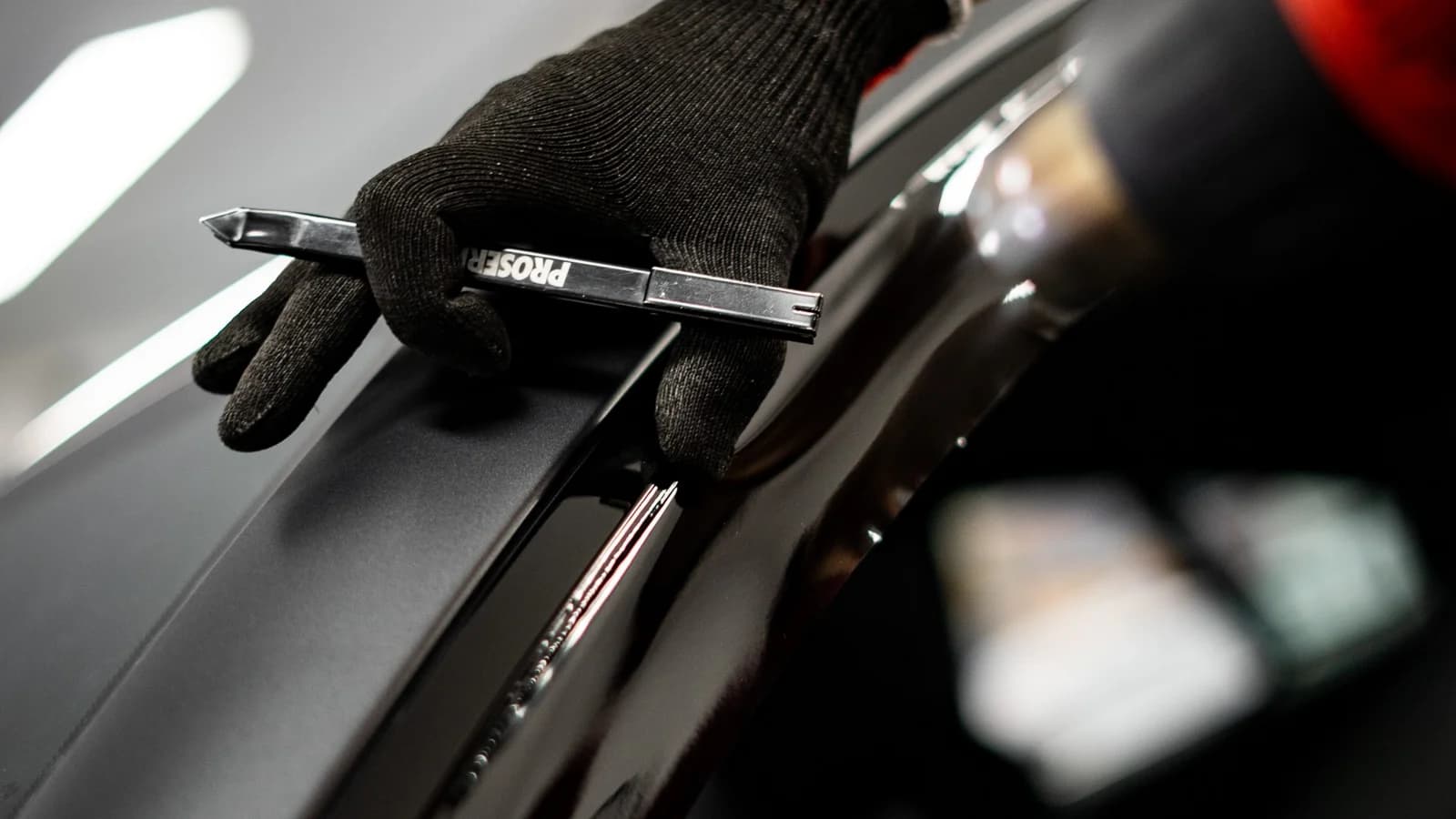
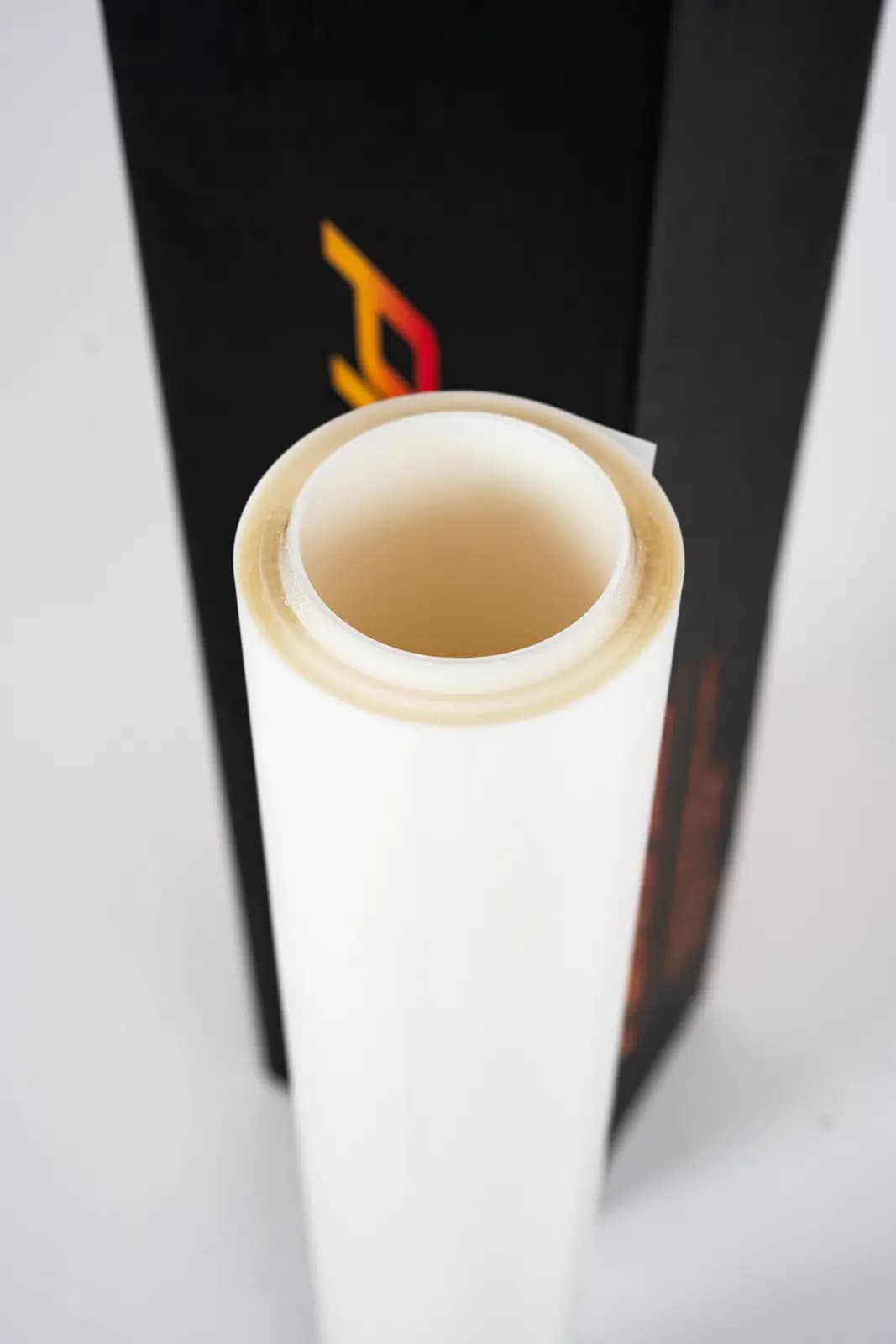
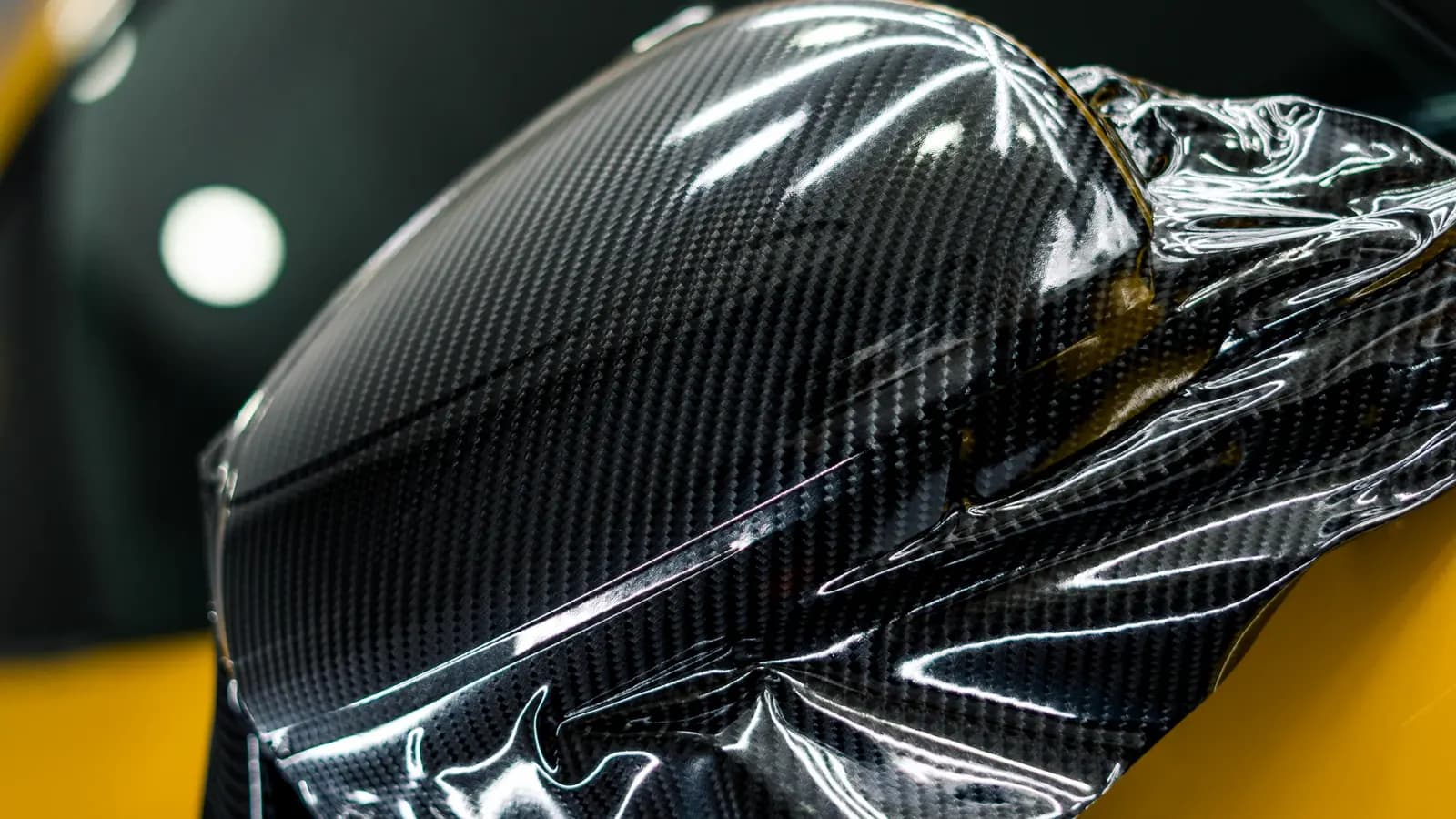
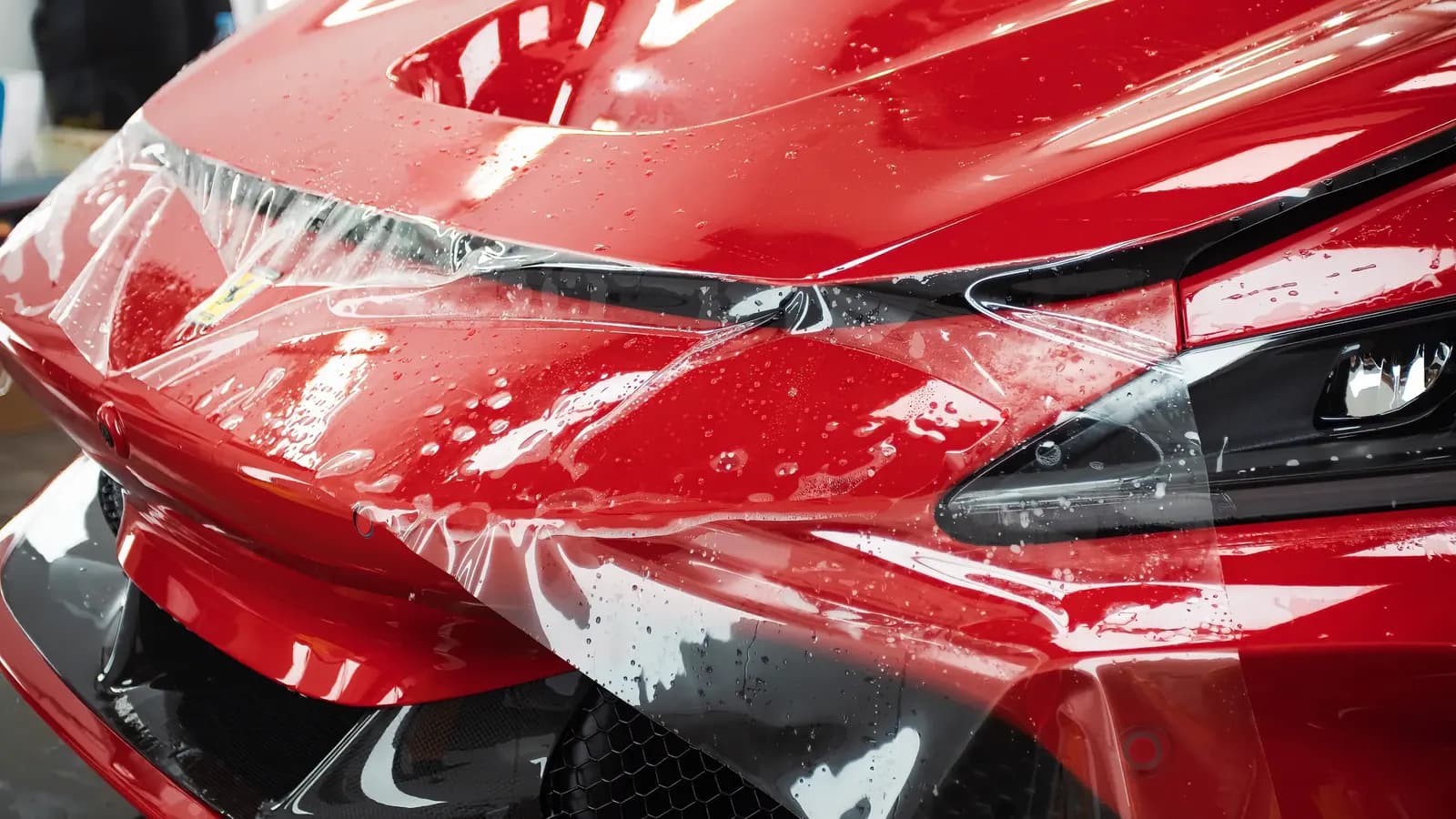
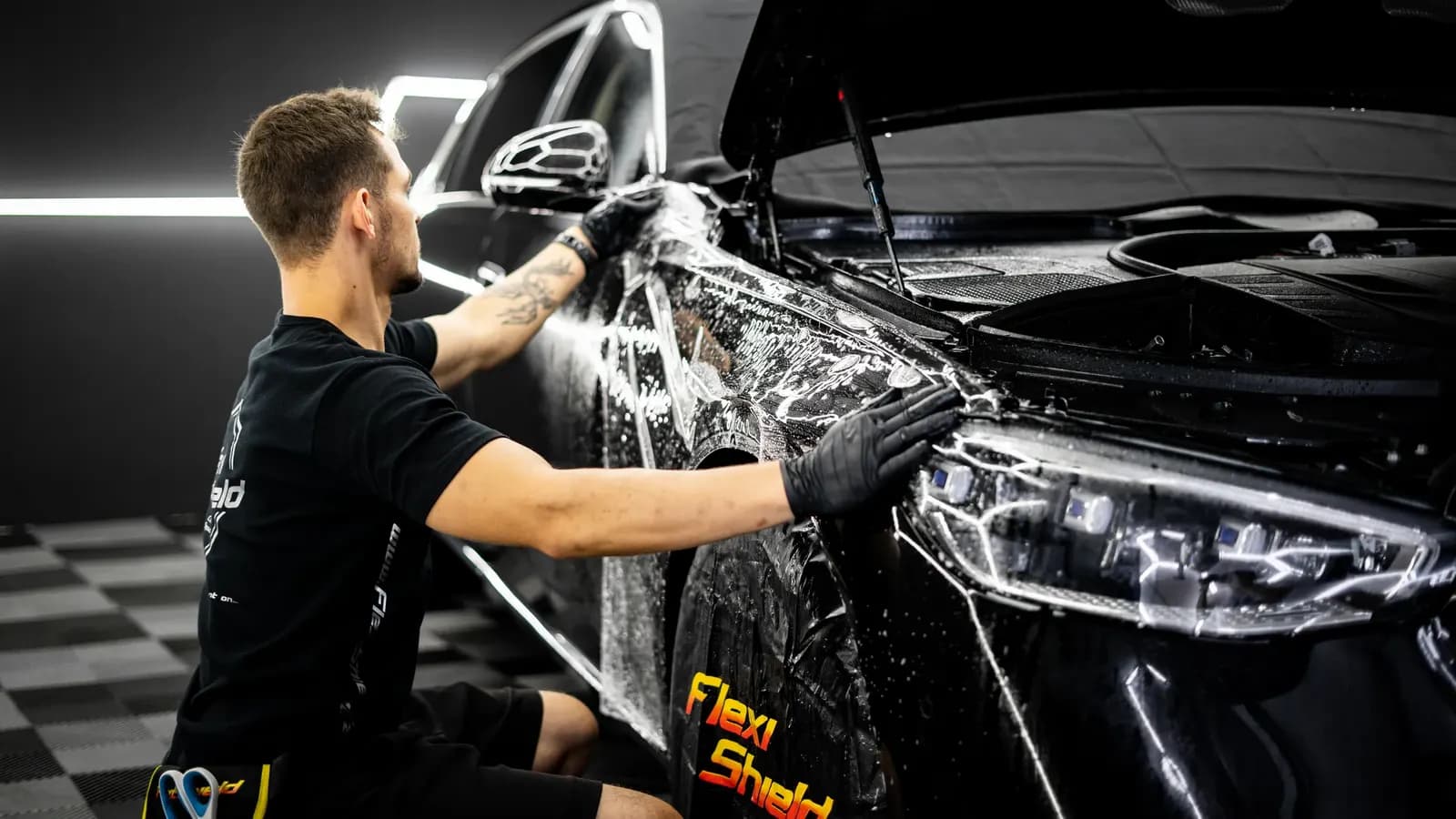
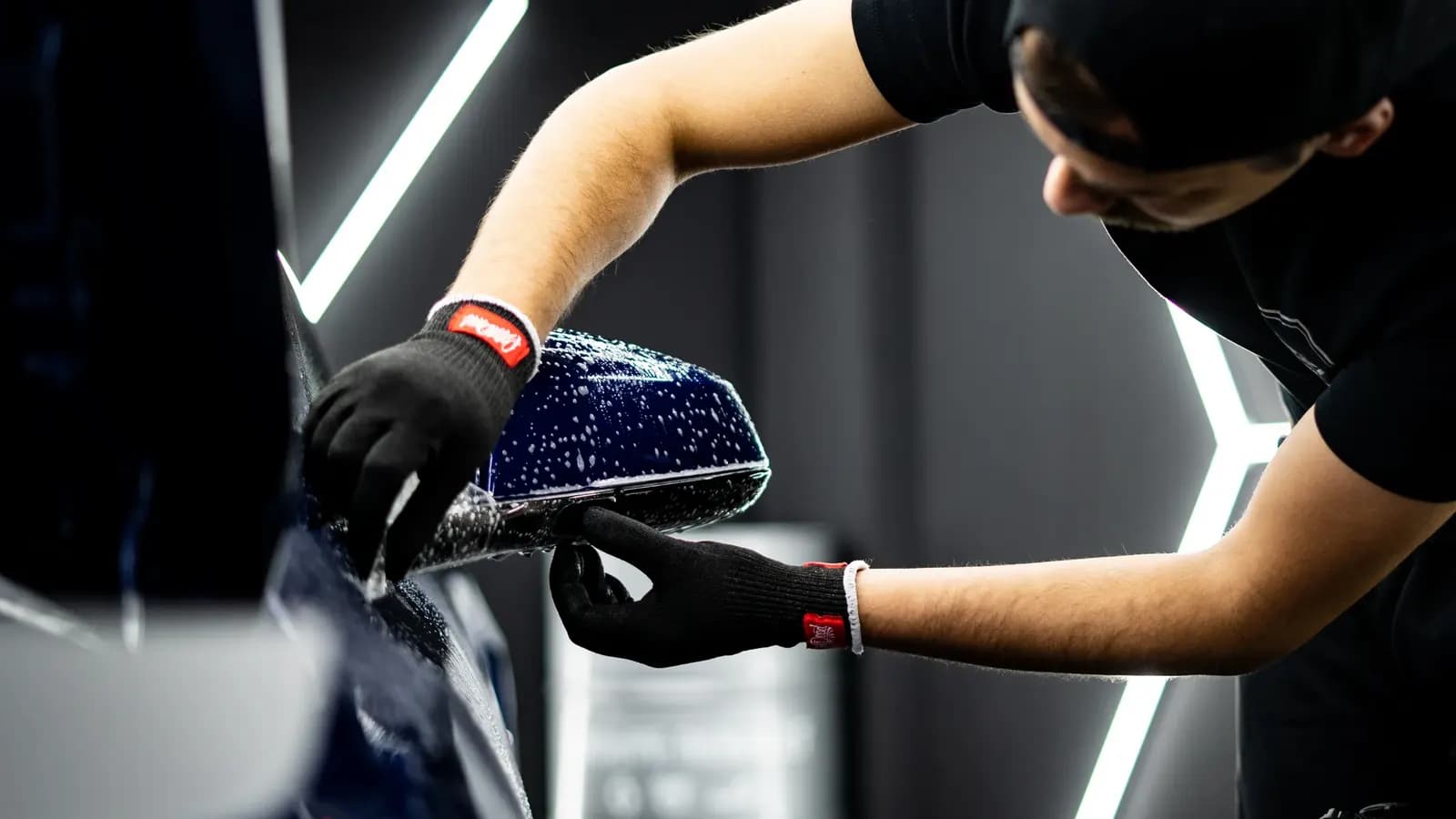
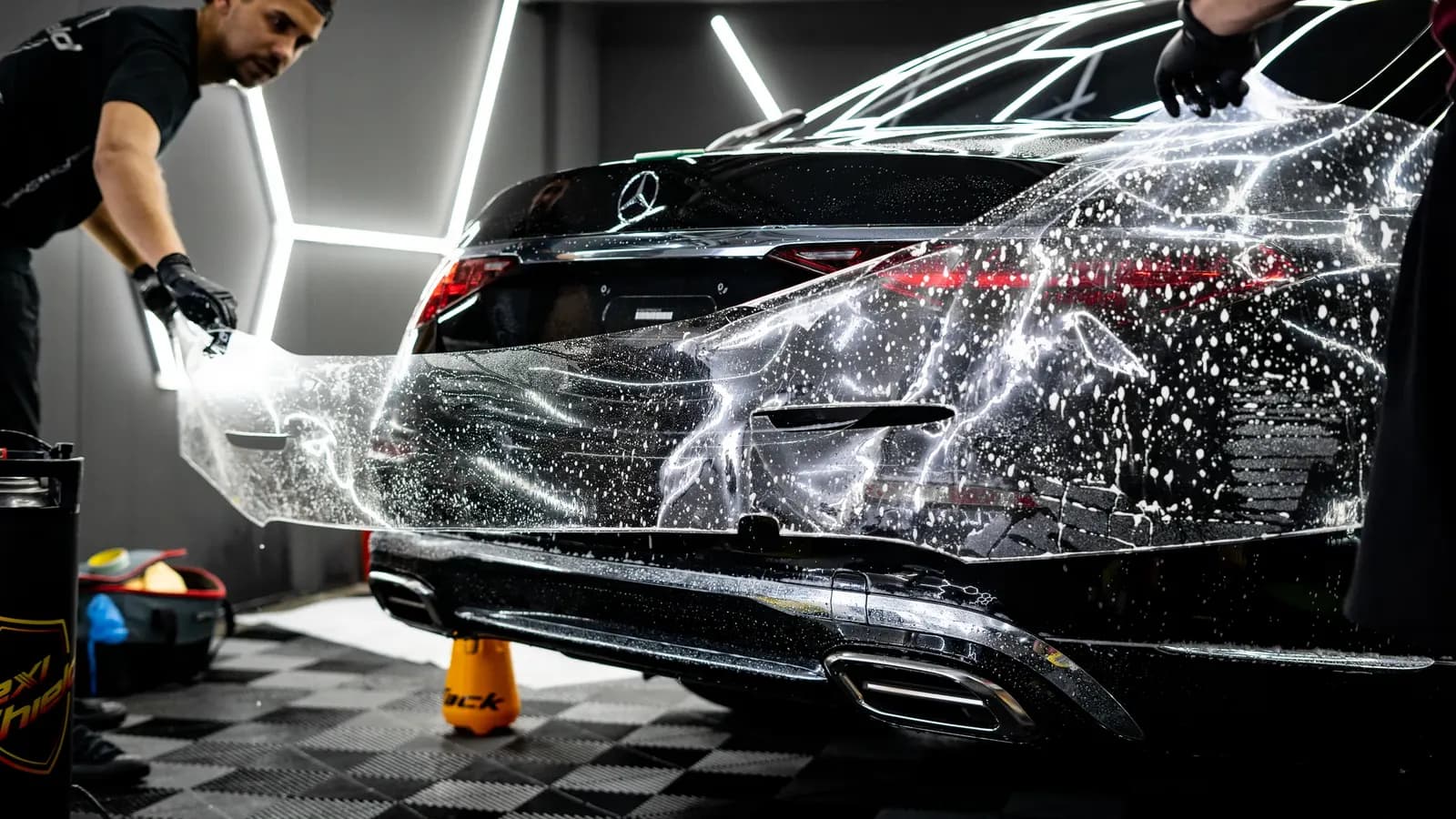
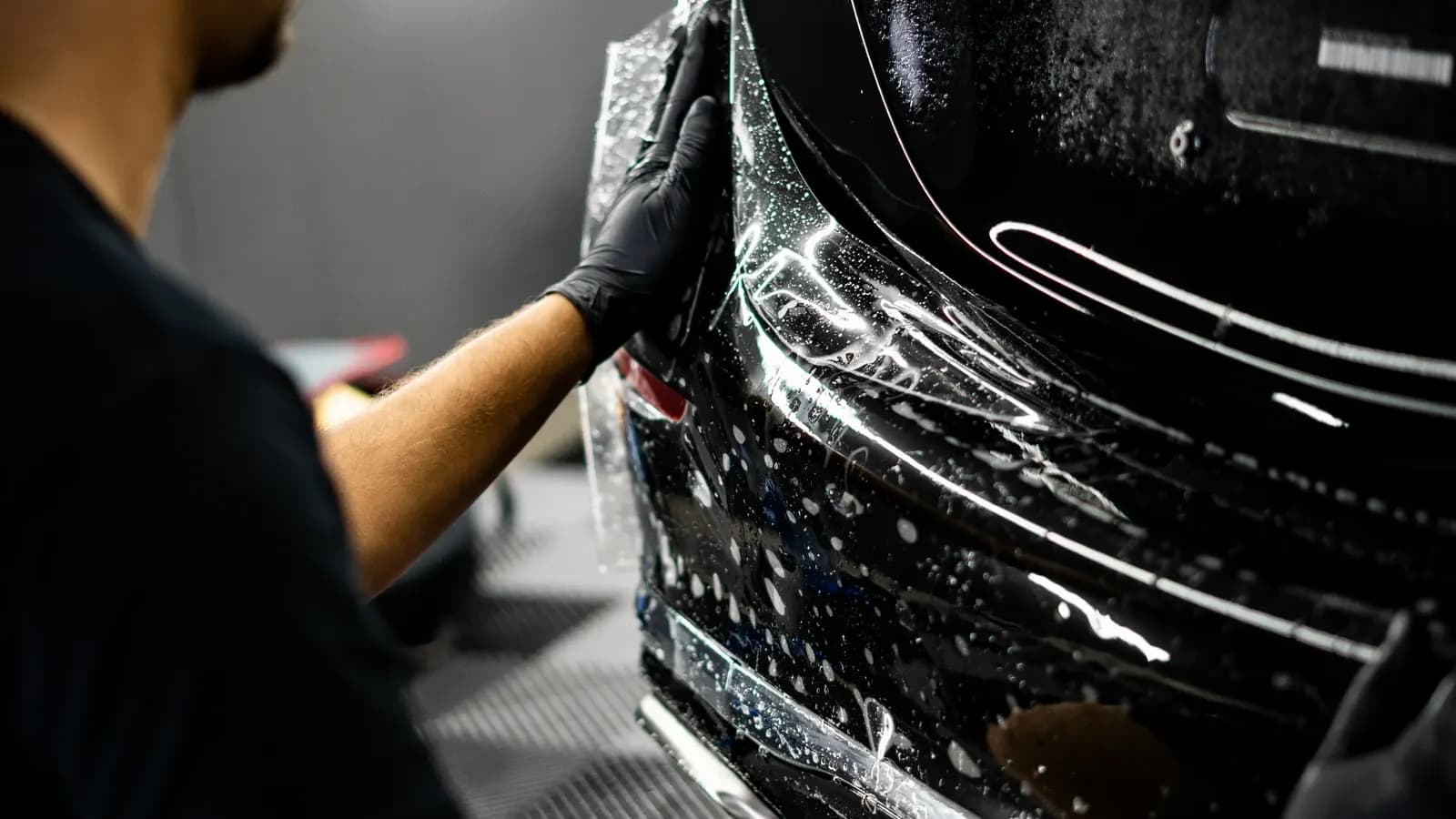
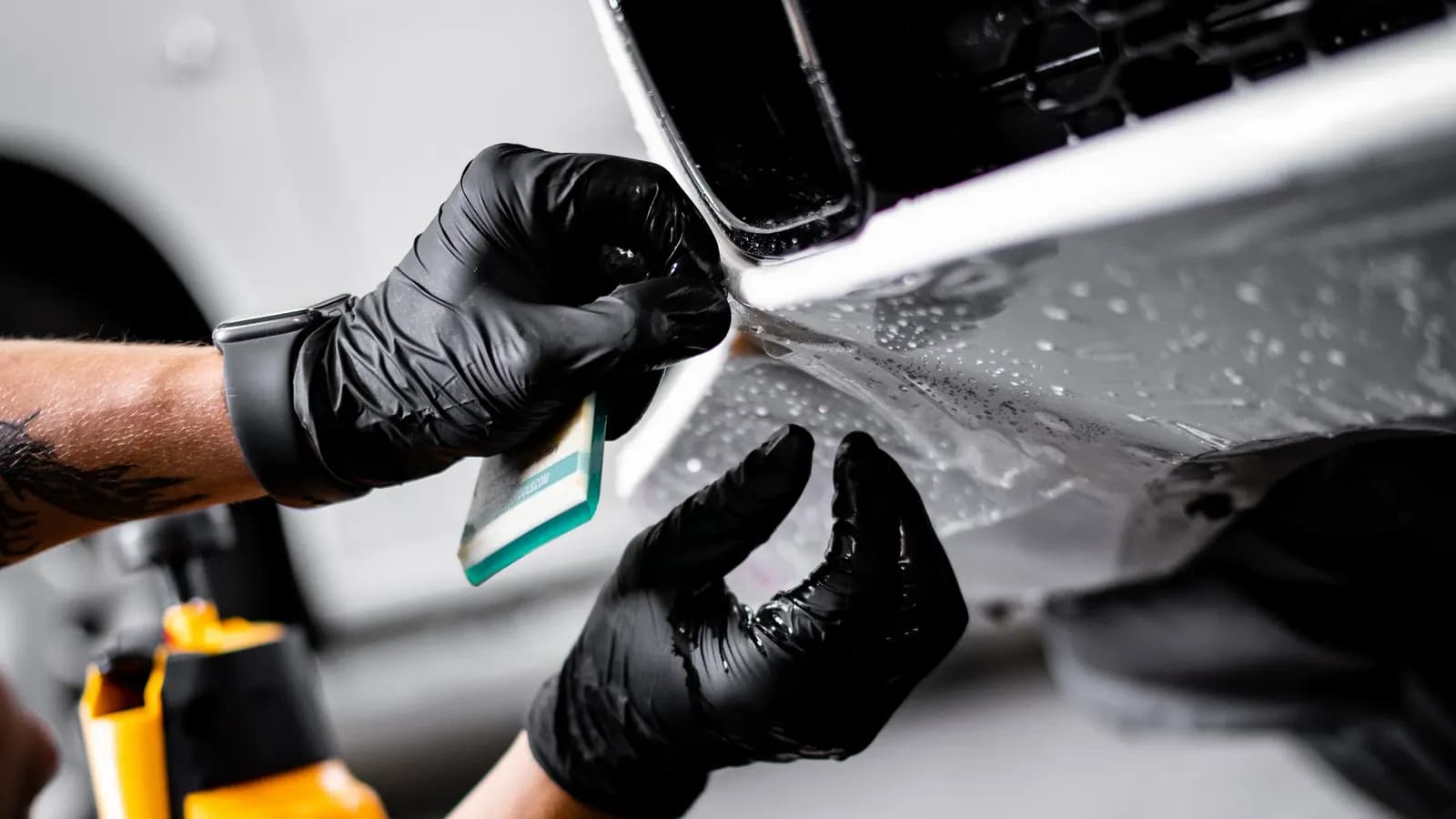
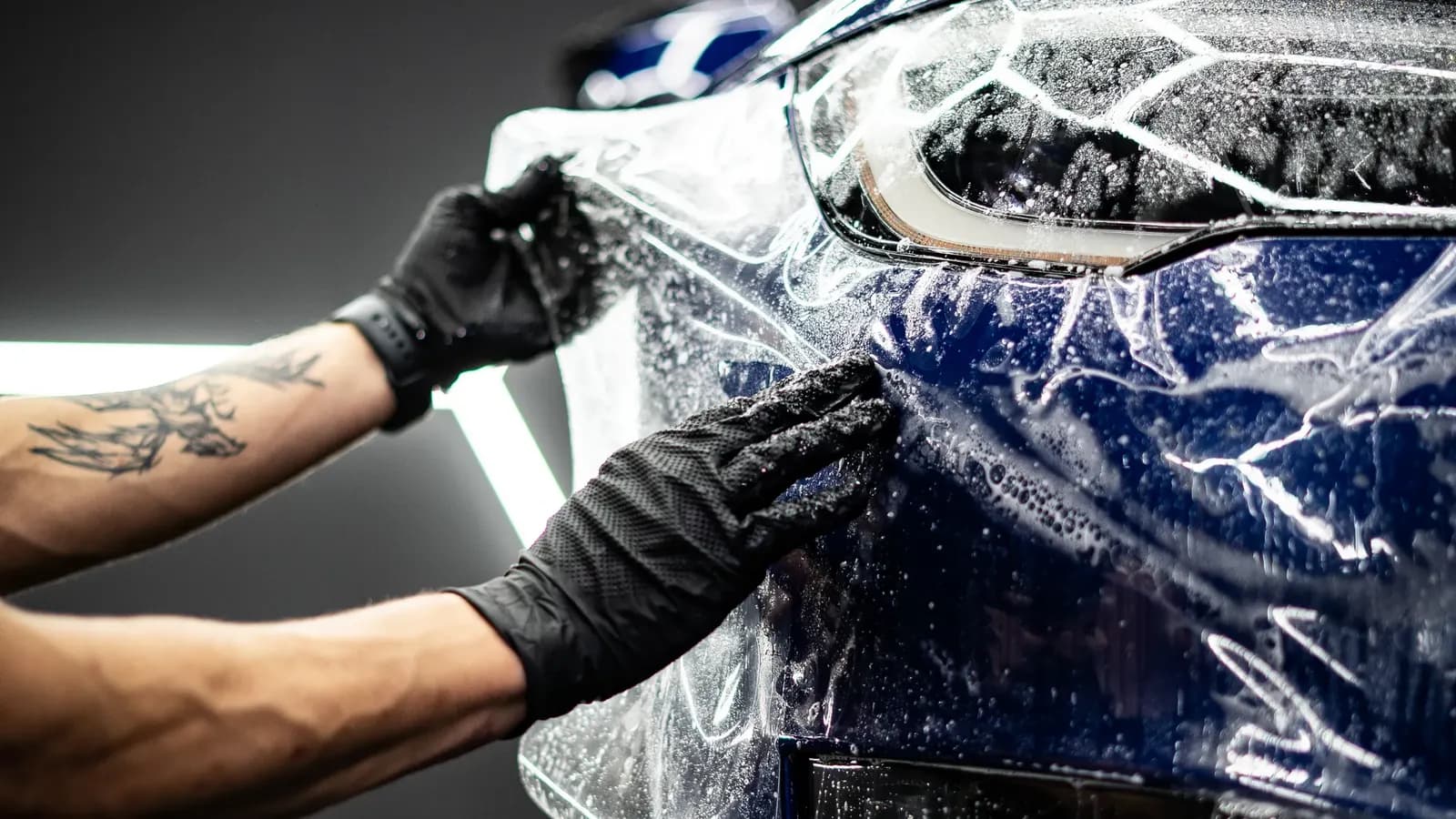
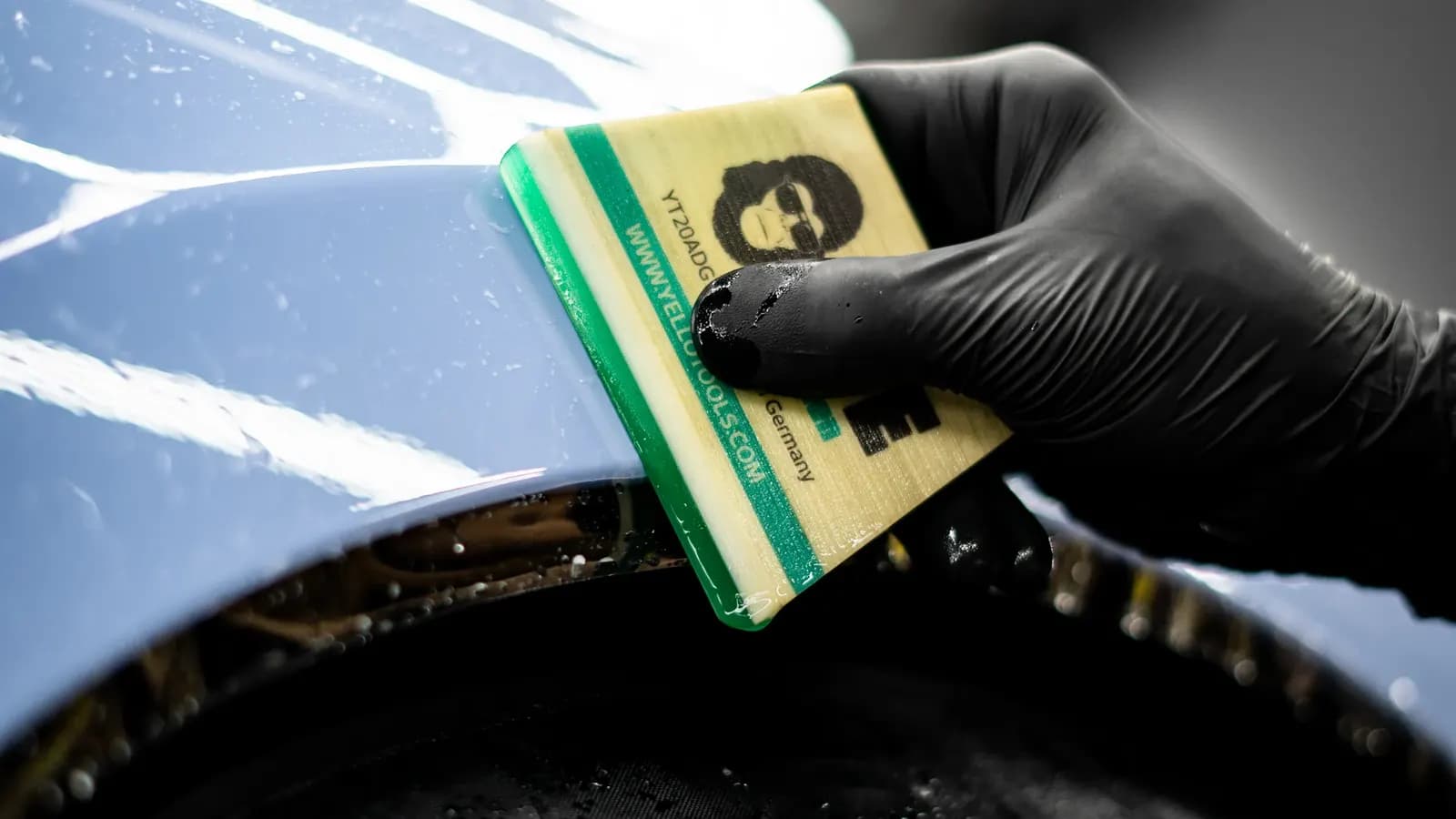
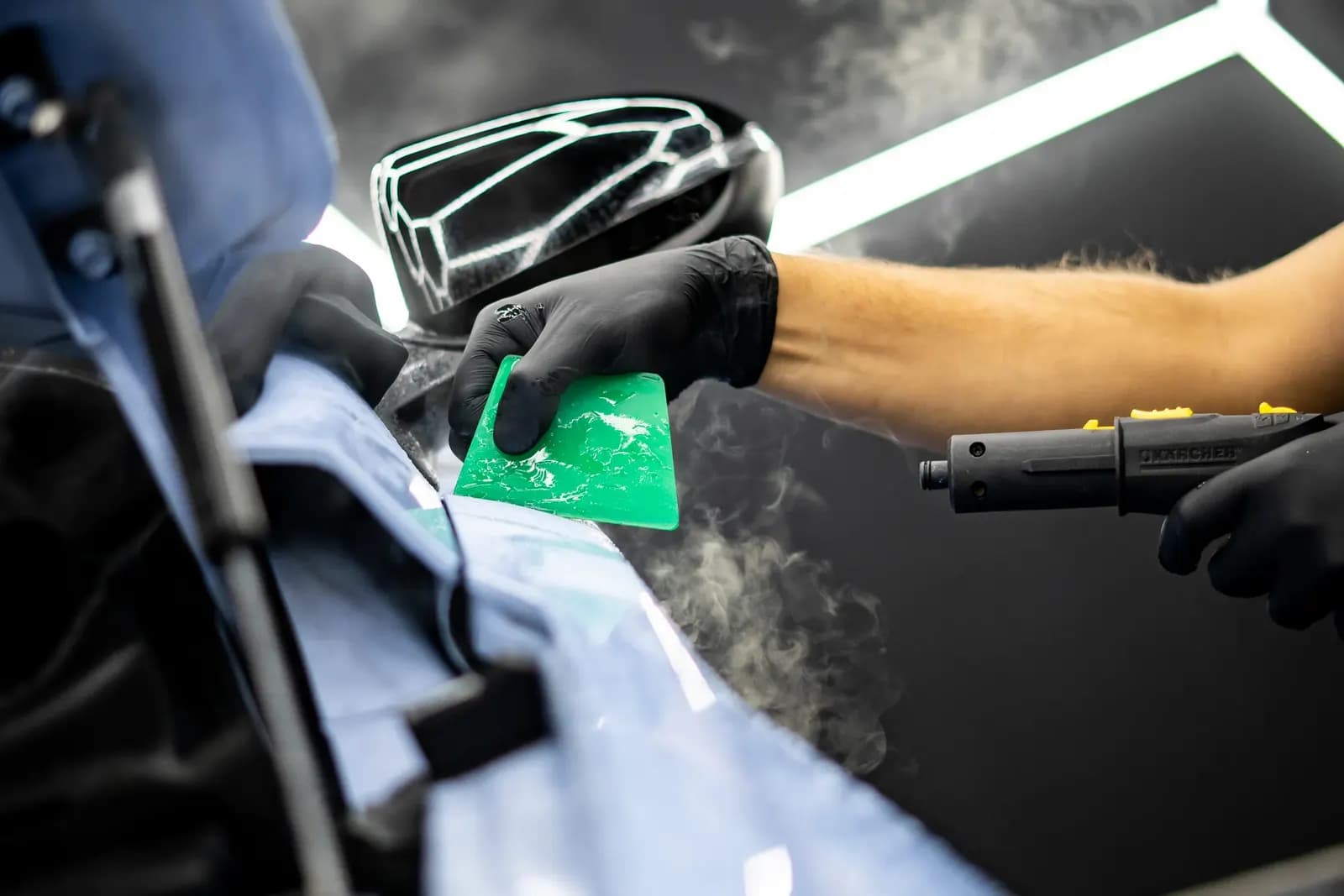
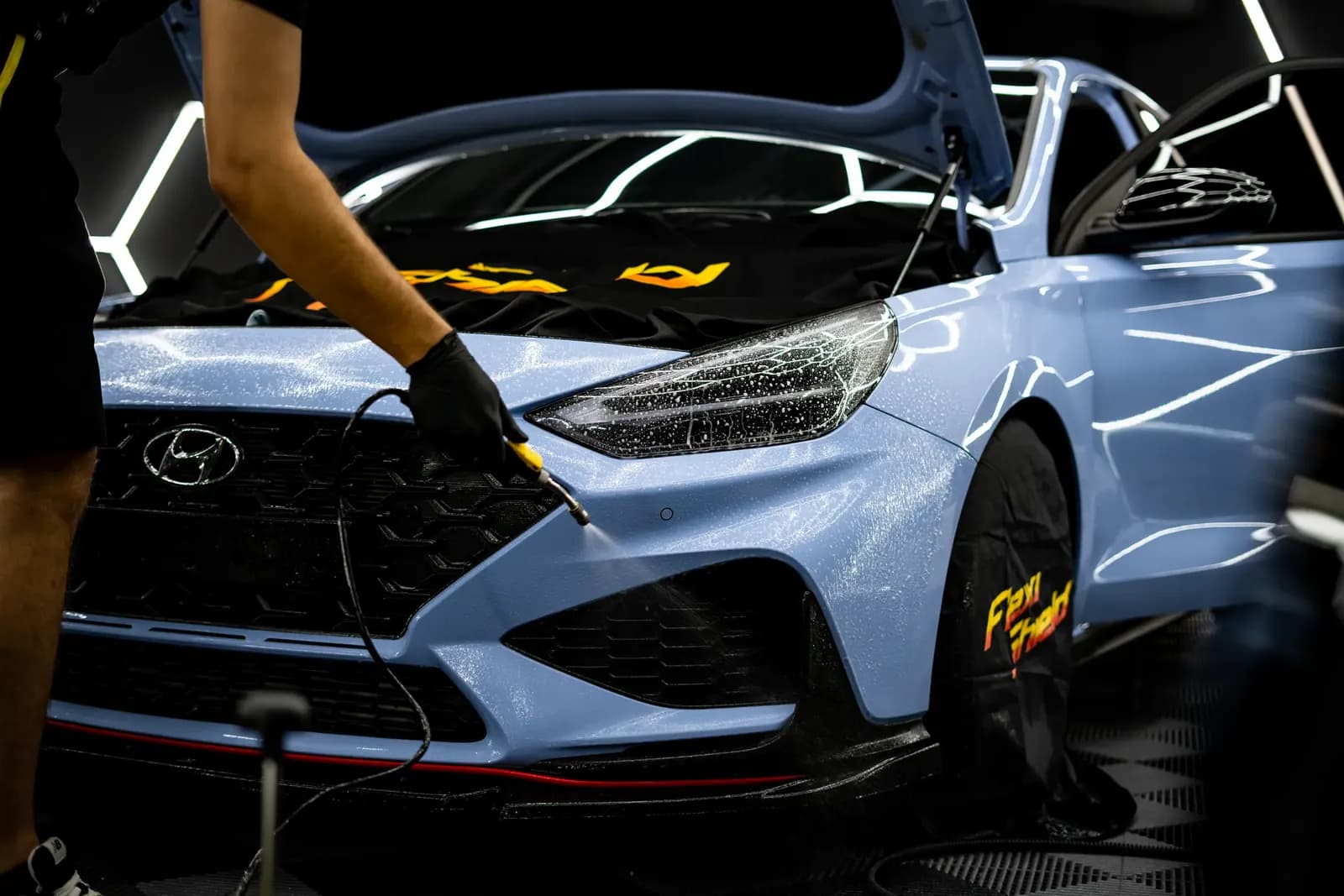
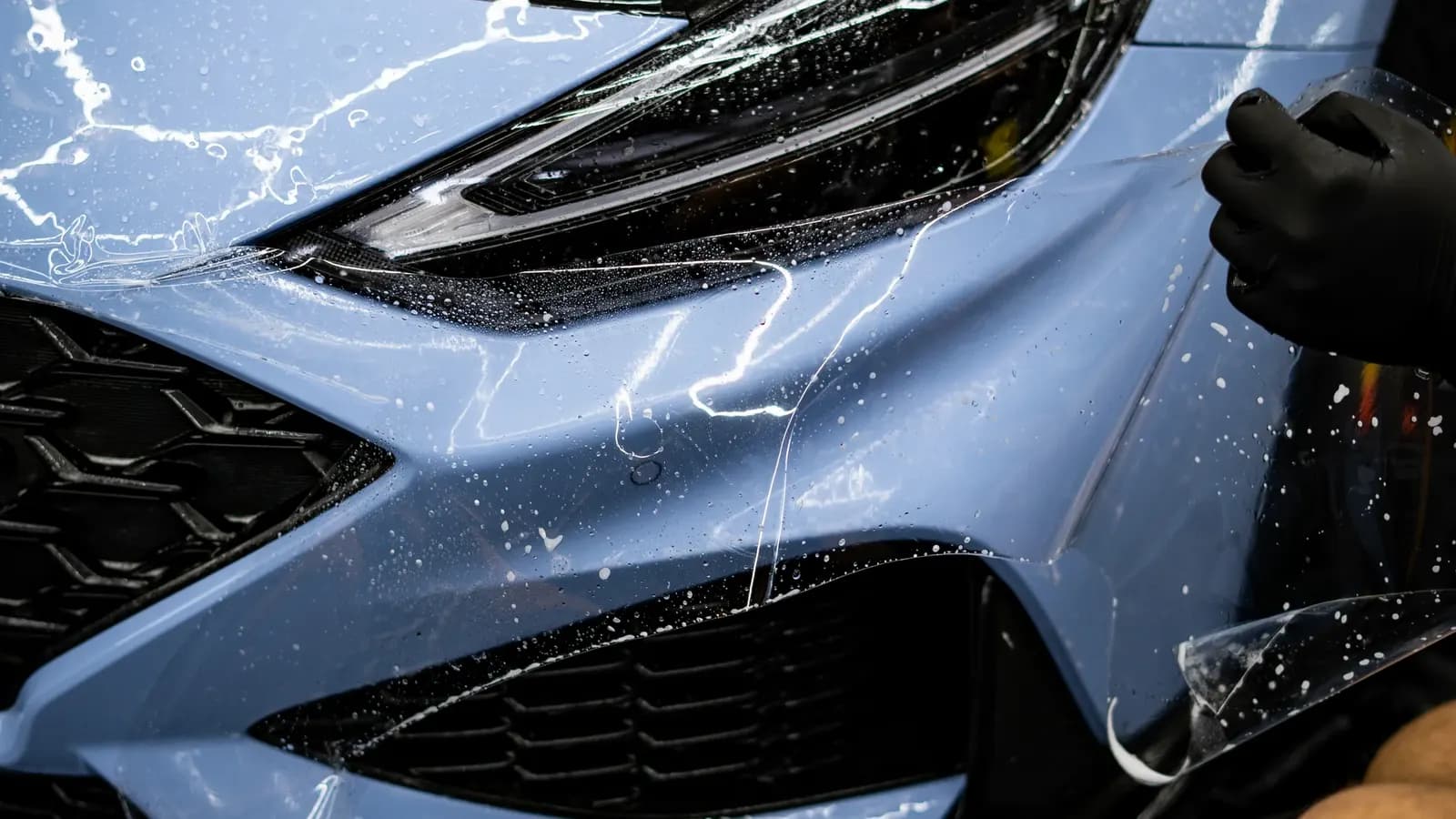
PPF (short for paint protection film) is a transparent film we apply directly onto the paint. A stone chip, a scuff, or a bag resting against the boot edge then hits the film, not the paint underneath. We can apply it to a single spot, the front of the car, or the whole car.
Is it just one spot bothering you — the sills, the boot edge, the headlights, or the pillars? Or do you want to add a part to film your car already has from us? Then the single-part film page is all you need.
What the film does and doesn't do
From the moment the film is on the car, it takes the everyday wear. The paint underneath stays exactly as it was when the film went on.
The same goes the other way: the film doesn't repair anything. Swirl marks, scratches or dull colour that are already on the paint stay underneath it, kept exactly as they are.
The film isn't completely invisible. It has thickness. You won't notice it across the surface of a part, but up close, its edge is where you can tell it ends. Ask us in advance where the edges will run on your car.
The article What PPF Film Actually Does – and Doesn't goes into more detail.
A bonnet that's already been polished
Swirl marks and light scratches can be polished out. But polishing is fine abrasion: a scratch disappears because the paint around it gets thinner. There's a finite amount of paint on a car, and every correction takes a bit of it away.
Film doesn't take anything away from the paint. Whatever would otherwise scuff into the paint scuffs into the film instead. That's why it makes sense even on a car that's already been on the road for a few years.
For a car like that, it's just a matter of order: the paint is corrected first with Paint Correction, and only then does the film go on. Correction gives the paint a clean surface, and the film keeps it that way. We add whatever paint correction the paint needs based on its actual condition, determined at an inspection. We prepare a new car before the film as part of Detailing.
Paint Diagnostics will show the condition of your car's paint and what preparation it needs. If it stays at just diagnostics, you pay for that. If a job follows on from it, we deduct the diagnostics fee from the job. The article How Much Paint Is on a Car explains why the amount of paint matters so much.
How much of the car to protect
The scope depends on where the car takes the most punishment. Drive a lot on the motorway, and you take stone chips from the front. Park on the street and load up the car often, and it's the sides, sills and edges that get scuffed instead.
- A single spot that takes scuffing: sills, the boot edge, headlights, pillars, or adding a part to an earlier job. That's what the single-part film page is for.
- Where stone chips fly: the headlights and the front of the bonnet — the first things to take chips thrown up by the cars ahead of you.
- Front of the car: film across the whole front of the car, usually up to the A-pillar — the pillar next to the windscreen. Paint correction is priced separately, based on the paint's actual condition at inspection. For a car that covers a lot of motorway miles.
- Whole car: every part of the car that can be filmed, in gloss or matte finish. Paint correction is priced separately, based on the paint's actual condition at inspection.
If you're not sure which scope to choose, tell us where and how you drive, and we'll suggest one.
Warranty and film thickness: by wear and by years
Scope tells you where the film goes. The manufacturer's warranty length and the film thickness tell you which film it'll be. The base is a FlexiShield film with an 8-year manufacturer's warranty and 191 µm thickness; a thicker film with a longer manufacturer's warranty (203 µm and 10 years, or 216 µm and 12 years), a matte finish and a FEYNLAB film with ceramic protection all cost extra. An overview of the films is in the article Which PPF films we fit.
We recommend the warranty and thickness based on two questions.
How hard will the car work? The thicker the film, the tougher and more resistant it is: harder to tear, puncture or scratch through. If the car often drives on the motorway, on gravel or off paved roads, or gets loaded up a lot, it's the thickness of the film that decides how well the paint is protected, not how long the warranty runs. What that means for a car that mostly runs motorways is something we go into in a separate article.
How long will you keep the car? If you'll sell it in three or four years, you won't get the use out of the longest warranty yourself. If you plan to keep driving it for a long time, a warranty that covers that whole stretch makes sense.
In the quote, you'll see which warranty and thickness we recommend for your car.
Ceramic protection can also be applied over the film. The Combined Protection page describes how the protections stack together.
What you're paying for
The quote covers two things: the material and the work on your car.
- The film, with the manufacturer's warranty and thickness recommended for how hard the car will work and how long you'll keep it. How much film is used depends on the scope and the size of the car: a big car needs more material than a small one. A film with ceramic protection costs more, and matte finish costs more too, because matte film is harder to manufacture and to apply.
- The installation. Our film is fitted by Lukáš Vyskočil and Sebastian Vyskočil. SEVEN Works is a certified FlexiShield studio and installer; the certification is issued by the film's manufacturer abroad.
- A warranty on the work from us, and the manufacturer's warranty on the material, plus warranty checks.
Paint correction — single-stage and multi-stage polishing alike — is priced separately based on the paint's actual condition, determined at an inspection or paint diagnostics; the same applies to repairing paint damage, such as stone chip pockmarks or spots touched up with a paint pen.
We'll send you the exact amount for your car and the scope you choose.
If something goes wrong
Two warranties apply to the film, and each one comes from a different party:
- On the workmanship, we give a two-year warranty. It comes from us, the studio that fitted the film.
- On the material, for clear FlexiShield film the manufacturer's warranty follows the length you choose: 8, 10 or 12 years; for the matte FlexiShield finish it is 7 years; for FEYNLAB film, the manufacturer's warranty is 10 years.
In its care instructions, FlexiShield, the manufacturer, states that a ceramic protection made for PPF should go on the film after installation and be renewed every 6 months; we apply FEYNLAB ceramic protection on the film, see Ceramic Surface Protection.
For the first 7 days, don't wash the car, don't use a pressure washer on the film, and don't wipe the film with a towel, especially the edges; for the first 3 days, don't drive faster than 80 km/h. Residual water under the film is normal and disappears on its own within 15 to 30 days. Don't deal with a lifted edge or a bubble yourself – bring the car to us.
We carry out the warranty checks ourselves. If you notice anything about the film that doesn't seem right, let us know and we'll take a look. What's normal in the first few days after installation is covered in the article on bubbles under fresh PPF film. You'll find how to wash a car with film so it lasts in the article A Car with PPF Film: How to Wash It. The manufacturer's warranty covers only manufacturing defects in the film: it replaces the faulty film, not the labour involved, and a claim goes through us first, the studio that fitted the film.
What a PPF quote should include
For PPF quotes to be comparable, each one should state:
- The film: brand, film thickness and the warranty the manufacturer gives on it.
- The parts by name: headlights, mirrors, the whole bonnet or just its front section, wings, pillars. For matte finishes, also the parts that stay in gloss film.
- Paint preparation: what's done to the paint before installation and whether it's included in the price.
- The workmanship warranty: how long it lasts and who gives it.
- Warranty checks: whether they're included.
You can attach another quote to your enquiry, or call us on +420 739 374 074.
How it works
- You tell us what car you have, how and where you drive it, how long you plan to keep it, and what's bothering you about it.
- Paint Diagnostics shows what preparation the paint needs before the film.
- We send a quote with the scope and the recommended warranty and film thickness. If it works for you, we confirm a slot in the workshop.
- We prepare the paint and fit the film.
Request PPF film
You don't need to know the scope, warranty or film thickness you want. Just tell us what car you have, how old it is, where and how often you drive, what you carry in it, and how long you want to keep it. If you know the paint has been polished or repainted at some point, mention that too. Prefer to call? We're on +420 739 374 074.