
Film on the paint
Bubble under PPF film: when to wait, when to call
3 minEstimated reading time — roughly how many minutes it takes to read at a normal screen pace.
A bubble or milky patch under PPF film a few days after installation isn't always a defect. Here's how to tell a water bubble, which clears up on its own, from an air bubble or lifted edge, which need our help.
On this page
On this page5
A few days after a PPF installation you notice a bubble, or a milky patch, on the bonnet or the bumper. The car has just come back from the studio, and the first thought is usually that something went wrong.
In most cases nothing did. There is still water under fresh film, and it leaves in its own time. You can tell the difference yourself, and a few days are enough: whatever gets smaller day by day will go without anyone touching it. Whatever looks the same as it did at the start – and likewise an edge that lifts only once the frosts come – will not leave on its own, and we put it right at the studio.
While the film is fresh, there is still water underneath
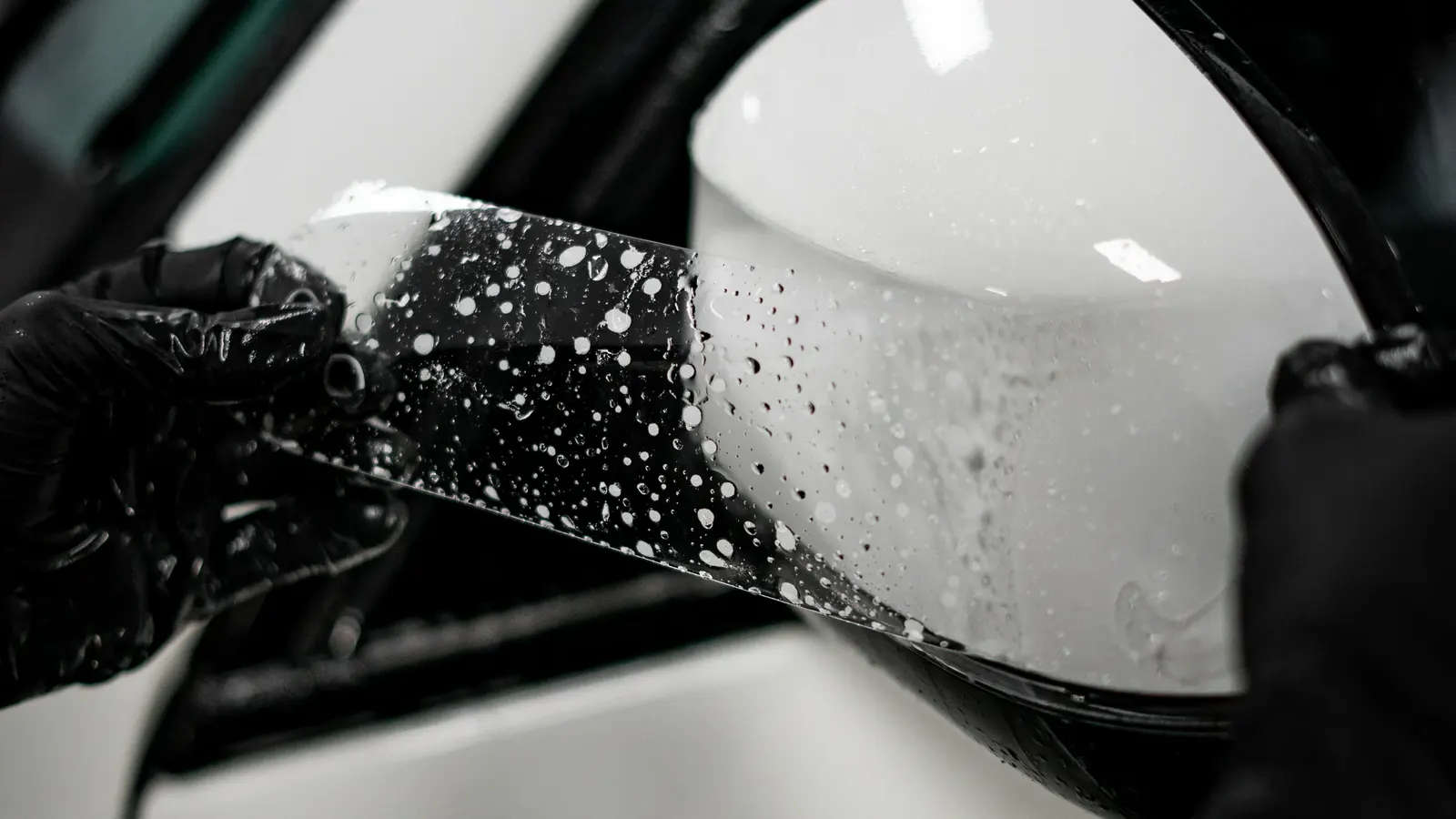
We position the film wet: the installation fluid (slip solution) lets it slide across the paint until we have it exactly where it belongs. Most of that fluid is then squeegeed out, but microscopic droplets between the film and the paint always stay behind.
This moisture works its way out on its own, usually over the first weeks. Until then you may see small bubbles or a milky haze, most often on large panels such as the bonnet. This period is called the wet-out phase, and it is neither a fault of the PPF film nor a sign of poor work.
When you cannot tell which one it is
The most reliable test is time. Watch the spot for a few days. Is it getting smaller? Then it is water and it will leave on its own. Does it look the same after a week as it did on day one? Then it is air underneath, and waiting will not help.
You can look at how the two appear side by side in the demo.
Interactive diagnostics
Defect under PPF: fix, wait, or reinstall?
Select the defect type and see the correct solution with a time horizon.
Water bubble under PPF
evaporates in 7–14 daysSlip solution residue between PPF and paint. Water gradually diffuses out through the polymer — the film is permeable to small molecules. Summer: 3–7 days; winter: 10–14 days.
Solution:No intervention. Do NOT press or push — pressure deforms TPU before the water disappears (hard water bubble = permanent deformation). Observe for 14 days.
The demo helps you put a name to what you see on the car. Which of the two it is, though, only those few days will tell reliably – it is not something we close from a single look either, here at the studio.
An edge that lifts once the frosts come
We treat the film edges during installation so that water cannot run underneath. Even so, moisture can find its way under an edge that did not bond quite tightly to the paint, sometimes months later. In frost it freezes and lifts the film at the edge of the panel.
You can recognise it by place and timing: it sits where the film meets the paint, not in the middle of a panel, and it appears with the first frosts. It belongs to the same group as an air bubble – it will not put itself right.
What not to do at home
Do not press a water bubble with a finger or a squeegee, and do not expose it to strong heat, such as sun on a bumper. The adhesive under the film (PSA) cures around the water and the bubble then stays for good.
Do not open an air bubble with a pin or a knife. The film's protective top layer (TRT topcoat) is thinner than a hair; a point tears it and leaves a scratch that shows more than the bubble did.
Do not deal with a lifted edge using glue or a heat gun. Heat alone will not press the edge back down; the paint underneath has to be cleaned first.
What we do when you bring the car in
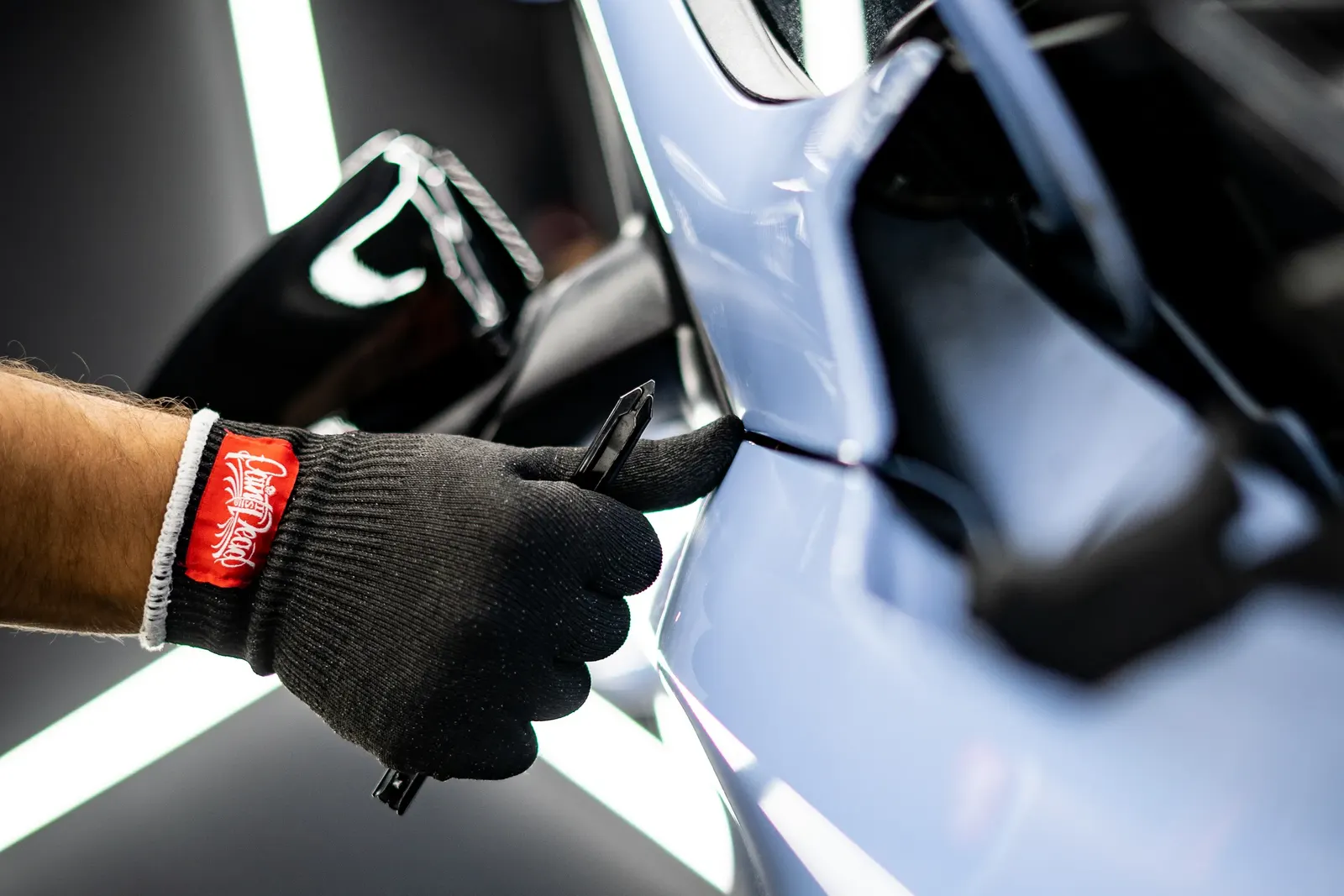
With a smaller air bubble we release the film at that spot, push the air out and lay the film back down. If the bubble sits at the edge of a panel, or the film no longer holds, we re-wrap the whole panel. A lifted edge we warm, clean the paint beneath it and press the film back; if it will not hold there, we replace that piece of film.
Before you bring the car in, photograph the spot close up and again from a step back, and tell us when it appeared. We will assess it from the photos and come back to you with a date.
So whatever you see on the car, a few days of waiting will tell you whether you can leave it be or whether you should get in touch. Send the photos and a description through the form, and note that you already have the film.
Topic: Film on the paint
More in this topic