
Layers and limits
When combining technologies makes sense
2 minEstimated reading time — roughly how many minutes it takes to read at a normal screen pace.
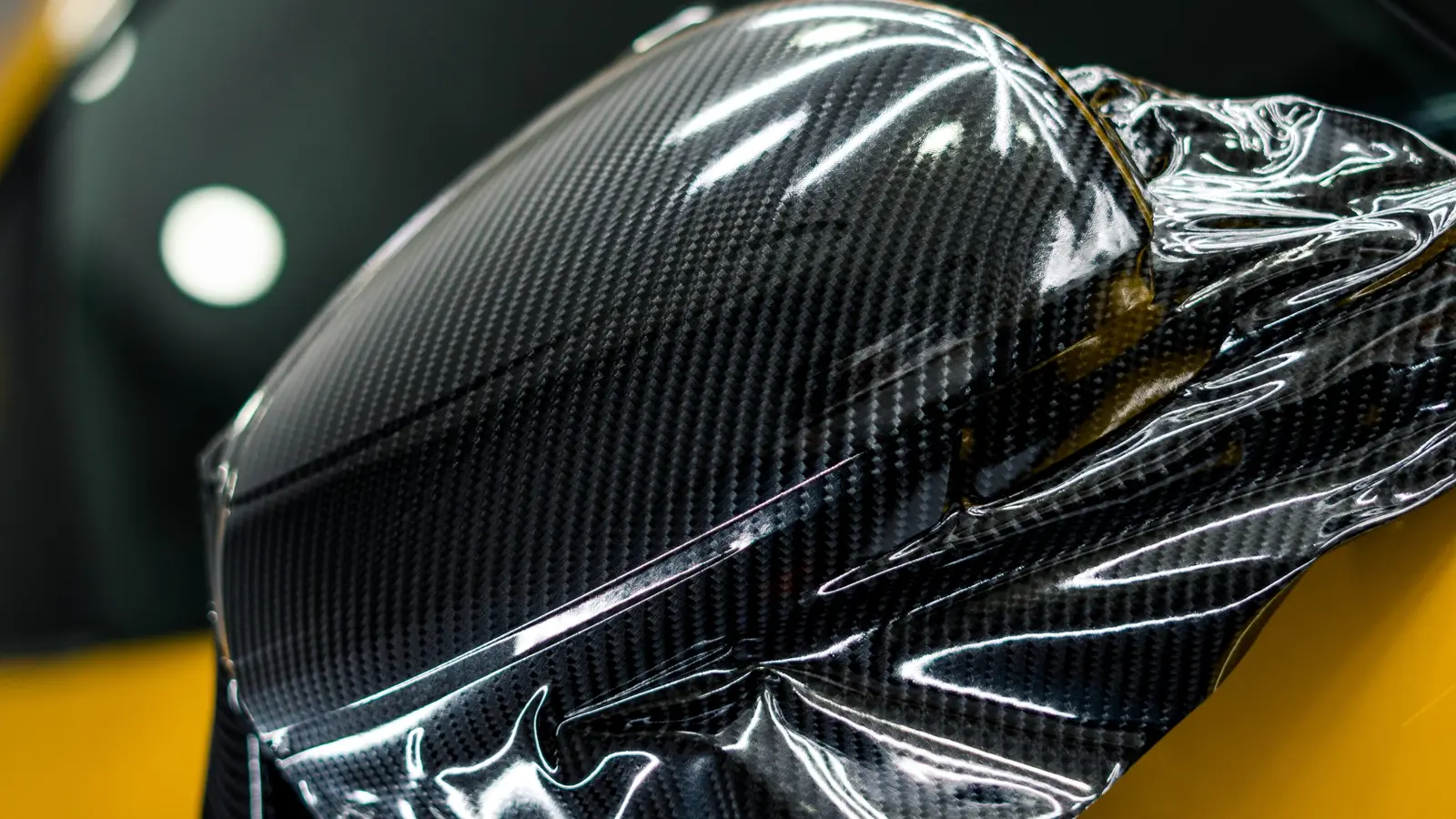
There's film on the bonnet and ceramic coating over it, and after a while the edge of the film lifts — the layer above separates and the surface looks matt there. That's what a combination looks like when two technologies compete with each other. We'll show when layers suit each other, and when we'd recommend just one.
On this page
On this page6
There's PPF on the bonnet — paint protection film laid directly onto the paint — and ceramic coating over it. After a while the edge of the film lifts, dirt collects underneath it, and above the film there's a matt patch that doesn't go away once the car is washed and dried. Neither of those layers is faulty. What's faulty is how they've been divided up across the car.
Two layers don't give you twice the protection. Each one works differently, at a different level and toward a different goal, so combining them doesn't add up the load — it splits it. The moment you expect the same thing from both, neither fixes the other's weakness; the place where the problem shows up simply moves from the paint to the edge of the film. The car is then worse off than if one technology had been left on it alone.
What follows is when a combination makes sense, how to tell that it doesn't on your car, and what we do about it.
When you want film and ceramic at once
The two layers get along when each has its own place and its own job. Film goes where the car takes the hits: the bonnet, the wings, the sills and the door edges. Ceramic goes over the rest of the car and over the film as well — water gathers into beads and runs off, and dirt lets go more easily.
Ceramic sitting on top of the film isn't the problem. The problem starts where one layer is meant to do the other's work: ceramic where the stone chips fly, or film over the whole car.
Film also moves a little in everyday use — it expands in the heat and gives when a door is slammed. That does it no harm, it's made for it, but the layer above has to tolerate it. Hard ceramic cracks exactly where the film flexes most: on edges and along its borders.
How to tell the layers haven't got along
Go along the edges of the film: the lip of the bonnet, around the mirrors and the door handles, the door edges. A lifted strip with dirt held underneath means the edge has stopped holding. A matt patch above the film that doesn't go away after washing and drying is the top layer separating.
Another product won't put that right — one of the layers has to come off. Photograph the spot in daylight and send us the picture; going by the condition of the paint and the film, we'll tell you which one.
When we'll talk you out of a combination
A combination means two installations and stricter maintenance, not twice the certainty. We'll talk you out of it when the paint needs correction first: both layers would preserve it in the state it's in.
And we'll talk you out of it when the car goes regularly through a brush wash: the brushes find every edge, and film adds a few more. For a car like that we'll recommend a single layer, and we'll say which one depending on whether stone chips or washing is the bigger concern for you.
If you only need to deal with one type of load — just appearance and easy maintenance, or just protection of the most exposed areas — standalone ceramic coating or standalone PPF will do. How the two technologies differ and what each manages on its own we go through in What PPF actually does for your paint and How ceramic coating actually works.
The last reason has nothing to do with the car: having both simply "sounds better". All the car gets out of it is one more border that can lift.
Before we touch the layers at all
We start with paint diagnostics: we go over the car panel by panel and find where the real load is — what the sand off the wheels abrades, where the sun beats down. Bring it to us at the studio in Ústí nad Labem.
Out of that comes a proposal for where the film goes, where the ceramic goes and where neither does. Sometimes a single layer comes out of it, and we'll tell you that before anything is ordered.
How a car like that is washed afterwards
What ceramic will take, the edges of the film may not. So we don't bring a pressure washer up close and square on to the edges; the jet goes at an angle and from a distance. A brush wash is out, and the strong bug and tar removers that ceramic shrugs off don't go near the edges: they get under the lip to the adhesive.
When you're deciding whether to have both
One question settles it: on your car, does each layer have its own job, and can the upper one tolerate the lower one moving? If it can, the combination splits the load — the film takes the hits, the ceramic keeps the rest of the car easy to wash.
If it can't, you're not buying twice the protection but a second layer with nothing to do, and the car ends up worse off than with one.
Tell us which layers you're considering
We have the other paint protection options side by side in the Guide.
Topic: Layers and limits
More in this topic