
New car
What a new car really needs
3 minEstimated reading time — roughly how many minutes it takes to read at a normal screen pace.
Under a bright light, the bonnet of a new car almost always shows faint swirls and smears from its way to you. Protection applied over paint like that just seals them in. We'll explain what we do with the paint first.
On this page
On this page5
Park a new car under a hard light and lean over the bonnet. Almost every time you'll see faint swirls and smears from the journey to you – on a car you've had a few days.
Because it's new, you'll usually let it go and order protection straight away. But you're deciding about paint nobody has properly looked at yet.
What your car went through before you collected it
You haven't driven it anywhere yet, and plenty of people had their hands on it before you.
Before you collected it, it went through manufacturing, transport, storage and preparation for handover. At each of those steps someone covered it, washed it or wiped it – and each time something stayed on the paint.
Under the showroom lights you'll see none of it. You'll see it outside in the sun, at home.
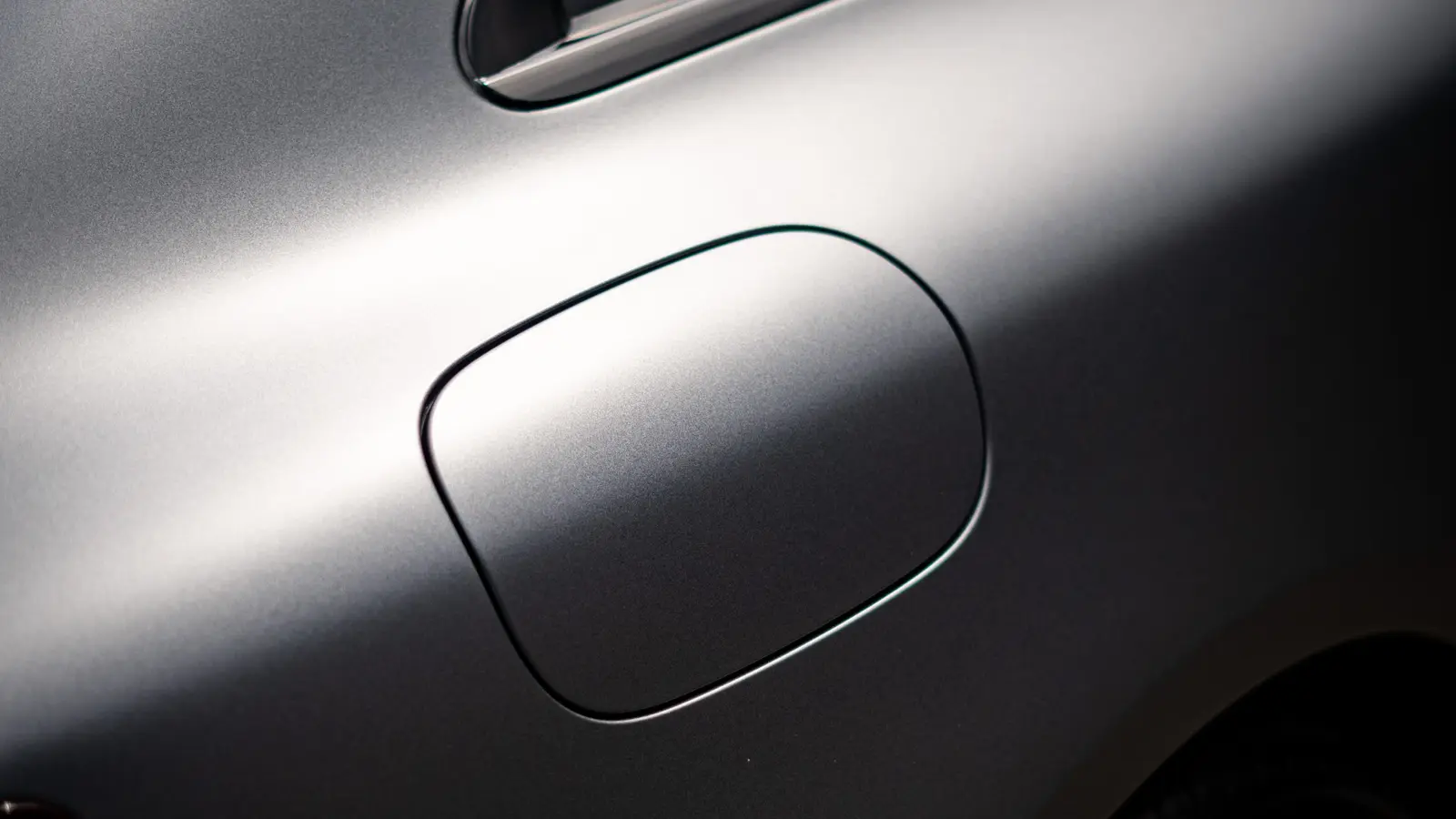
You order protection right away, and a month later the marks are still there
The paint left the factory sprayed and clear-coated, not corrected. Your car mainly had to reach you in one piece; how it looks in a few years is left to us.
With protection installed on paint in that state, the swirls and micro-scratches stay underneath it, sealed in and fixed.
A few weeks later you look at the car in the sun, the marks are still there, and it feels as though the protection isn't working. When you bring it to us, we see the same thing under the lamp: the marks are lying beneath it. You paid for protection, not for swirls sealed under it.
You're choosing protection and don't know what's underneath
Most people write to us with the question already settled: which protection should I choose? We ask something else first – what state the paint you want to put it on is in.
By protection we mean a thin layer we apply to the paint and leave to cure – either a basic protective product, or a ceramic layer that lasts for years. Neither of them corrects the paint: both preserve it in the condition we find it in.
That's why, at SEVEN Works, we start a new car with Basic detailing for a new car. It levels the paint out before anything else goes on top of it.
What we find on a new car when you bring it in
We put your car under the lamp, go over it panel by panel and tell you what we see on the paint and how much of it we can correct.
Correcting paint here means machine polishing: we work the surface with a machine and a fine compound so the reflections stop rippling. We don't sand anything and we don't respray anything – we work only with the top glossy layer you touch.
With your car we have an easier job than with cars that have been on the road for years: the marks are shallow, easy to read, and there aren't many of them.
What we do now saves you work later – simpler upkeep and fewer interventions.
Your car is a month old and you're asking whether it's ready
The odometer won't tell you. What tells you is whether anyone has looked at the condition the paint is actually in.
Meanwhile your car stands outside all day at work, you don't get round to washing it for a week, and the first rain catches it as it is. From here on the marks on the paint only add up, and whatever you seal under protection, we won't get to it until we take that protection off. That's why it makes sense to correct the paint now, while there's the least of it to deal with.
We cover the difference between what survives a few washes and what lasts years in Short-term vs. long-term condition.
Tell us what car you have and when you collected it. At our studio in Ústí nad Labem we'll look at the paint and tell you whether preparation is enough for a start, or whether it makes sense to add protection straight away.
Topic: New car
More in this topic