
New car
After Picking Up a Car with Ceramic Protection: The First Days
3 minEstimated reading time — roughly how many minutes it takes to read at a normal screen pace.
Water beads up on the paint and it feels smooth from day one, but the layer is still curing. We'll tell you what to avoid in these first weeks and how to wash the car.
On this page
On this page6
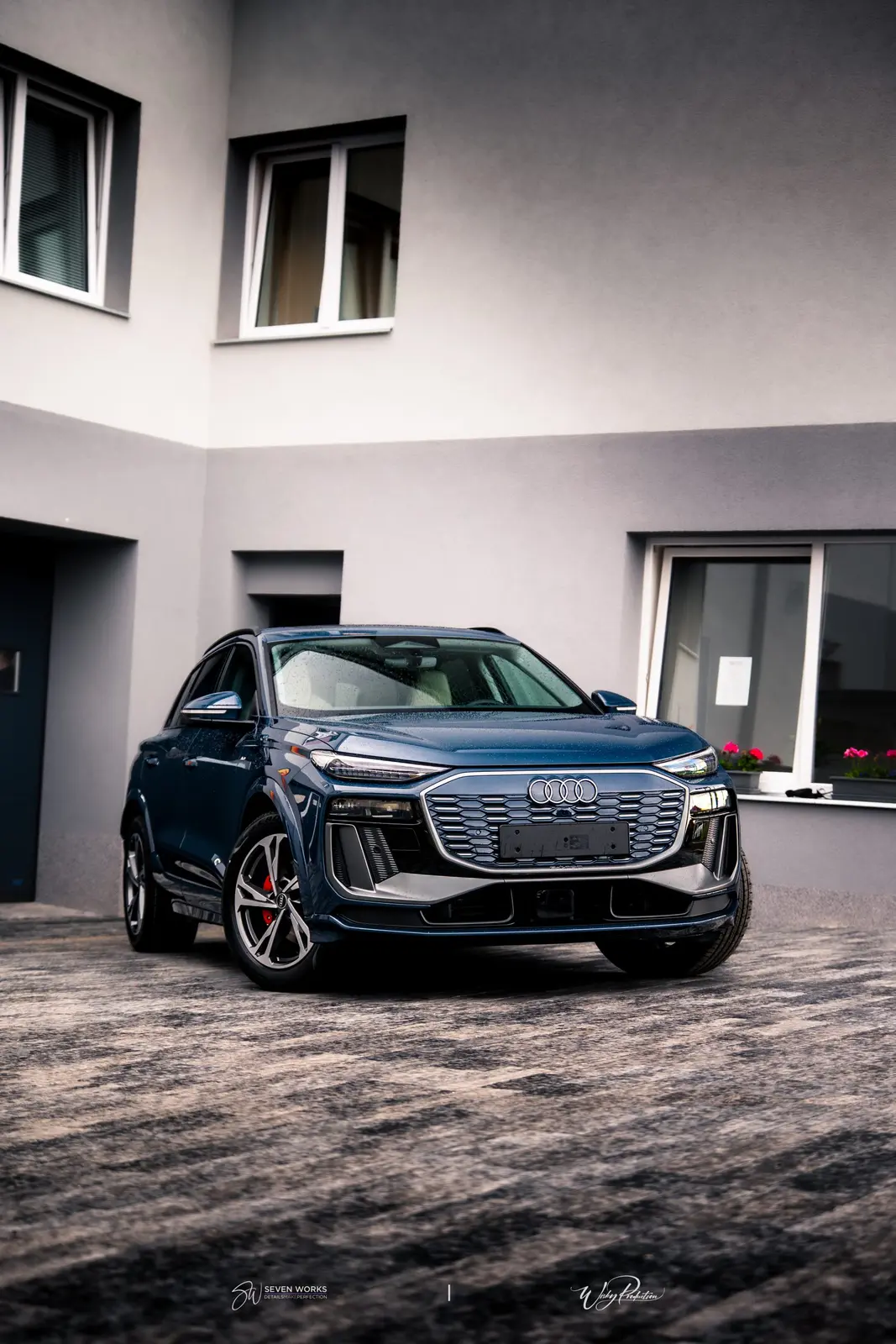
A car with ceramic surface protection comes home finished on the outside. Water gathers into beads and runs off the paint, the surface feels smooth to the touch and dirt doesn't stick to it – on day one you see exactly what you had the protection applied for.
The layer underneath, though, isn't finished yet. It is still curing – bonding with the paint and hardening. What you do with the car over the first two days, and how you wash it afterwards, decides how long the protection lasts.
When you bring the car home
For the first 24 to 48 hours after application the car should have as little contact with water and dust as possible. Anything that settles on the paint in this time, or runs down it, gets in the layer's way while it bonds.
Leave the car under a roof – in a garage or under a carport, not under trees. Don't drive in the rain, and skip dusty roads and parking next to building work. Two quiet nights is a good rule; whether twenty-four hours is enough for your car or forty-eight is better depends on the product we installed on it.
Most people don't have a garage, though, and nobody can order two dry days. If it doesn't work out, or you're not sure, don't try to make up for it your own way: a cover or wiping the car dry are, for the layer, just another touch. Call us. Depending on where the car is standing and what weather is coming, we'll tell you over the phone whether waiting is enough – you won't have to drive anywhere for it.
Before the layer fully cures
Curing doesn't end on the second day. How long it takes on your car depends on the weather and on where the car is kept; count in weeks rather than days. For that whole time, treat the paint more carefully than before and wash the car less often – with the first wash, wait until the first week is behind you.
How to wash the car once that week is over
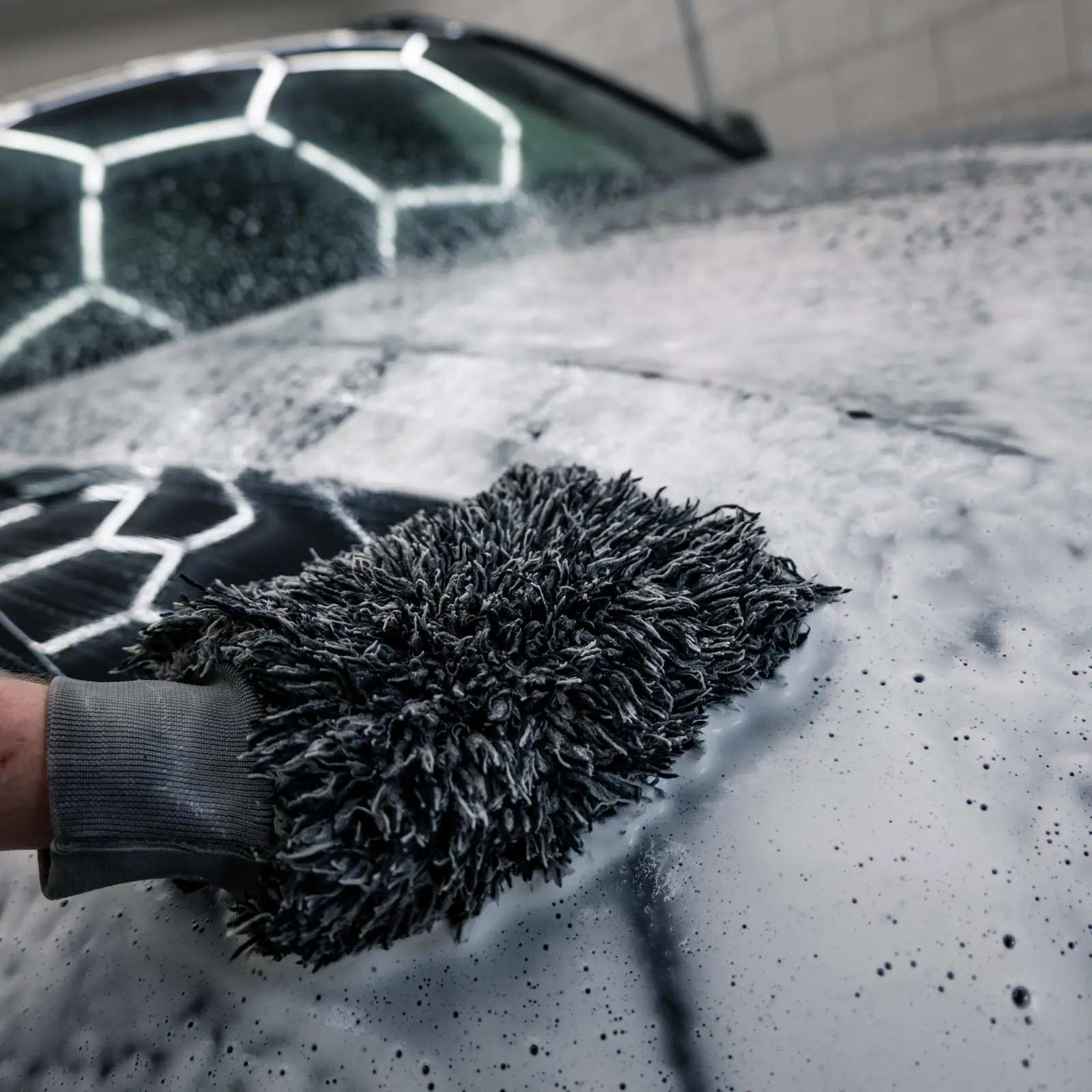
By hand, and with two buckets. Shampoo in one, clean water in the other, where you rinse the mitt after every pass so the dirt doesn't go back onto the paint.
The fine scratches you later see in the sun usually don't come from driving but from the bucket – when dirt mixes into the clean water, or when the paint gets wiped with a kitchen towel. At handover we show you this on your own car, along with how to guide a microfibre wash mitt.
Choose a neutral shampoo, one that doesn't list wax or any other surface product on the label. Wax only sits on top of a ceramic layer and tends to mask the beading rather than support it – and that holds afterwards too, once the layer has cured, so don't wax the car at all.
When the car is dirty and there's no time for a hand wash
Don't take it through an automatic wash with brushes. The brushes carry dirt from the cars that went before you across your paint; a fresh layer takes the worst of it, but it isn't a good idea a year later either.
Leave aggressive cleaners alone for now as well – bug removers, wheel cleaners, degreasers. They are meant to dissolve dirt on their own, without scrubbing, and what deals with baked-on insects will deal with a fresh layer too. When there's no time for a hand wash, it's better to put the wash off by a few days than to go through the brushes.
When water stops beading
Water gathering into beads and running off the paint isn't just nice to look at – it's the simplest sign that the layer is working.
When the beading disappears after a while, when dried-on droplets stay after rain and won't wipe off, or when the layer has been scratched somewhere, none of that is a job for home. Bring the car to us – as a certified FEYNLAB installer we can tell what's happening with the layer and what can be done about it.
What to do next
The layer takes the most attention in the first weeks, while it cures: two quiet nights, the first week without washing, then by hand, no wax and no brushes. Once it has cured, nothing new starts to apply – you wash it the same way, you'll just have the hang of it by then.
The care that goes with ceramic surface protection is exactly this. How long it lasts for you is decided in the first weeks after handover.
Topic: New car
More in this topic