
Interior
Why a Stain Comes Back After Seat Cleaning
3 minEstimated reading time — roughly how many minutes it takes to read at a normal screen pace.
The seat was clean right after cleaning, but the stain showed up again a few days later. We explain wicking, why it happens, and how the right cleaning process helps prevent it.
On this page
On this page6
You had the seat cleaned, the stain disappeared – and a few days later the outline is back, sometimes stronger than before. Poor work is not necessarily behind it. Most often it is water that did not manage to leave the seat in time and took the dirt up with it on its way out; less often it is what stayed in the fabric after cleaning.
We will show you how to tell those two causes apart on a seat, how much water actually belongs in one, and what we do about an outline that has come back.
The outline came back after a few days, not straight away
Timing separates a new stain from a returned one. A freshly spilled drink shows immediately and has a sharp shape. A returned outline arrives with a delay, typically on the fifth to tenth day: the seat is clean after the work, it dries, and only then does the stain appear – in the same place you had cleaned, and often with a darker edge.
The look then separates the two causes from each other. A sharp outline of the old stain means water. A greyed, greasy-looking area across the whole surface means cleaner was left in the seat.
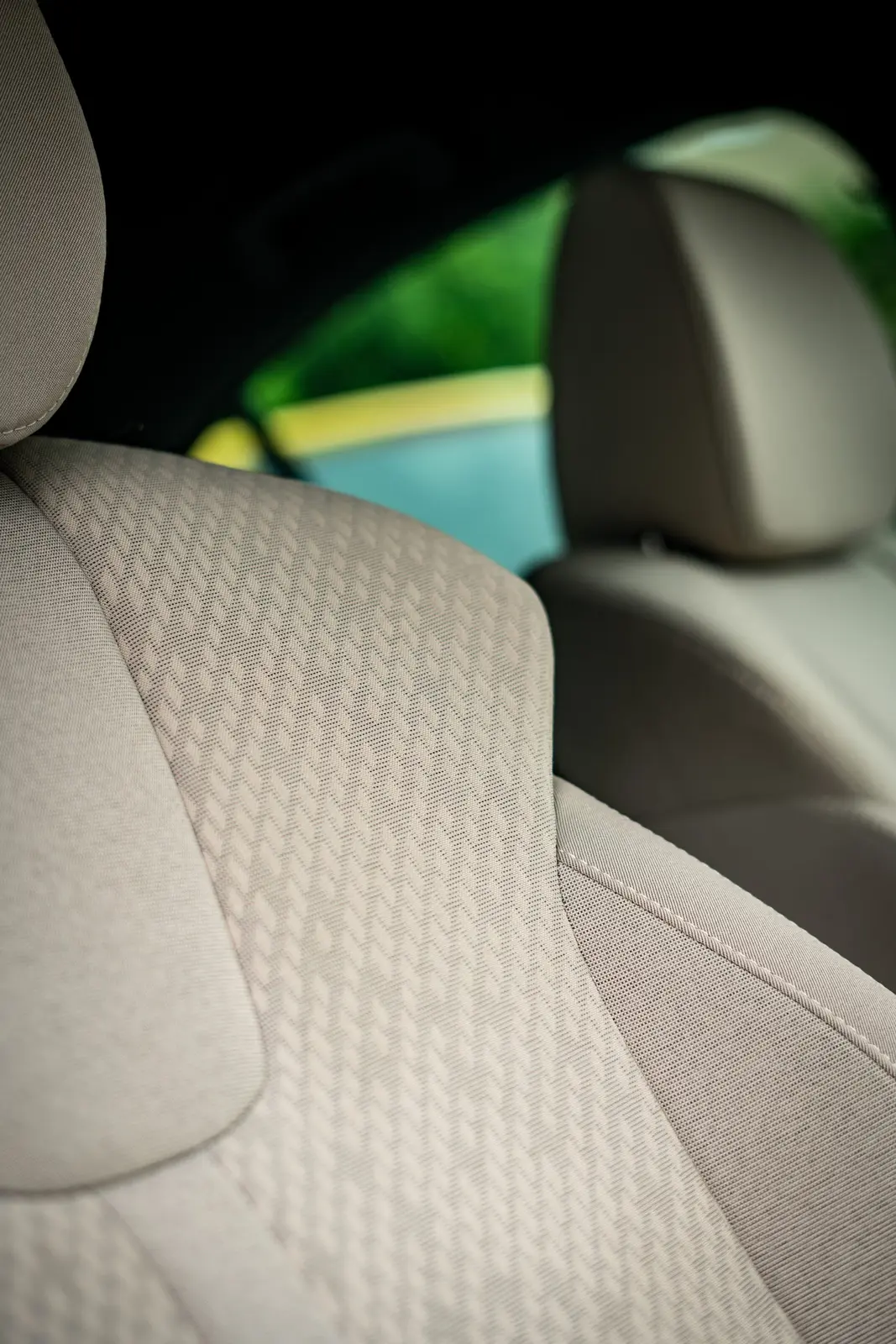
What goes on under the cover while a seat dries
Cleaning puts water into the seat, and it dissolves dirt sitting deep under the cover that nothing showed of on the surface. While it is damp, the dissolved dirt stays in the foam padding and does not reach the top.
As the seat dries, the moisture rises back towards the surface and takes the dirt with it. The water evaporates at the top, the dirt stays on it – and that is the outline. The technical name for it is wicking.
Interactive seat cross-section
Wicking po extrakci — kde je hranice
Use the slider to set the volume of applied chemistry. Above ~250 ml water penetrates the foam and pulls stains back to the surface during drying.
Standard extraction
OKWater begins wetting the upper foam layer. Not a problem, just extended drying of 6–8 h, ideally with a fan at the window.
One thing follows from this, and the whole rest of the work rests on it: a returned outline is not fixed by a harsher cleaner, but by getting the water out of the seat before it has time to carry the dirt up.
How much water a seat can take
That is why we watch the amount of water, not the strength of the chemistry. On a cushion the limit is roughly 150 to 250 ml depending on how soiled it is; above that the dissolved dirt gets deeper into the foam than we can extract it from. A backrest takes up to 100 ml, a front carpet up to 200 ml, a rear one up to 250 ml.
The headliner is the most sensitive of all. Its fabric is held on by adhesive, and adhesive does not tolerate water: more than 50 ml and the backing comes away, the fabric starts to hang. That is not something you clean, it is something you redo.
When you have a seat cleaned elsewhere, this is the question that decides it: not how strong the cleaner is, but how much water will go into the fabric and how long it will dry.
When cleaner has been left in the seat
A grey film across the whole area did not come up from below with the water. It stayed on top after the cleaning: all-purpose cleaners leave a slightly sticky layer behind, and the dust you carry into the car on your shoes and clothes clings to it faster than it does to clean fabric. A new film of dirt – resoiling, technically – can show up within a week.
Most often the cause is a mistake in the order of the steps: cleaner poured straight into the extractor tank. The extractor sucks the used water back into the same tank it sprays from, so part of the chemistry returns to the fabric. The seat then ends up cleaned but not rinsed.
That is why here the cleaner goes onto the fabric with a sprayer, is left to act on it for a while, and only then do we extract with clean water and no chemistry in the tank. The last pass rinses the seat out instead of loading more into it.
Whether the rinse has worked we can see on the extracted water: it stops foaming and clears. As long as the foam keeps coming, we go over that spot again.
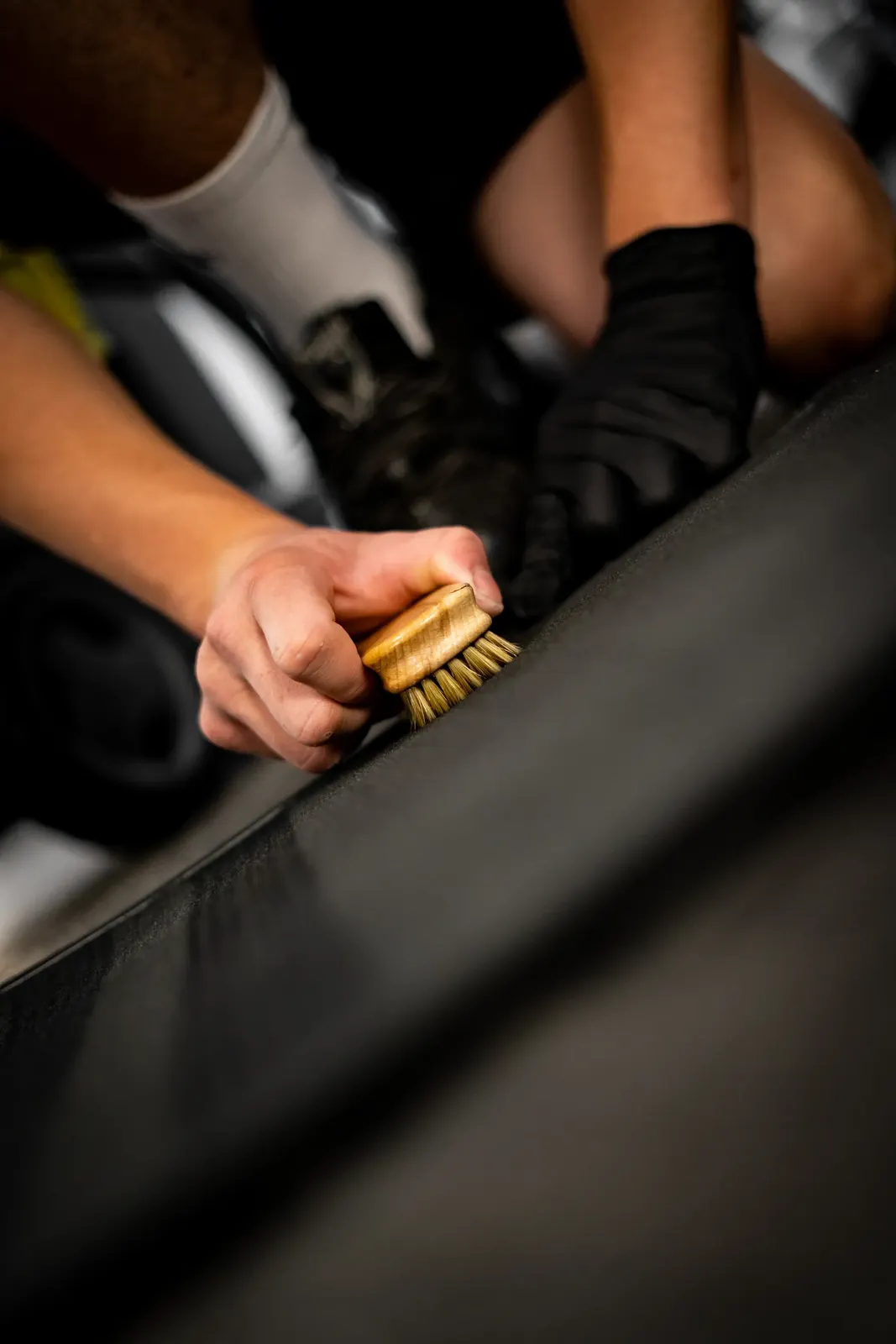
The windows mist up in the morning, even though the seat looks finished
As long as there is water in the seat, the cleaning is not over. You can tell without any equipment: in the morning the windows are misted on the inside and the car smells.
So after the work the car stays open and under airflow for as long as it takes the windows to stop misting. We hand it back dried through, with a date from which you can move your things back in and put the covers on.
In winter it takes longer. The interior dries more slowly and below 10 °C a cleaner works two to four times more slowly than in the warm, so it needs more time and the car stays with us somewhat longer than in summer. In the heat it is the other way round: it dries quickly and the cleaner needs a shorter contact time, otherwise the fabric is over-cleaned and the colours fade. If you need the car back by a particular day, tell us when you book.
A returned outline does not mean cleaning it all again
With wicking you do not pay for cleaning the whole seat a second time. We go over that one spot with hot water and no chemistry, extract it in several passes and put airflow under it straight away, so it dries before the outline has a chance to come back.
When cleaner has been left in the seat, the work starts by washing that sticky layer out – and only then does tackling the stain itself make sense.
Write to us with how long ago the cleaning was done, what it was cleaned with and how the seat has been drying since; a photo taken in daylight helps. We will confirm whether water or cleaner is behind it, and tell you the approach and the price. A returned outline means one or the other stayed in the seat – and we will get both of them out of it.
Topic: Interior
More in this topic