
Interior
Oiling a Leather Car Seat? Here's Why Not
3 minEstimated reading time — roughly how many minutes it takes to read at a normal screen pace.
Oil doesn't soak into a leather car seat — it sits on the surface, where cabin dust turns it into a fine abrasive over time. Here's how that happens, what you'll notice after a few months, and why a water-based conditioner works better.
On this page
On this page5
Put your hand on a seat cushion a year after you oiled it: the hand catches slightly as it moves. The leather is no longer smooth, it is tacky. The oil never soaked into the seat at all – it has been lying on top the whole time. Here is why it stays there, and what driving the car turns it into.
Oiling leather is a habit carried over from shoes and furniture: leather is supposed to be "fed", or it dries out and cracks. On a car seat it runs into trouble at the very first step – at what you are actually touching when you sit down.
What you touch when you sit down
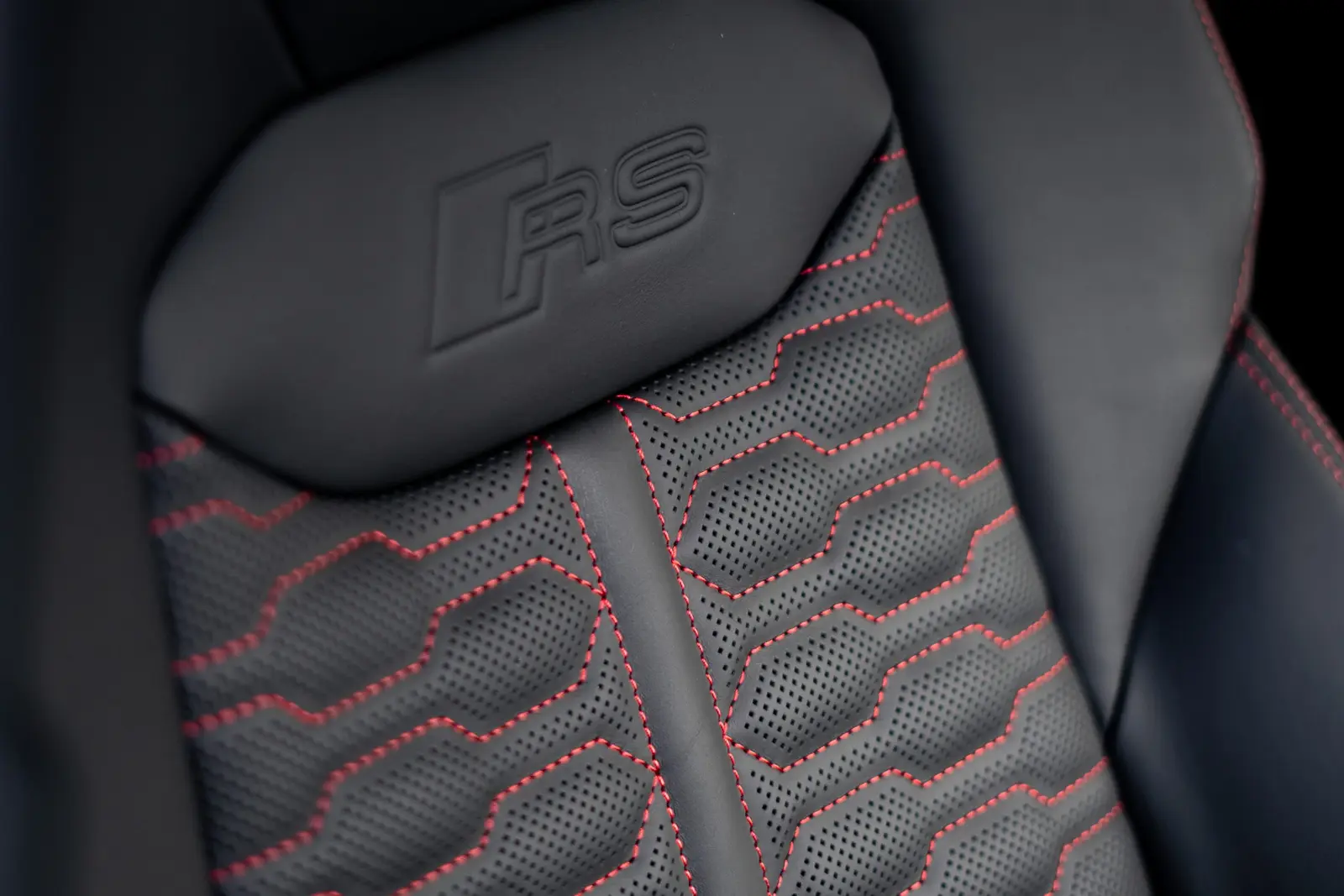
A car seat is not bare leather. On top it has a thin layer of plastic with pigment in it: it holds one even shade and takes the rubbing from clothes so the leather underneath does not have to. When you sit down, that is what you touch, not the leather.
It is not airtight, though – there are microscopic pores in it. Through them the leather underneath lets moisture out and in, so anything watery gets through.
Oil is too greasy for that. It stays lying on top, exactly where you sit, and it blocks those pores as well. So it does not feed the leather, it only gets in the way of what the leather does on its own.
What dust and grit make of a greasy surface
A greasy surface holds on to everything that moves around the cabin: dust off clothes, small crumbs and above all the grit you carry in on your shoes. The grit is the hardest of it.
Every time you get in and twist round, your body slides across the cushion and that mixture runs between you and the surface like fine sandpaper. Worst of all on the edge of the cushion, where you climb into the car.
From the first oiling the seat also gets dirty faster: dust that would have brushed off now has something to cling to. You can see how dirt catches on that film here:
Interactive simulation
Oil vs water-based: what happens to PU leather
Choose conditioner type and use the slider for months since last application. Oil-based products gradually turn the surface into an abrasive paste.
SEVEN Works Leather Treatment — water-based
StableNo petroleum oils. Active molecules penetrate through PU pores and hydrate the adjacent corium layer. Surface remains matte, does not attract dust. Recommended frequency: every 2–3 months or 2–3× per year under ceramic coating.
What you will see and feel after a few months
It does not happen straight away. It usually takes 6 to 12 months from the first oiling, so most people never connect the state of the seat today with what they put on it last year.
First the cushion goes dull – the sheen the oil left behind disappears under the dust settling on it. Then it darkens where you sit most; that is the layer filling up with dirt.
To the touch the cushion is tacky, and your fingers notice it before your eyes do. Shut the car up and the cabin smells stale – not of oil from the bottle, that is long gone. And on seats someone has been oiling for years, we end up seeing the edge of the cushion worn through, where people get in.
When you want to put it right with another coat
The leather looks dried out, so adding more suggests itself. But the second coat ends up where the first one did: on top, on whatever is already lying on the seat.
Oil on the surface goes rancid in time, and that is where the stale cabin comes from. It is not a fault of storage or of the brand you bought; oil as such does that in the open air.
The only things that get inside are the ones the top layer lets through, and those are water-based products. In the shop you know them by the words water-based, on the seat by the surface staying dry to the touch afterwards, with no greasy sheen. First, though, what is lying on it has to come off, or even a good product will just sit on the greasy film.
What we will do about it
First we need to look at it. Send us a photo of the cushion and the backrest in daylight; we can usually tell a greasy film from ordinary dirt on it, and it costs nothing.
At the studio we start with a small area out of sight: how much of the film comes off there tells us how deep it has worked into the rest of the seat and how much work it will be. Write to us and we will tell you what the seat needs and what the price will be for that scope.
The rest is on us: we take the greasy film off the seat and treat the leather with a water-based product, and add a protective layer where the surface needs one. You can book detailed interior cleaning.
Topic: Interior
More in this topic