
Layers and limits
Where the paint ends and protection begins: the layers that decide
2 minEstimated reading time — roughly how many minutes it takes to read at a normal screen pace.
In the sun the paint no longer reflects sharply: dull patches and faint swirls left by washing. The question that follows is usually ceramic coating or film. But what can still be corrected, and what cannot, is decided by the paint layers underneath – and those we assess for you at our studio.
On this page
On this page4
In the sun it shows up first: paint that used to reflect sharply now has dull patches and faint rings left by washing. At this point you are usually deciding whether a ceramic coating or a film will help.
Before we advise you, we need to see what condition the top layer of your paint is in. Both the coating and the film go onto it – and what we find there tells us what can still be done with your car.
When you look at the paint up close
Your car does not carry one layer of paint but several – and we count on each of them for a different function, a different thickness and a different load it can still take for you.
You only see and touch the topmost one – the clear coat. That is where the car shines and where you see light reflected. And every time you wash the car, that is the layer you are putting under load.
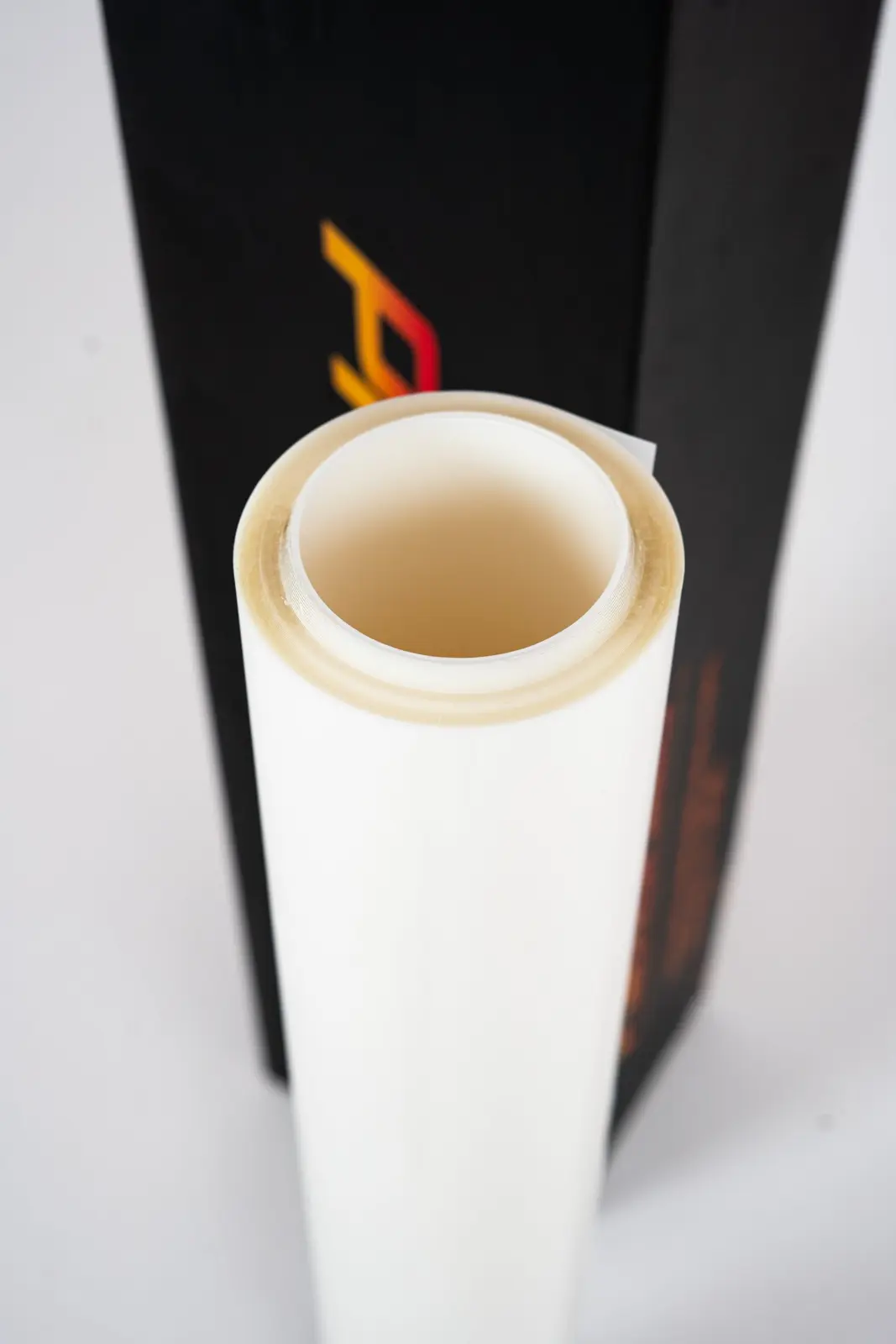
When you are choosing between a coating and a film
We cannot get either a coating or a film inside the paint. With both we work only on the surface, on the clear coat you can see.
With a ceramic coating we bond a layer directly onto the clear coat and change the way the surface behaves. PPF film (Paint Protection Film) – a clear film we lay over your painted panels – goes above it as a physical barrier that takes what the paint would otherwise get.
In both cases we either firm up your clear coat or take the load off it, but we do not restore its structure. As long as your clear coat is intact, we have something to build on; once something breaks into it, no layer we put on top will replace it for you.
Interactive diagram
From physical film to covalent bond
Posuvník ilustruje rozdíl v „propojení“ s lakem — ne skutečný chemický profil konkrétního produktu, ale didaktický model.
Transitional mode
Some active groups already penetrate the paint structure — dependent on surface preparation and application quality.
Curves = chemical anchors (metaphor)
In the model you can go through how firmly a layer holds on the clear coat – from a mere film on the surface to a chemical bond.
When you have had the paint corrected several times
Your car has a finite amount of clear coat, and every time we correct it, we physically sand a little of it away – even when we really do remove the defect. After one correction you will not see it on the car; by the third or fourth it already makes a difference to us.
Protection slows that loss down, it cannot stop it. That is why we will not promise you a layer that lasts for good either.
We have the fewest options with cars that come to us after several corrections in a row. Each time you wanted back a look the paint can no longer carry, and each time you took away from what you had left.
If your paint needs evening out, we do paint correction once, as preparation before protection – not as regular maintenance.
Before you choose protection, bring the car to us
What condition your paint is really in is something we find out during paint diagnostics. We will assess the state of your paint layers in person at our studio in Ústí nad Labem and tell you which protection builds on them best.
If you have a long way to come, photograph the paint in the sun and write to us how many times someone corrected it before us. When a ceramic coating is worth it and when PPF film is, we write about in the article When paint protection makes sense.
Topic: Layers and limits
More in this topic