
Starting out
When paint protection makes sense
4 minEstimated reading time — roughly how many minutes it takes to read at a normal screen pace.
Small stone chips on the bonnet, and after a wash the paint looks matt, without depth. Protection won't erase them — it extends how long the car keeps looking as it does today. We'll show how ceramic coating and PPF differ and how to choose.
On this page
On this page6
Your car arrives with the paint it has today – and on the day we install protection, we seal that state in under the layer. A stone chip or the fine scratches left by a car wash will not go away with it; they stay underneath and you will keep seeing them. So we look first at what can still be done about them. Below we describe how we prepare the paint, and what we then base the choice between a ceramic coating and PPF film on.
What we do to the paint before anything goes on it
We cannot use protection to do the work of paint repair. We will not even out the structure of the surface with it, we will not remove older defects and we will not stop the paint from ageing – we will only slow down changes that would otherwise run faster.
So we look at the paint under hard light and tell you which of the things that bother you today can be put right. On matt paint we get the gloss back by paint correction and fine scratches disappear; deeper stone chips stay. Whether correction is worth it on your car we find out during paint diagnostics.
Only on paint prepared like that does it make sense to install anything, which is why we work in this order. What goes on the paint afterwards we do not choose by which protection is better. Two things decide: what your car takes on the road, and what you expect from the result.
When it is mainly about looks and easy washing
We bond a ceramic coating directly to the paint: we stabilise it chemically and seal it. The paint then looks richer, the depth of the gloss comes through, and water gathers into beads and runs off carrying the dirt with it – washing takes you less time.
Rough treatment does it no good, though: with a brush car wash, a harsh cleaner or washing in direct sun you will wear it out sooner than necessary. You will notice because the water stops gathering into beads.
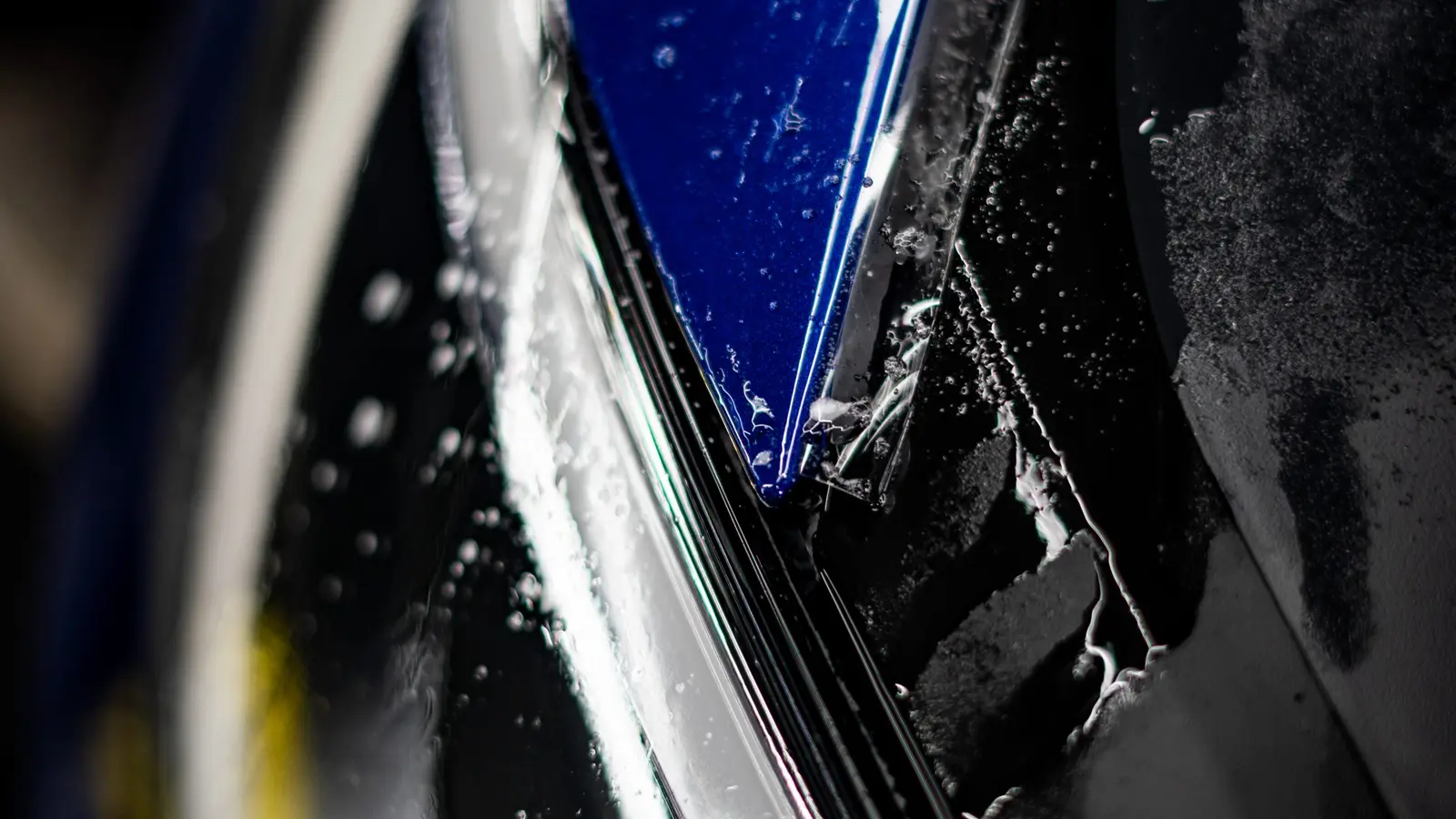
When the car takes hits
A car that parks outside and drives salted motorways in winter picks up stone chips and scuffs around the door handles. On a car like that we install PPF film: we do not bond it into the paint, we lay it on top as a separate layer. The stone then hits the film and your paint underneath stays whole. And you do not have to treat it as carefully as a ceramic coating. The sharpest case is a car you make your living with: there the hits do not come only from the front, but from the sills and the boot edge, where the load is dragged across every day.
When the car is both
Most of the cars that come to us drive around town during the week and take the motorway at the weekend. For those we do not pick one of the two, but a combination of protections: we install film where the hits land, and the rest of the car gets a ceramic coating. That way you pay for film only where the car makes use of it.
When we tell you that you do not need protection yet
Not every car is driven that way. If your car spends most of its time in a garage and you cover a few thousand kilometres a year, we will not recommend film – your car does not meet the hits it is made for – and you will often get by with the cheaper basic surface protection.
Between that and a ceramic coating you are not choosing by how the car is driven, but by the second criterion: what you expect from the result. If what you want is for the paint not to lose what it has, we will stay with basic protection; if you also want that depth after a wash, what we wrote about the ceramic coating applies. We will tell you so even if you came in for something more expensive.
And if what bothers you about the paint is how it looks today, we would be sealing in exactly that look. In that case we will recommend waiting and having correction done first.
Tell us how you use your car
The extent of the film will not come out of a phone call, we need to look at the paint. Bring the car to our studio in Ústí nad Labem, we will go over it with you during paint diagnostics, and the extent will be proposed by Lukáš Vyskočil or Sebastian Vyskočil, who install the film here.
If you want to form a picture first, read what PPF film actually does for your paint and where paint ends and protection begins – both together with their limits.
Topic: Starting out
More in this topic