
Interior
Your Alcantara Steering Wheel Is Going Shiny and Pilling
3 minEstimated reading time — roughly how many minutes it takes to read at a normal screen pace.
Alcantara on the wheel shines exactly where you hold it, with tiny balls of fibre. It isn't dirt — the fibres have flattened and tangled. Here's what we do about it at the studio.
On this page
On this page6
The steering wheel is the part of the cabin you touch most, so it's the first place where alcantara starts to shine and form tiny balls of fibre. You'll catch the shine at a certain angle of light, mostly on the two spots where you hold the wheel.
Most people reach for whatever cleaner is closest to hand, and the surface gets worse for it. Here's what each sign means and what we do about it at the studio.
Why alcantara isn't cleaned like leather
Alcantara is neither leather nor suede, whatever people call it. It's a man-made fabric: a dense pile of fibres thinner than a hair, set on a firm backing. It looks and feels like suede, but it's a textile — and dust works its way in deeper than a cloth can reach.
That's why a leather product or an all-purpose interior cleaner doesn't belong on it. The dirt has to come out of the fabric, not be pushed further in.
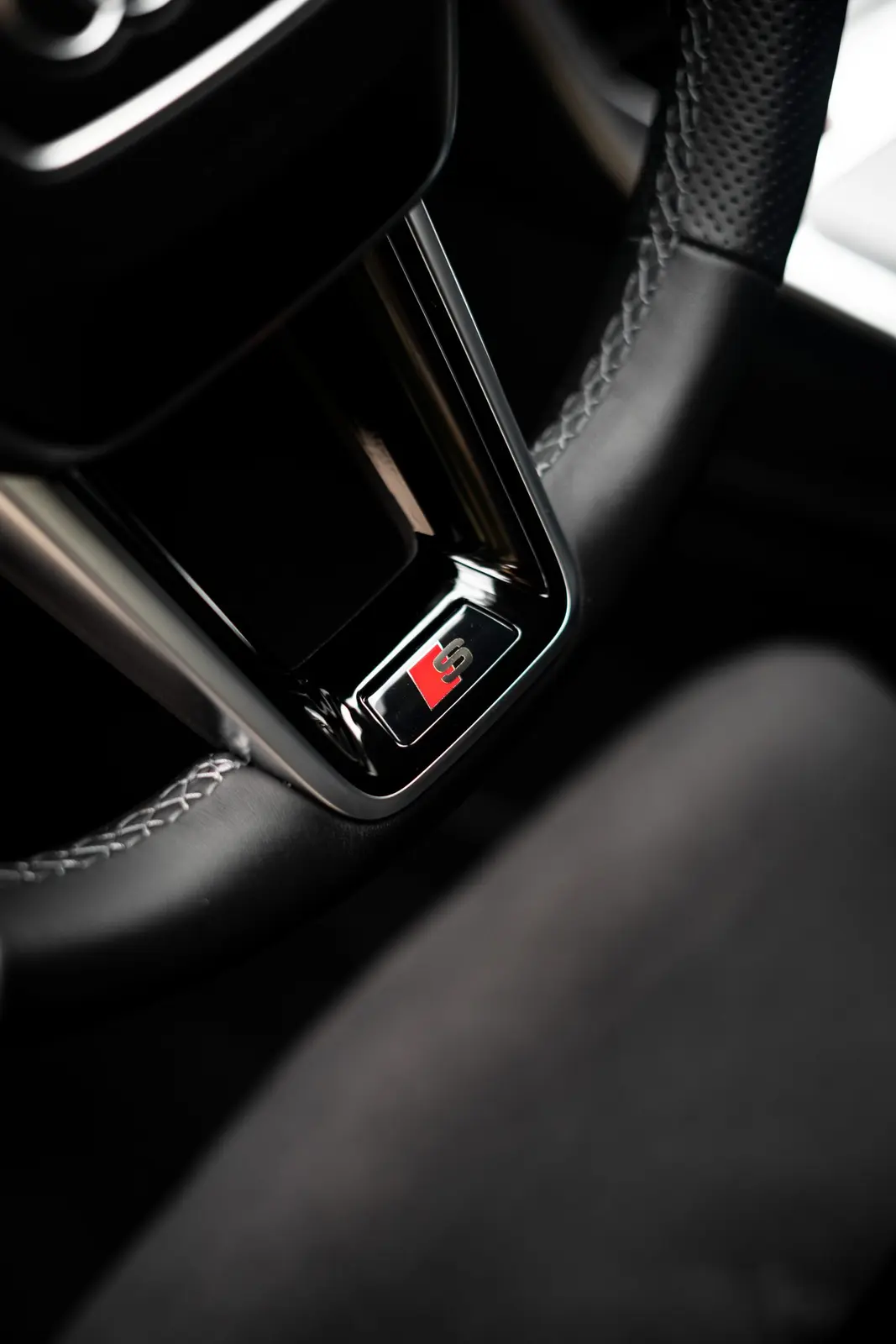
Shiny patches aren't dirt
Where your palms press on the wheel, the fibres gradually flatten. Heat from the sun through the glass and moisture from your hands help it along. Flattened fibres lie differently from the surface around them, and past a certain angle of light you see that as shine, not as dirt.
We can tell because the shine sits exactly where you grip the wheel and doesn't wipe off. The fibres won't lift back up by themselves. It only happens mechanically — while cleaning we soften them with steam and comb them back so they lie the same way as the rest. It won't make the wheel look new, but the patch stops shining.
Pilling, and what takes it off
These are tiny balls 0.5 to 2 millimetres across, formed when fibres tangle together. They're usually triggered by friction against coarser textures — denim, wool, fleece — which is exactly what people are wearing getting in and out of the car. In winter there are more of them: in dry air static lifts the fibres and they tangle more easily.
They can be taken off, but it depends what with.
Interactive tool selector
Alcantara pilling — what to use
Pick a tool to compare effectiveness vs damage risk. Each has a role — not all belong in DIY.
Electric de-piller — safe and thorough
Electric de-pillerRotating blade behind a guard catches only protruding pills; short fibres stay protected. Safest full pilling removal on large areas.
Recommendation:Slow, light pressure; check the waste bin fill level.
The demo compares the tools, from a soft brush to a razor blade. The more aggressive the tool, the faster the balls go — and the greater the risk that the fibres underneath go with them. So we take them off by hand, a bit at a time, starting with the gentlest tool that still does the job on that surface.
When something spills
Alcantara draws liquid in deeper than it looks from the surface. Wiping it dry isn't enough — moisture can stay hidden underneath and show up later as a patch where the fibres go limp and start to shine before the rest of the surface does.
If something spills, don't dry it with a hairdryer or hot air, and get in touch with us as soon as you can. A fresh stain comes out more easily than one that's been drying in for a week.
What ruins alcantara for good
Acetone and chlorine — nail polish remover and household disinfectant — damage the fibres immediately. Aggressive degreasers and all-purpose cleaners work more slowly: the surface looks clean for a while afterwards while the fibres keep growing brittle.
Most of the damage we see, though, comes from the sprays and wipes sold to "refresh" an interior. You can spot them by the way plastic stays noticeably glossy and slippery to the touch — that film is silicone, and in alcantara it fills the gaps between the fibres that dirt is meant to leave through. The surface turns dull and stiff even though it looked clean, and there's no getting it back. On alcantara we use a gentle, neutral, silicone-free cleaner.
What happens next
Here's what it looks like with us: first we look the wheel over under a hard light to tell flattened fibres from dried-in dirt. Then we clean the surface in small sections with a neutral foam and a soft brush, draw the dirt out of the fibres, and comb them back at the end. Pilling we take off separately, by hand.
Working out whether it's flattened fibres, pilling, a dried-in stain or all of it at once, and choosing a process that won't make the surface worse, is a job for Deep Interior Cleaning.
Tell us how the wheel or the seats look — a photo taken so the shine shows is enough — and we'll tell you what we'd do with them and what it costs.
Topic: Interior
More in this topic