
Interior
Blue Jean Stains on Car Seats: Why They Happen, What Helps
4 minEstimated reading time — roughly how many minutes it takes to read at a normal screen pace.
A blue stain from jeans isn't surface dirt — it's dye that has mechanically pressed into the leather or upholstery. We explain what speeds up penetration, why the leather type matters, and what actually fixes the stain in place.
On this page
On this page6
A blue stain from jeans on a light-coloured seat often won't wipe off with an ordinary cloth. It looks like a bluish haze right where you sit, a cloth only spreads it into a wider ring, and the longer it stays on the seat, the harder it is to get out.
Below you'll find what a fresh stain looks like and what an old one looks like, what to avoid in the first few hours, and what we do about it at the studio.
What the stain looks like and when it shows up
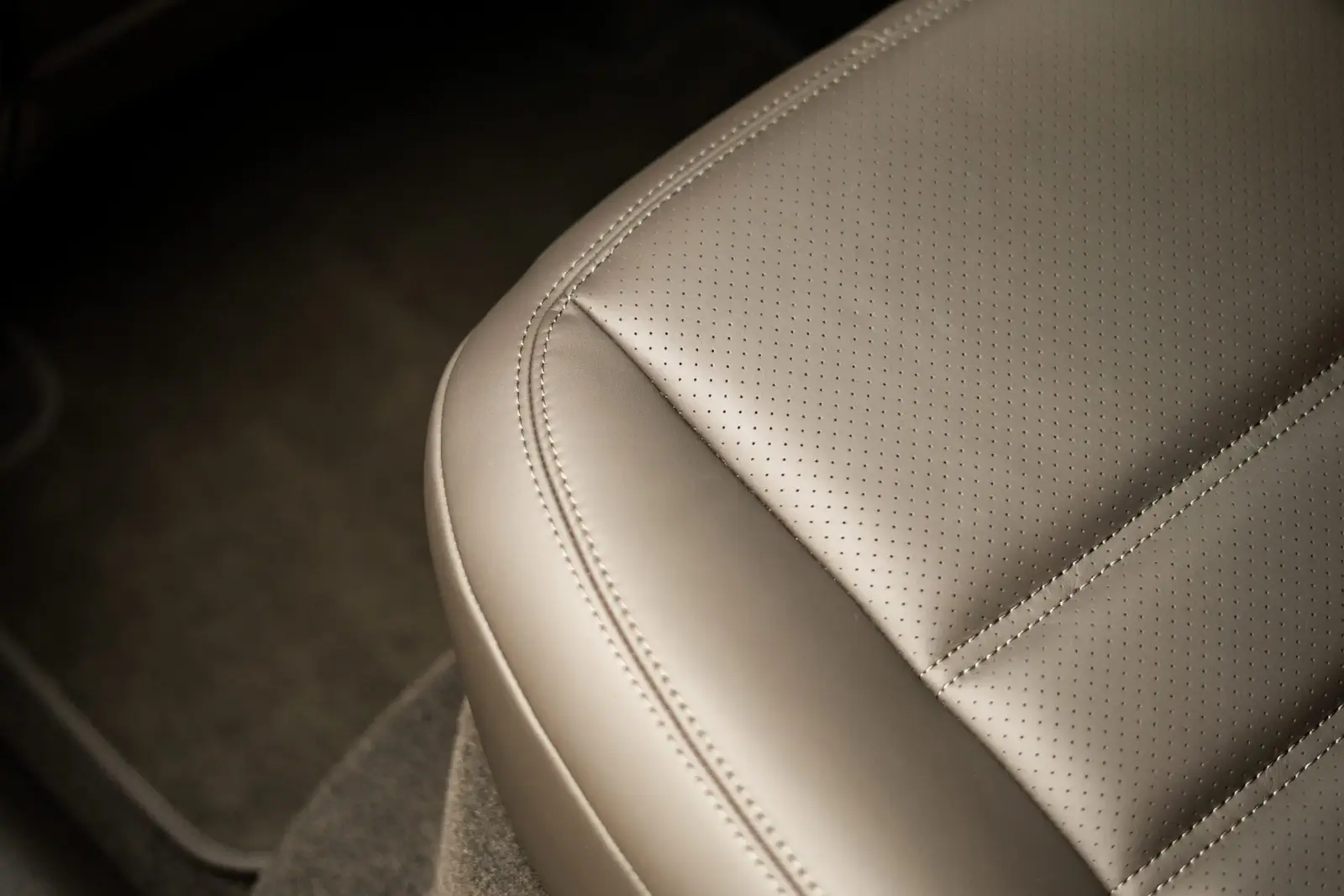
People usually find it on a light-coloured seat base and on the side bolster, where the thigh and the back pocket rub against the upholstery. It tends to happen after new dark jeans that haven't been washed yet, and after a longer drive in hot weather.
A fresh stain is a pale blue-grey veil with no sharp edges, it follows the shape of where you sit, and it feels no different from the surface around it. An older stain is deeper in colour, turns greyish and holds even in the creases where the seat folds — the dye has had time to work deeper, and it cleans off less easily. That's why it makes a difference whether you bring the car in the next day or six months later.
Why sitting is exactly what pushes it in
You put your body weight on one spot, and you slide across it as you get in and out. It's the pressure together with that sliding that works the dye from the fabric into the surface — which is why the stain grows where you sit, not where you put something down.
Heat in the cabin and damp speed it up. In a hot car, or in jeans still damp after rain, a few drives do what would take far longer in dry, cool conditions.
The demo below shows the same thing in motion: the more friction and the more often the sliding happens, the faster the blue works into the surface.
Interactive tribology
Jean dye transfer — three penetration levers
Nastavte podmínky a uvidíte, kdy indigo začne pronikat do PU clearcoatu kůže. Vyšší tření, teplo a vlhkost penetraci umocňují.
INTERVENTION — likely transfer
InterventionThe combination of friction and heat/humidity begins opening PU pores for indigo penetration. Fresh staining (within 24 h) is removed with Interior Cleaner. Without coating, an indigo layer accumulates over months.
Interior Cleaner do 24 h
On some seats the stain shows up sooner
How quickly the stain appears depends on the seat surface. Soft, unprotected leather, warm to the touch and slightly absorbent, soaks it up fastest — the dye goes straight in, which is why we clean it more carefully and in small sections. Ordinary leather with a factory protective layer holds out considerably longer and takes a more thorough approach.
Even that won't avoid a stain if you drive tens of kilometres a day in dark blue, unwashed jeans. Synthetic leather and upholstery with an additional protective coating come off best, since there's nothing for the dye to soak into.
You don't have to work out which surface you have in your car, or look it up in the car's paperwork. We can tell at the studio by sight and by touch, and we choose the method and the products accordingly.
What a protective coating can do
A protective coating on leather and upholstery isn't an impenetrable barrier and doesn't close the way in completely. It does something else: water and sweat from the jeans bead up on it and run off. On an unprotected surface they soak in instead, and take the dye from the fabric with them.
In practice that means a fresh stain stays up on the coating and can be lifted off it with a damp cloth before it works its way further in — on an unprotected seat a cloth alone no longer does the job. We recommend it mainly for light-coloured interiors in cars that are driven every day; whether it's worth it in your case, we'll tell you right there at the car.
What fixes the stain in place, even though it looks like it's helping
A melamine sponge often makes the stain worse rather than better — it abrades the protective surface and leaves glossy patches on an otherwise matte seat.
Bleach and chlorine chemically damage the surface, and instead of clean leather you end up with a yellow stain on top. Hairspray and acetone dissolve the surface and leave visible cloudy patches on it.
And heat from a hair dryer or steam cleaner, which people instinctively reach for, pushes the dye deeper instead. For a fresh stain that's exactly the wrong move.
What to do next
In the first few hours the best thing you can do is leave the stain alone — no sponge, no bleach, no acetone, no hair dryer, since those are exactly the interventions that push the dye deeper or damage the surface.
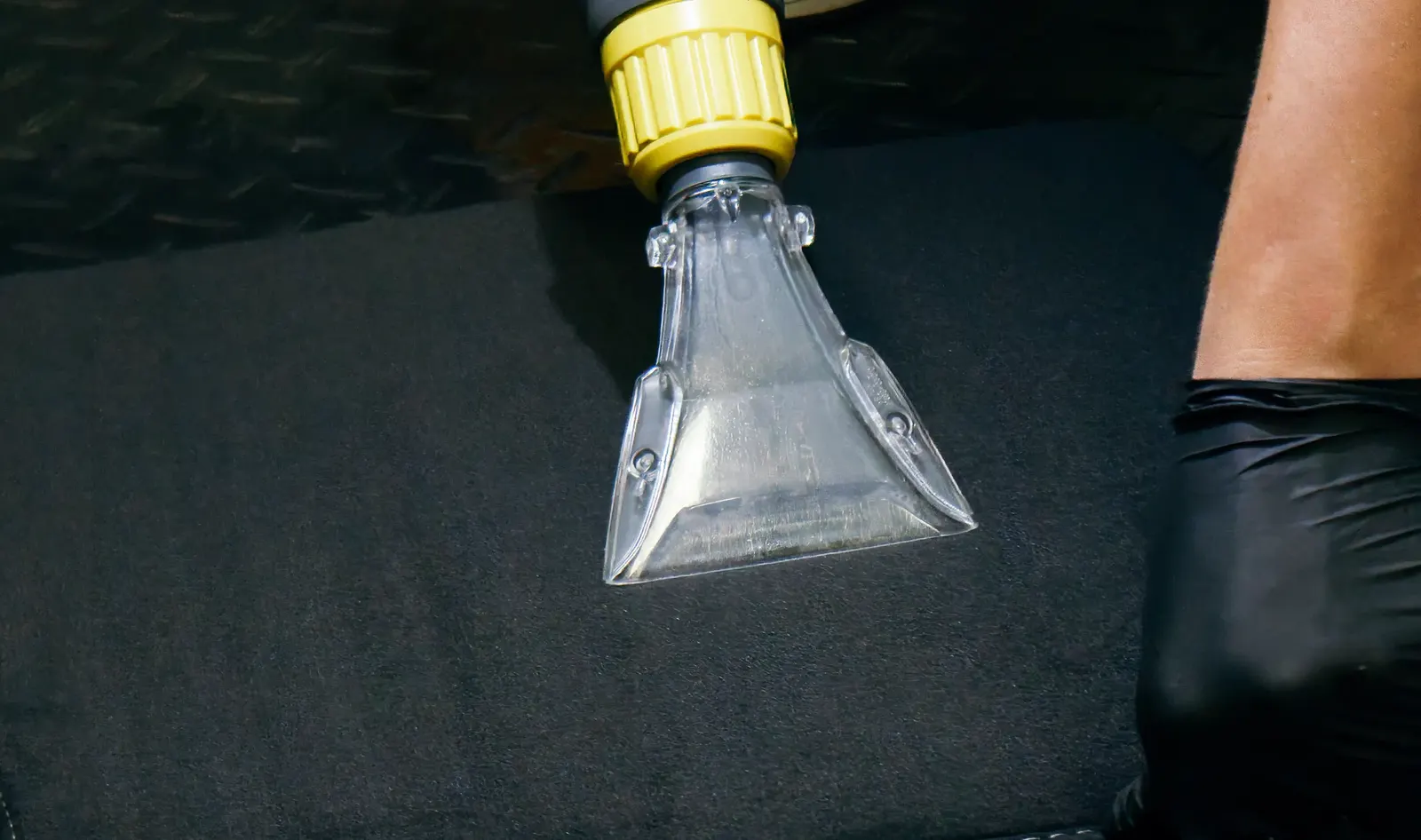
At the studio we then go about it like this: first we degrease the seat and try the chosen method on a hidden spot, on the side under the seat base for instance. Then we lift the dye in several gentle steps rather than one aggressive clean, so the surface stays matte and doesn't lighten. Finally we treat the leather so it isn't left dried out, and on light-coloured interiors we can apply a protective coating straight away.
How much of the stain disappears depends on how deep the dye has gone, and that's something we can only tell by looking at your actual seat. The sooner you write to us about how the stain happened and how long it's been on the leather, a photo is welcome, the better — we'll suggest a course of action and give you a price based on that.
Stains on upholstery are handled as part of detailed interior cleaning. Bring the car in and we'll take a close look at the seat.
Topic: Interior
More in this topic