
Washing and drying
Swirl Marks in the Paint After a Wash: Where They Come From
3 minEstimated reading time — roughly how many minutes it takes to read at a normal screen pace.
Fine swirl marks in the paint after a wash aren't a fault in the car — they're a trace of contact with dirt from a mitt or cloth. We explain what increases the risk of scratching and why a contactless wash alone isn't enough.
On this page
On this page6
The car comes out of the wash, stops in the sun – and there is a fine web of swirls on the bonnet that was not there before. A clean car looks worse than it did before the wash, and the first question is usually whether the wash did it. After a careful wash at home it turns out the same.
Today's wash did not do it on its own, and neither did any other single wash. Swirls are not a fault in the car or a defect in the factory paint, so there is no point taking it to the dealer. They are a record of how the car has been washed so far, and every touch the paint has had counts towards it – the brushes in the wash tunnel just as much as your sponge at home.
We will show you how to read that record, why it thickens and what can be done about it.
Why you only see them after a wash
In the shade and under cloud the paint looks fine. The hairline scratches the web is made of only show up in direct sun or under a hard light – a lamp in the garage, for instance. A washed car no longer hides them under a layer of dust either.
There are most of them on the bonnet and on the boot lid, where the sun falls from above. Walk around the car and turn the panel towards the light. How dense that web is tells you how much has already added up on the paint.
What presses them into the paint
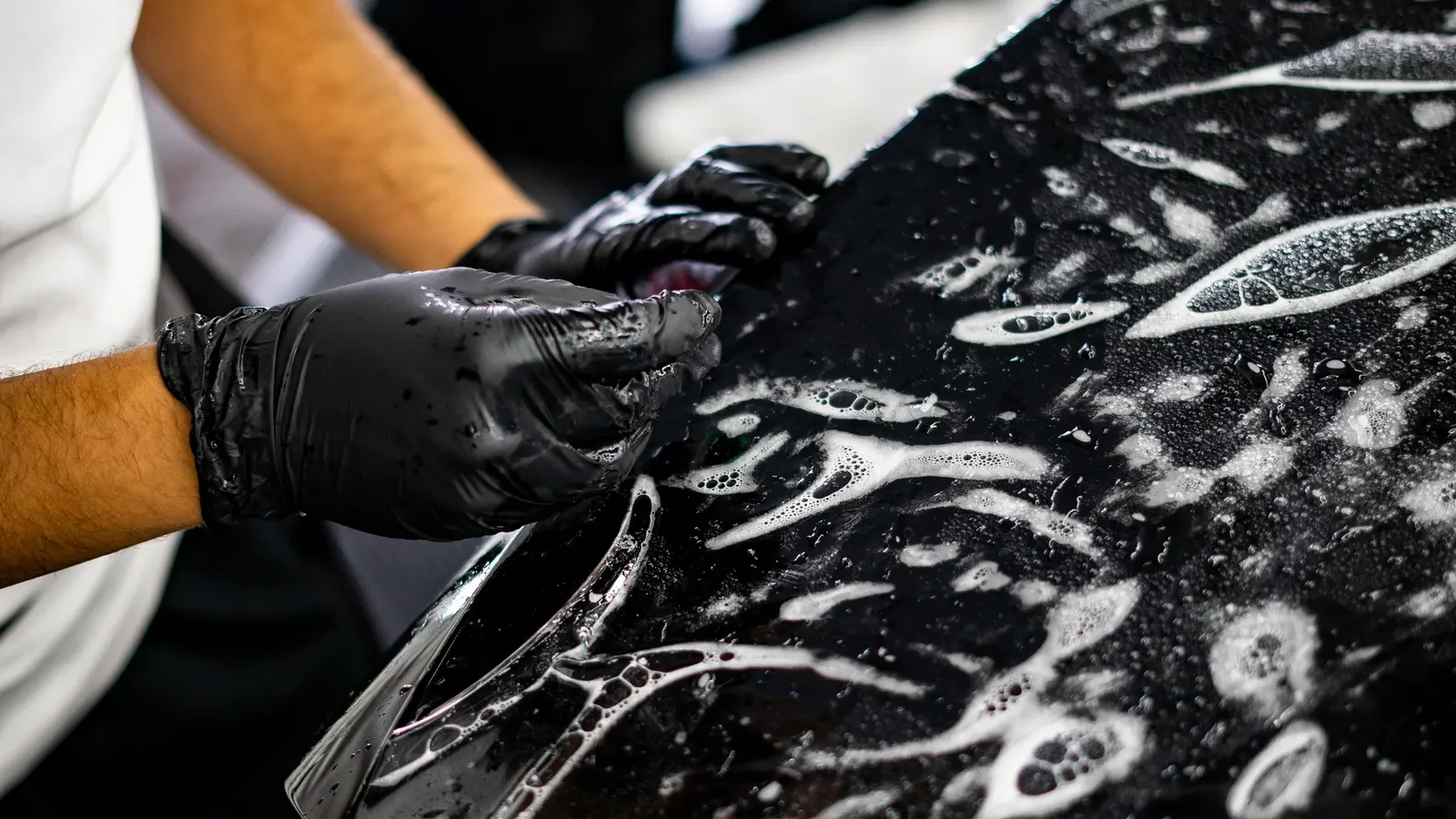
One hard grain is enough – dust or sand – caught in a mitt, a cloth or a sponge. Every further pass presses it into the paint as a tiny scratch. The brushes in a brush wash carry the same thing – they run over your car straight after the car ahead of you.
You will not notice a single pass. But with every wash done the same way a few more swirls are added, and in a year or two they add up across the panel into the web you are looking at now. What decides how many are added next time is what touches the paint, and the state it is in.
Where a wash most often goes wrong
Almost always on two things. The first is the bucket: dirty water the mitt keeps going back into puts the same thing back onto the paint that it rinsed off a moment ago. That is why you need two buckets – it is called the two-bucket method. One holds the foam, the other is kept clean purely for rinsing the mitt, with a grit guard at the bottom for the grains to sink under.
The second thing is the order. A pass over a panel the dirt has not been rinsed off yet will not wipe the surface clean. Rinse first, only then touch it.
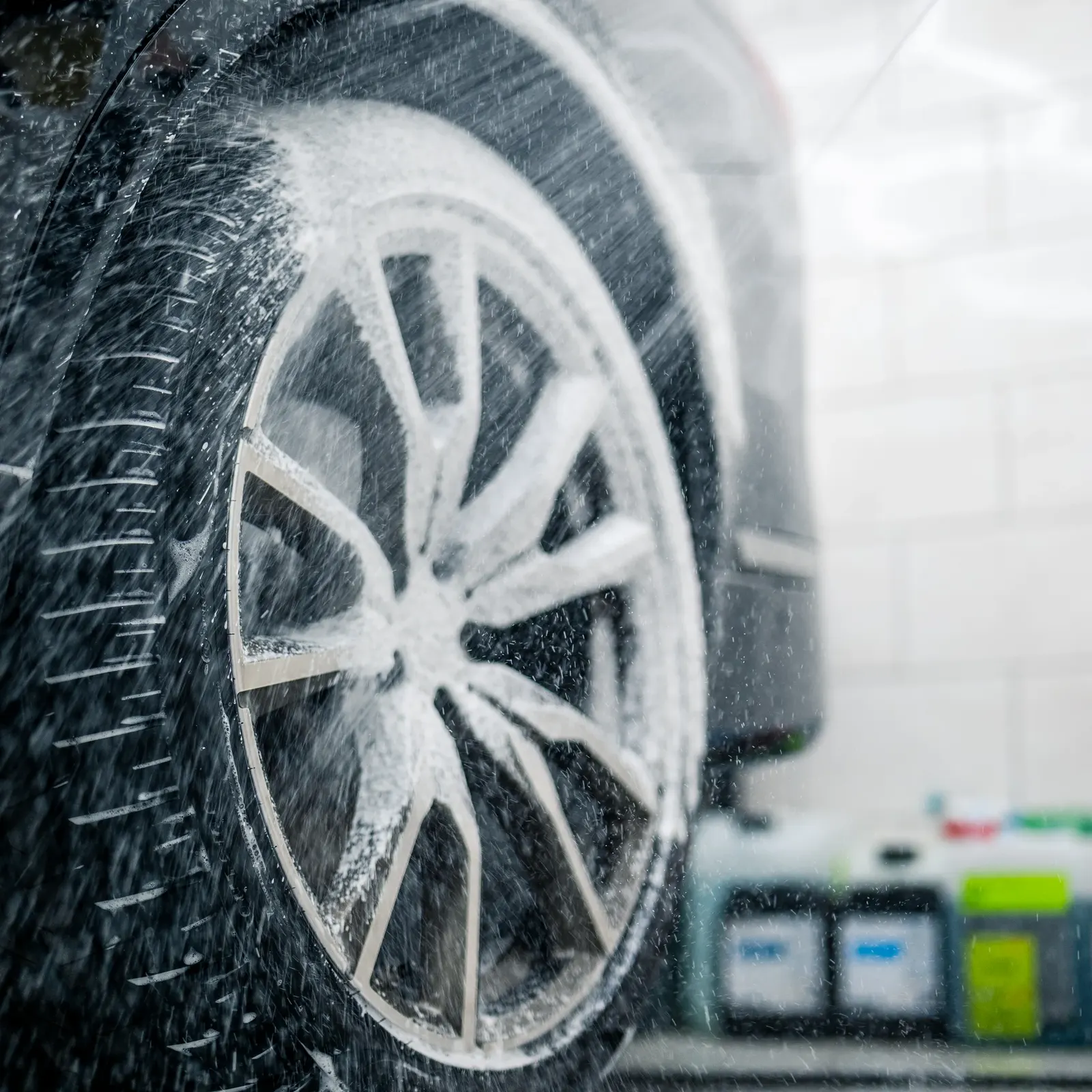
Most of it is taken off by active foam and a pressure rinse – at home, in a jet wash bay or in a touchless wash. They bring down the loose dirt and part of what has dried on the paint; whatever holds on more firmly comes off only with a hand and a mitt.
The order matters at the end too, when drying. A dry cloth dragged over a panel that was not rinsed runs over whatever stayed on the paint and makes the same swirls as a mitt – which is why they appear even after careful drying.
When the paint feels rough after a wash
Run your fingers over the dry, washed paint through a plastic bag. A smooth surface is fine. If you can feel a fine grain under the bag, there is bonded contamination on the paint – residue from road traffic, dried-on insects, mineral deposits. It behaves differently from loose dust: water rinses that away, this it does not.
If the grain can be felt across the whole panel, it is worth starting with a decontamination wash and only then changing how you wash. We will go through the scope and the steps with you beforehand.
When the swirls are already there
Washing differently will stop them adding up, but it will not wash off the ones already in the paint. Those are removed by paint correction, and that takes paint away – which is why it is not done regularly.
How much of that web can be levelled depends partly on how much paint is left underneath – that we can only tell at the car. With a fresh, light web we start with a wash and see how much of it is left.
How we wash a car, and what it costs
Here a car is washed by hand, using that same two-bucket method – whether it is a hand wash or a decontamination wash; they differ in what is done to the paint. If we find swirls on your car, we do not say so as a reproach – they tell us what to start with.
Photograph the bonnet against the sun and write to us about how you wash the car. We will tell you whether changing the wash is enough, or whether it is worth removing the swirls first.
Topic: Washing and drying
More in this topic