
Ceramic protection
What Ceramic Protection Costs: Prep Is Most of the Work
3 minEstimated reading time — roughly how many minutes it takes to read at a normal screen pace.
Dark specks of brake dust on the bonnet, tar along the sills, paint with no gloss left — all of it has to come off before ceramic protection goes on. That preparation takes most of the time and the price. We show what it involves and what pushes it up.
On this page
On this page6
Say ceramic protection and most people picture the product going onto the paint. On a car that arrives with us, though, we see something else first: dark specks of brake dust on the bonnet, black spots of tar along the sills, and a film that leaves the car looking dull an hour after a wash – the same effect behind why the car is dirty again a few days after a wash.
Applying the product is the shorter part of the job. Most of the time, and most of the money, goes into preparing the paint so that Ceramic Surface Protection has something to hold onto. How much preparation that takes depends on the state the owner has brought the car to — which is why two cars of the same size don't cost the same. Here's where the difference comes from.
When the car looks clean after a wash
The top, glossy layer of paint — the one you touch — isn't a smooth surface up close. It has fine pores in it, and dirt from everyday driving settles into them; washing doesn't flush it out.
Apply protection to paint in that state and it doesn't grip the paint, it grips the dirt on top of it. It sits on that dirt instead of bonding with the surface it was made for, and sooner or later it comes away along with that layer.
The demo shows it in cross-section, the view you'll never get with the naked eye on the car:
Interactive diagram
From physical film to covalent bond
Posuvník ilustruje rozdíl v „propojení“ s lakem — ne skutečný chemický profil konkrétního produktu, ale didaktický model.
Transitional mode
Some active groups already penetrate the paint structure — dependent on surface preparation and application quality.
Curves = chemical anchors (metaphor)
On handover day neither you nor we can tell the difference — freshly applied protection looks the same either way. It shows a year or two later, in whether water still stands on the paint in beads or spreads out flat. That's why we don't cut corners on preparation, even though it would bring the price down.
What we do to the car before anything is applied
Before protection goes onto the paint, we work through three steps, and none of them can be skipped.
First we wash the car so that everything loose comes off. Most owners do this part themselves at home, and it's the only place where your own work goes into the price — not through one wash before you bring the car in, but through how often you wash it over the year. At home it pays to foam the paint and let the foam sit for a while, so the dirt slides off before you touch it with a mitt.
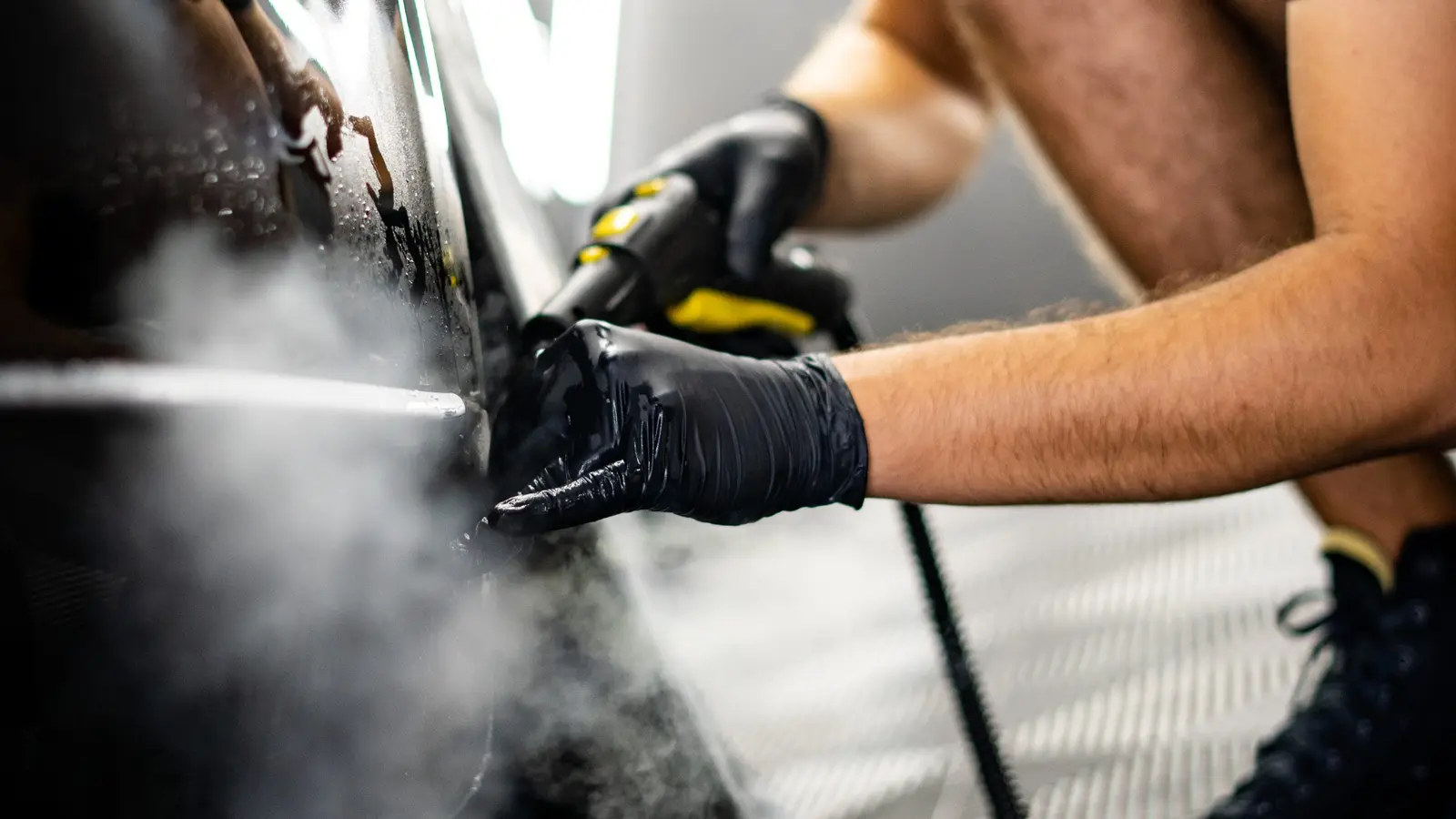
Then off comes what the wash left behind. The dark specks are brake dust rusted into the paint, the black spots are tar from the road, and there's insect residue and white marks from minerals in hard water. This only lets go with chemistry, and we call the step decontamination.
What's left are particles lodged in the paint so firmly that chemistry won't dissolve them. Those we take off by hand, piece by piece. This part can't be rushed, and a neglected car has the most of it.
When you wash the car every fortnight
This is where we have the least work. Regular washing doesn't let dirt bake into the paint, so the chemistry and the hand cleaning are done quickly.
A car like that sets the lower end of the price list — it's the lowest exactly because the paint preparation is minimal.
When you last washed it three months ago — or a year ago
Three months without regular washing and enough builds up on the paint that a wash no longer takes much of it off. It has to come off with chemistry and by hand, and that's time added.
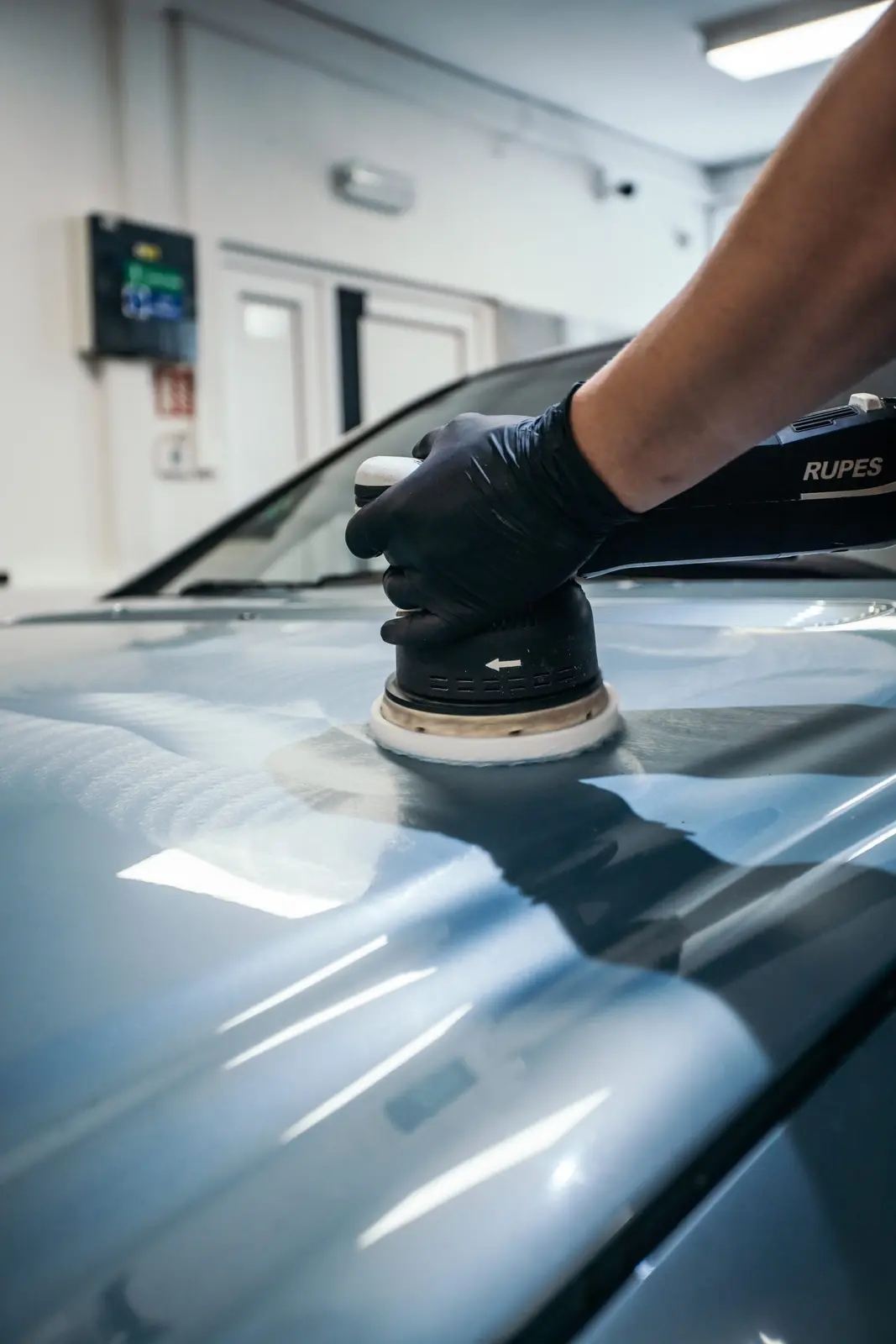
After a year the dirt layers up further and the paint starts to weather: it loses gloss and the colour looks faded. A light paint correction is then added to the cleaning, and the price goes up.
On a car like that we don't do the same work as on a maintained one, we do more of it — a larger share of the job goes into cleaning the paint than into applying the protection. That's how the two cars of the same size from the beginning end up apart on price. The same preparation is paid for again at every application, not once for the whole life of the layer — which is why a one-year coating makes sense on a car you will be changing soon, and not as protection renewed every season.
When we tell you we can't recommend protection yet
This happens with paint that's heavily weathered, dull, or has defects that cleaning alone won't fix. Protection could be applied, but it would seal in the state the paint is in.
So we suggest a Decontamination Wash as a separate step first, and depending on what shows up under the dirt, a paint correction as well. Only after those is there any point in talking about protection.
What to tell us about the car to get a price
We need to know how long you've had the car, how often you wash it, when you last washed it, and whether you can see dull patches or defects in the paint. Add a photo of the bonnet and sills in daylight and we'll read more from it than from a description.
From that we'll tell you whether we're at the lower end of the price or higher. The exact figure we'll see only at the car.
Topic: Ceramic protection
More in this topic