
Ceramic protection
How Long Ceramic Coating Actually Lasts
3 minEstimated reading time — roughly how many minutes it takes to read at a normal screen pace.
After a few months water spreads across the bonnet instead of beading up, and the gloss looks flatter. We show how to tell whether the layer is still there, and what decides whether it lasts as long as it's built for.
On this page
On this page5
The car looked new the day you collected it. After a few months and a few washes it doesn't any more: the gloss is flatter and water spreads across the bonnet instead of pulling into beads and running off. After the first winter of road salt, the difference shows even more.
Part of the answer to "how long will it last" depends on which line you choose. The Original Ceramic is built for one year, Ceramic by Paul Dalton and Ceramic V3 for three years, and Ultra V3 for five years. Whether the layer on your car actually lasts that long is something we can tell from the paint before the coating even comes into play.
How you can tell the layer on your car is still holding
Ceramic surface protection bonds with the paint so that it behaves like its top glossy layer. It can't be peeled off or washed away with shampoo. As long as it holds, water beads up on it and dirt lets go on its own during a wash.
A glaze or a car-wash wax just sits on the paint and is gone after a few washes. When the gloss disappears well before the end of the period the protection was built for, the layer on the paint isn't holding the way it should. Often you can tell from a photo of the bonnet in daylight, too.
What decides whether the layer lasts as long as it's built for
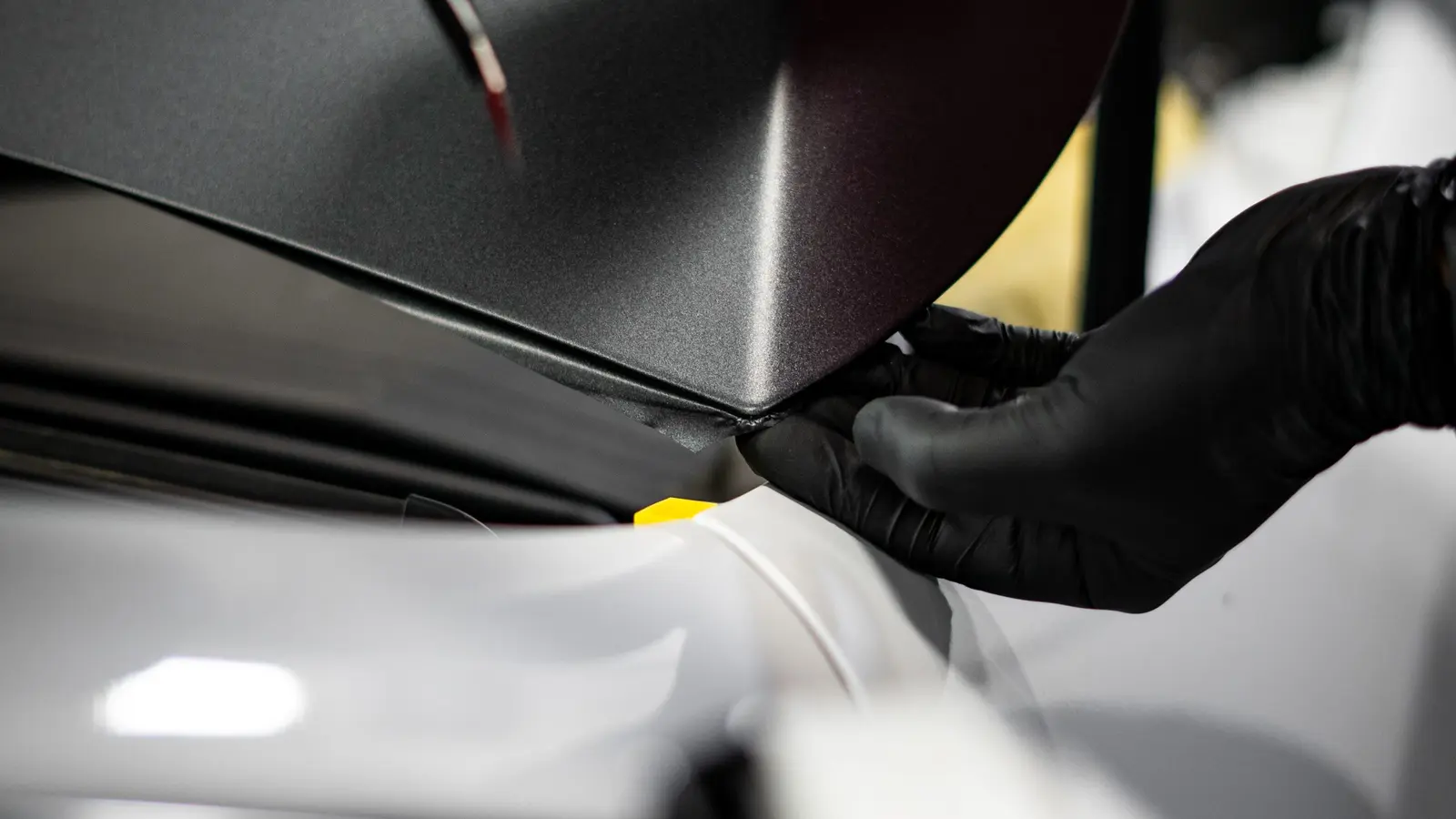
Before we install the coating, we take the old waxes and glaze residue off the paint, since they would otherwise end up underneath the layer. When this step is rushed, the layer still goes on, but it holds onto the old residue instead of onto the paint. Then it disappears within a few months, regardless of whether you chose the one-year or the five-year line.
At that point, the cleanliness of the paint decides the outcome at least as much as which line goes on it. That's why preparation takes up most of the time on a job in our studio. We show you the state of the paint before we even start. What we took off the paint and what we found on it is also written into the handover report for the job.
What the coating can take and what it can't
A properly installed layer takes winter salt, washing and summer sun without going dull after the season. With a well-executed protection, then, the question isn't whether it survives the first winter, but how it behaves under regular use over the whole period it's built for. That period is largely determined by how you wash the car and where it's driven.
An ordinary ceramic layer won't remove scratches caused by contact with the paint: a brush in an automatic wash, a hard sponge, or a cloth with grit in it. Fine rings around the door handles will still appear even under the coating. In sunlight you'll see them as circular smears around the handle. We remove those with paint correction, and at your next visit we'll tell you what came from washing and what didn't.
This is what the self-healing lines Heal Lite and Self Heal Plus are for – the coating that heals wash marks by itself. Minor micro-scratches and wash marks heal themselves in these once warmed by the sun. Heal Lite is the lighter variant, Self Heal Plus is the highest line we offer. Deeper scratches, though, aren't fixed even by these.
When we'll suggest a different route
If the car is used for everyday driving and you don't need a full ceramic system, it makes sense to start with basic surface protection. If you do want ceramic, the line is chosen based on how long the protection needs to last and what you expect from it. Ceramic by Paul Dalton is mainly about depth of gloss and smoothness, Ceramic V3 about a strong layer that's easier to wash, and Ultra V3 about the highest chemical resistance. On dark paint, where every ring from washing shows, consider a self-healing line.
What we recommend depends on the state of the paint and on where the car is parked and how often you wash it.
What happens next
How long the protection lasts on your car comes down to two things. The first is the line you choose. The second is the condition the paint was in before application, and how you wash and use the car afterward. Bring the car to our studio, or send us a few photos of the bonnet and the side taken in daylight. In the studio we'll then wash and degrease the paint, level out defects with correction, install the protective layer, and let it cure overnight.
We'll give you a precise answer for your car once we've seen the state of the paint and talked through how you use it. Write to us and we'll tell you which line we recommend and what you can expect with your car.
Topic: Ceramic protection
More in this topic