
Changing the look
Chrome on your car you'd rather not have: what to do about it
5 minEstimated reading time — roughly how many minutes it takes to read at a normal screen pace.
Shiny trim around the windows, the grille and lettering don't suit the car, or they've turned white and stay grey even after washing. You can leave the chrome as it is, try polishing it, or cover it with film. We describe when each of these routes fits, and what film on chrome can and can't do.
On this page
On this page6
You're standing by the car and your eye keeps sliding to the same spot: a shiny trim strip around the windows, the chrome grille on the front, lettering on the boot lid. It doesn't suit dark paint, and the car looks older than it is. Or it's the opposite: the trim used to shine and is now grey, milky, with marks that don't go away after washing.
Either way, the chrome sits in places you can't just unscrew. You have three options: leave it as it is, try polishing it, or cover it with film. Each suits something different. Which one makes sense for your car depends mainly on the condition the chrome is in.
What's happening to the chrome
Chrome elements on a car aren't all the same. Trim around the windows tends to be metal, while the grille, badges and lettering are often plastic with a thin shiny layer on top. You usually can't tell by looking, and you don't need to for the decision either. Just notice what exactly is bothering you.
The shine is fine, you just don't like it. This isn't about a repair, it's about looks, and film solves it.
The surface is grey, milky or has patches, but is still smooth. Run a finger over it and you don't feel any edges or unevenness.
The surface is flaking, cracking or blistering. The shiny layer is separating from the part underneath.
Aggressive wash chemicals and winter road salt often show up on chrome first. That's why how you wash the car also decides how long any of the solutions below will last.
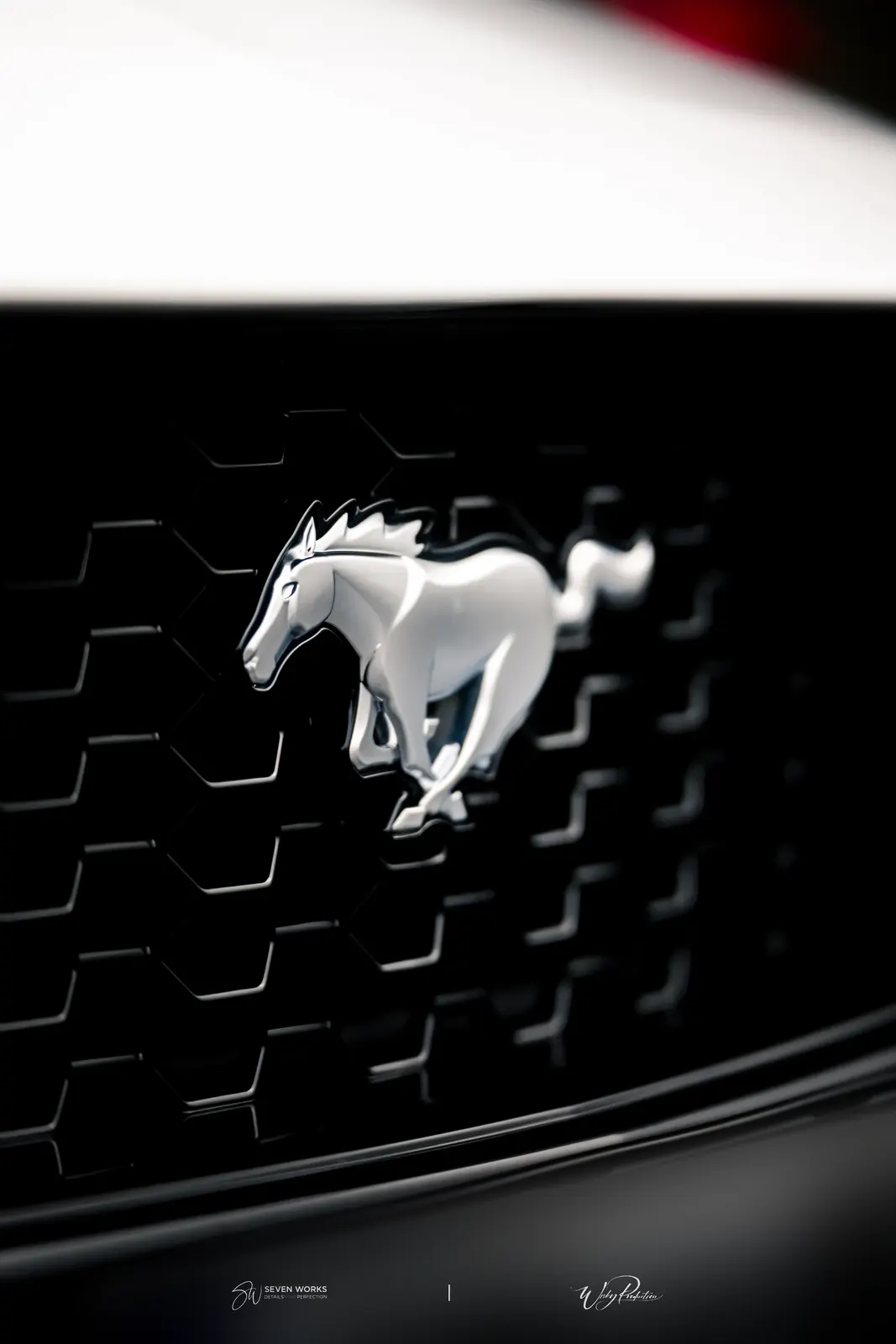
Leaving the chrome as it is
That's a reasonable choice too. A greyed trim strip doesn't harm the car in any way, it just looks worse. If you leave the chrome, wash it gently: a neutral-pH shampoo, without the harsh pre-wash chemicals some wash lines use. The shine won't come back this way, but new marks may not build up as quickly.
Polishing
Metal polish helps when the surface only has built-up grime or a light haze on it. When the surface itself is damaged, polishing only thins it further. The trim shines for a while, but the marks often come back.
Flaking chrome on a plastic part can't be polished. Polish would just wear it through to the plastic.
The last option is new parts. For trim around the windows this tends to be laborious and usually more expensive than the other routes. If the new trim gets washed the same way as the old, it can end up the same way over time.
Covering it with film – de-chroming
With de-chroming, the chrome part is covered with film, most often black in gloss or matte finish. The chrome disappears from view, and the trim, grille or lettering blend in with the rest of the car.
What film can do:
- change the look without touching the paint or the part underneath,
- cover a greyed surface, as long as it's still smooth, because the film lies flat on it,
- be removed again later, say before selling the car or handing it back after a lease,
- be applied to just part of the car, for example only the trim around the windows or only the grille.
What film can't do:
- it won't repair the surface underneath: blisters and a flaking layer will show through as a relief, and loose flakes can lift the film,
- on small badges and lettering with fine shapes it may not sit cleanly, and in that case it's better to leave that element as it is,
- it isn't paint, so it has an edge; a well-fitted film has that edge folded around the part's border, where you don't normally see it,
- it ages in the sun like any plastic, and replacement eventually comes round.
Whether the film shows mainly comes down to the edge. When it's folded around the border of the trim, the part looks, from a normal distance, as if it left the factory black.
What to check
Ask where the edge of the film will end. When it's folded around the border of the trim, you don't see it, and water doesn't get under it as easily. When it ends on a visible surface, that's usually the first place the film starts lifting over time.
The part needs to be clean and degreased before film is applied. Wax or sealant residue under the film reduces adhesion.
If you want to cover the badge on the front grille, there may be a driver-assistance radar behind it. Newer cars often have one there, and a layer over the badge can affect how it works. You don't have to work this out yourself: send us the make, model, year and trim level, and we'll tell you whether that badge can be covered.
For the first few days after the film is applied, wash the car gently and don't aim a pressure washer jet at the edges of the film. That applies later too, since a pressure washer up close is the most common way an edge gets lifted.
If the car is on a lease, check what the contract says about appearance changes.
What to do next
Send us a photo of the whole car and a close-up of the chrome that bothers you. Tell us which elements you'd like covered and whether you want them gloss or matte. From the photos we can tell what condition the chrome is in and whether film suits it, and we'll send you a price along with how long the car will be with us. We also take on a single part, say just the trim around the windows.
We give a 2-year warranty on the work performed, and the manufacturer's warranty applies to the material. Film in our workshop in Ústí nad Labem is applied by Lukáš Vyskočil and Sebastian Vyskočil. If you'd like to ask something before sending photos, call +420 739 374 074.
You can find more about what de-chroming with us involves on the De-chroming page. If you're considering changing the colour of the whole car, take a look at Design Wrap or at A New Colour You Can Undo.
Topic: Changing the look
More in this topic